

The other night, my fiancée and I decided to spend a nice evening in the Western Mediterranean. Luckily for us, you can do that in Asheville. We popped into Zambra, a local joint that specializes in Iberian-Maghrebi food. The dishes tend to be tapas-style, small plates that are meant to be shared along with the great conversations that tapas and wine facilitate.

The question I always have when I eat at a place that claims to be Mediterranean is really quite simple: is it authentic? The answer, interestingly, isn’t what you might expect. It’s not just replicating flavors and ingredients that count as Mediterranean. On a certain level, while there are some staples (think olives, pig, wine, etc.), there is no such thing as Mediterranean food—it varies so much by country and even by region. What you’d eat in Rome is not what you’d eat in Istanbul or Barcelona. And what you’d eat in Venice is not what you’d eat in Naples.
But there is a culture of food that pervades the Mediterranean regardless of ingredients. What makes a cuisine truly Mediterranean in a traditional sense is the method of sourcing and the relationship between those who eat and what is eaten. It’s a symbiosis between the people and the land, one that should ideally sustain each other.

It’s for this reason that Zambra can claim to be authentically Mediterranean. Its dishes are locally sourced or they have strong relationships with long-distance food providers to ensure that the food is always fresh and sustainable. The only real exception is the wine, which is a great selection of Iberian vintages. I opted for a nice Portuguese vinho verde rosé. After all, without wine, you’re not really in the Med.
Likewise, Western Mediterranean fusion means you’re getting a wider profile of flavors. That’s not to say that Spanish tapas isn’t good—but it’s just one way to do it. Blending foods, which has been going on the Med for millennia, is just a fun way to present it.
We ate our way through a whole slew of dishes that capture so much of Western Mediterranean cuisine while still staying true to local WNC ingredients: charred octopus; pork-stuffed dates; crab cakes; seared scallops; chicken croquettes; braised pork rolls. They were simple dishes yet packed with flavors that leave you wanting more.
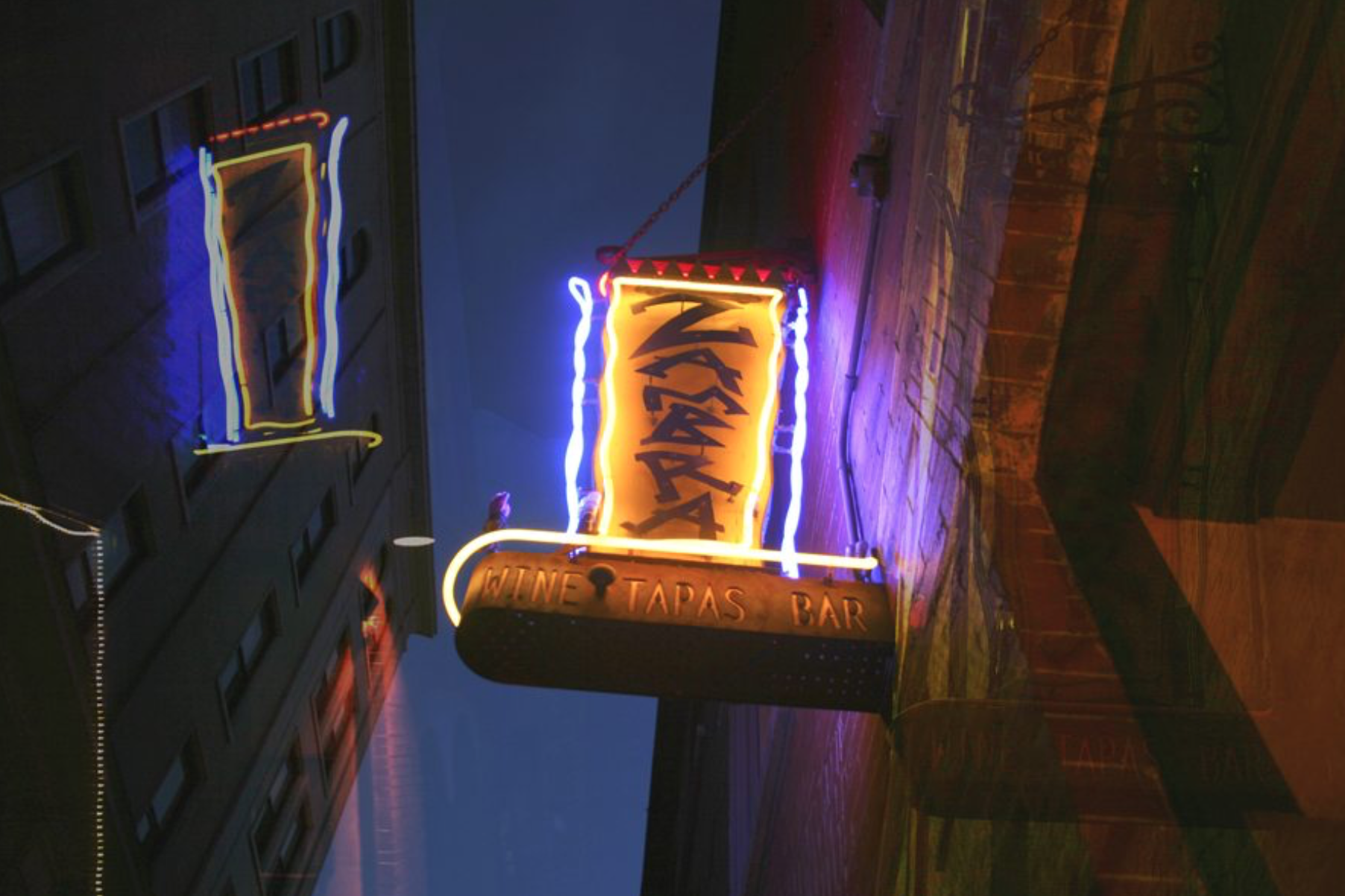
What’s best about Zambra is that it’s relatively inexpensive for both Asheville and for tapas. Tapas has been en vogue in the US as of late, which means it can get pricey. And Asheville is a food town with amazing, albeit often expensive, restaurants. Zambra stays true to its Mediterranean roots in that the focus should be on creating delicious food that shouldn’t break the bank.
In the end, you can visit the Mediterranean wherever you are. All it takes is finding the right place to eat, or just your local farmers market. The right mix of protein, starch, veggies, olive oil, cheese, and spice will take you to another world, one with a giant sea in the middle of it.
 Robert Clines, Ph.D.