
Last week, in what was really nothing short of an act of procrastination in an attempt to avoid grading final exams, I decided to do some reading for a proposed graduate seminar I want to teach on the intersection of Orientialism, imperialism, and classics. I am increasingly interested in how what we call the classical tradition—the study of Greece and Rome—is also a part of a larger process in the Mediterranean and beyond of building narratives of a historic East vs. West, civilized vs. barbaric, all in the name of justifying empire.

Part of this has been the creation of a purported “Western Civilization” that merited control of the world through its global empires because of its historical superiority. Some of the readings explore who had the right to claim descent from Egypt’s Pharaohs, the use of antiquities in Fascist Italy and Nazi Germany, and how French colonizers in North Africa tried to reform agriculture along the lines described in ancient sources, when Africa was “Rome’s breadbasket.” I hope to teach this course soon, perhaps in a year or two.
But designing this course took me in another direction, down a rabbit hole of reading that investigated a number of topics: studying the Mediterranean, doing history, and the ways in which modern imperialism and Orientalism have shaped our understanding of the Middle Sea and have fractured the past, potentially rendering it irredeemable without a significant amount of intellectual gymnastics. Three books in particular have stood out, in the order I read them: Rashid Khalidi’s The Hundred Years’ War on Palestine (2020), Amitav Ghosh’s In an Antique Land (1992), and Bashir Abu-Manneh’s After Said (2019).
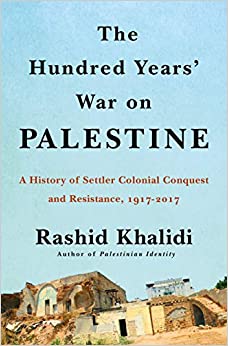
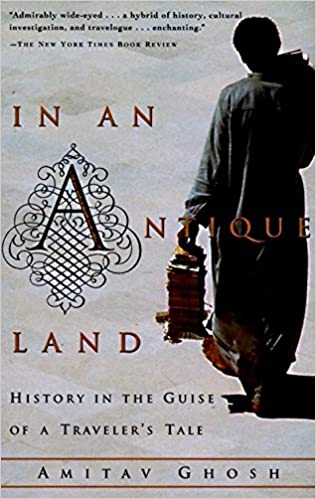
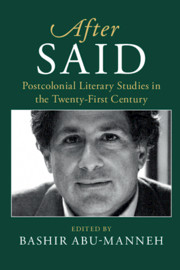
Khalidi’s work is part historical narrative, part personal memoir, and tells of the denial of sovereignty to the Palestinian people in the wake of Zionism, Western intervention since World War I, and the establishment of Israel. Ghosh’s work tells two narratives, bends the boundaries of genre, and underscores the irrevocability of empire, doing so through the lens of medieval Jewish travel/exile in the Mediterranean and the experiences of post-independence Egyptians grappling with the ebbs and flows of modernity. After Said captures the essence of the life and work of the postcolonial scholar and cultural critic Edward Said. What’s most telling is that, like imperialism and modernity, Said’s work—even the parts many now reject, like his refusal to see the role of materialism and capital in empire—especially Orientalism (1978) and Culture and Imperialism (1993), have irrevocably changed the way we think about and discuss empire, modernity, racism, and nationalism. Even when we disagree with him, we still have to talk about why.
These books pushed me to think about what we do as historians and why in truth history is an artifice. That is to say, how we treat history not as a linear progression of events and facts that took place in time, but as a constructed narrative of experiences that are always burdened by the pasts that preceded them as well as colored by those who get to tell that history. And not “history is written by the victors” necessarily, as that’s reductionist, so it doesn’t quite capture what I mean. Rather, these books have led me to consider the Mediterranean and its histories as a field of inquiry in new ways.
We might call this a postcolonial Mediterranean if we want, and in fact Iain Chambers did exactly this in “A Postcolonial Sea,” a chapter in his Mediterranean Crossings (2008). And Chambers claims that the Mediterranean as a unified, cultural space only entered intellectual discourse in the 19th century. I still find that explanation insufficient, because I struggle with seeing how the intellectual unity of the Mediterranean only came into being when the Mediterranean’s equilibrium destabilized in the wake of new European empires. It’s almost as if we historians are looking for a unity that wasn’t there, to find a unity that Orientalism and imperialism denied. We admittedly make intellectual leaps when we talk about, say, an “archaic” Mediterranean world. But it’s a useful tool nevertheless, and the Romans did call it ‘our sea,’ so I’m not ready to reject it.
What’s most telling in these three books (Khalidi, Ghosh, Said) is that history becomes a tool not for studying the past, but for justifying the present. Whether it’s Zionism, making sense of Egyptian nationalism, or grappling with the legacy of colonialism, history in all these contexts functions not to uncover the past, but to obscure it further. In each case, myths about the past get invented to make the past fit the mold needed to move forward new narratives.
Albert Camus makes this point about the use of Mediterranean pasts to construct new nationalist narratives in his “The New Mediterranean Culture” (1937): “It may indeed seem that serving the cause of Mediterranean regionalism is tantamount to restoring empty traditionalism with no future, celebrating the superiority of one culture over another, or, again, adopting an inverted form of fascism and inciting the Latin against the Nordic peoples.” But the use of history in this war on the past leads us to miss the point, says Camus: “Nationalisms always make their appearance in history as signs of decadence. When the vast edifice of the Roman empire collapsed, when its spiritual unity, from which so many different regions drew their justification, fell apart, then and only then, at a time of decadence, did nationalisms.”
Such inventions of collective identities that may not have ever been there, and the fracturing of these identities into regionalism allow us to create dichotomies and weave them into the past in an effort to make sense of how we got to where we are. In other words, Mediterraneanists don’t just study historic Mediterraneans, whichever one they study, to tell us something about those worlds. Rather, we must be cognizant of the ways in which it’s always an engagement with the current state of the Middle Sea. Ghosh’s Ben Yiju, an exiled Jew in medieval Malabar, speaks the same language as twentieth-century migrants crossing the Mediterranean; denying Palestinian identity is no different from the Roman destruction of the Temple and Sack of Jerusalem in 70AD. They are epistemological and metaphysical kin.
The Mediterranean’s timelessness as space, despite Chambers’s reservations, allowed for Walter Benjamin’s contradictory and somewhat reductive—but no less true—statement that “There is no document of civilization which is not at the same time a document of barbarism” (“Theses on the Philosophy of History”). It’s a famous statement, but it’s almost always disconnected from the context in which it was written, namely the art of writing history. It’s the rest of the paragraph that captures Benjamin’s point: “And just as such a document is not free of barbarism, barbarism taints also the manner in which it was transmitted from one owner to another. A historical materialist therefore dissociates himself from it as far as possible. He regards it as his task to brush history against the grain.”
So, if we don’t look at history with a critical eye, are we all bound to suffer from some sort of historiographical dissociative disorder that prevents us from seeing the truth because of what our world has done to us? Yes, I think Benjamin would clamor. So to break free from this, we must see through the barbarism and grapple with civilization not as its antipode but as its bedfellow. The way we discuss the past must pursue a discourse that elides differences. Only them can we break free from what obscures how we understand the past, the present, and the two’s interrelationship.
This is modernity’s problem, and the artifice of modern historiography has hindered our ability not to know what happened in the past, but to fully grapple with the experience of it in real time. Everything must be studied according to particular strictures of professional historicism. It’s a reminder, as Dipesh Chakrabarty pointed out twenty years ago in Provincializing Europe, that “Third-world historians feel a need to refer to works in European history; historians of Europe do not feel any need to reciprocate.” Again, the victors don’t always write history, but there are certain ways in which how history is written that haven’t quite allowed us to shake off the structures that aim to obscure certain voices.
Even the way we think about how to do history gets obscured by burdens that we don’t realize are there. Take for example Jacques Derrida. Anyone who’s taken a theory course has grappled with his work, and discussed him as one of the pioneers of challenging French structuralism. He’s thought of as a Parisian, where he spent most of his life, and he’s an intellectual spoken of often in the same breath as Michel Foucault and Jacques Lacan as those modern French philosophes who make our brains hurt. It’s an apt accusation, in fairness, as any grad student will attest. There’s just one problem with all this: Derrida wasn’t French. He became French in our minds, but he was a Sephardic Jew from French Colonial Algeria, and was expelled from his lycée by the Vichy regime. His Frenchness was always contingent. When we think about that past and the bloody war for Algerian independence from France, rather than solely his intellectual trajectory in Paris, his deconstructionism seems to make a lot more sense. His philosophy is the very embodiment of the fragmentation of Mediterranean histories obscured by Orientalism, nationalism, and empire. But still, his philosophy can still help us find the unity that the Mediterranean in a lot of ways never possessed.
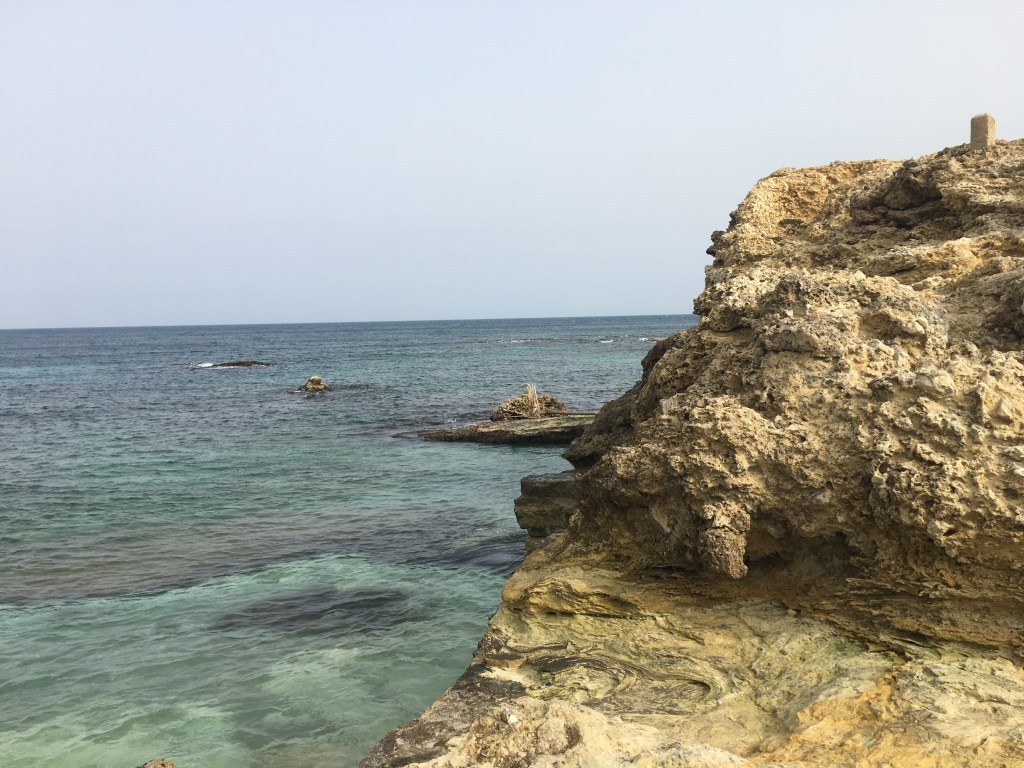
This erasure of pasts brings me to one of the overlooked aspects of the impact of modernity on the Mediterranean, what Gramsci called the Southern Question, originally where ‘backward’ southern Italy fits into the modern Italian nation-state, but now meaning perceived backwardness as the hurdle to modernization. We talk of a Global South, lands on the front lines of decolonization, globalization, and fast-paced development that compound the differences and inequalities that Orientalism, empire, and concomitant uses of history ushered in. The rush to modernize both put the past at the service of new nations and empires while also denying the histories of those left behind, i.e., the Global South. This is why Franco Cassano has urged us in Southern Thought (1996) to “go slow” and reclaim the Mediterranean and the spaces around it from the structures that seized them. We can only truly come to unlock the past and fully appreciate its deeper meaning, so Cassano would urge, “when we are cured of the obsessive search for separation and distinction. Then beauty will return to visit us. It is impossible to take power away from salesmen if we cannot figure out the difference between the experience of the world and its purchase on super discount.”
In other words, bad history isn’t just wrong; it’s dangerous. It tells fake albeit compelling stories that serve corrupt agendas. It separates us from the past as it was and provides us with a past that justifies a present that does not serve us. It serves some of us, but not all. And that’s what came across in Khalidi, Ghosh, and Abu-Manneh. For me, they all tell of pasts burdened and constructed by the present, and of a Mediterranean world burdened by the people who occupy it, rather than those who desire to live in and share it with one another. Disentangling all this isn’t easy, and I have intentionally not proposed any solutions. But I think we can start with being honest about the past and how we’ve bastardized it, and then work to find new ways to do it justice.
 Robert Clines, Ph.D.