

Last month, I joined the Appalachian Premodernists to give a talk on a chapter draft of my current book project on representations of foreigners in the Italian Renaissance. I’m a relative newcomer to this group, but it’s been a great experience to get to know everyone in the group.
The material from this lecture will be a part of the first chapter of my book, which will look at a few other writers and how they used antiquity to work out anxieties about identity that forced them to think about who they were and who their ancestors are.
In my presentation, I focused on Petrarch, a fourteenth-century writer often known as the father of the Renaissance, and how he depicted an African woman named Sophonisba in his epic poem Africa.
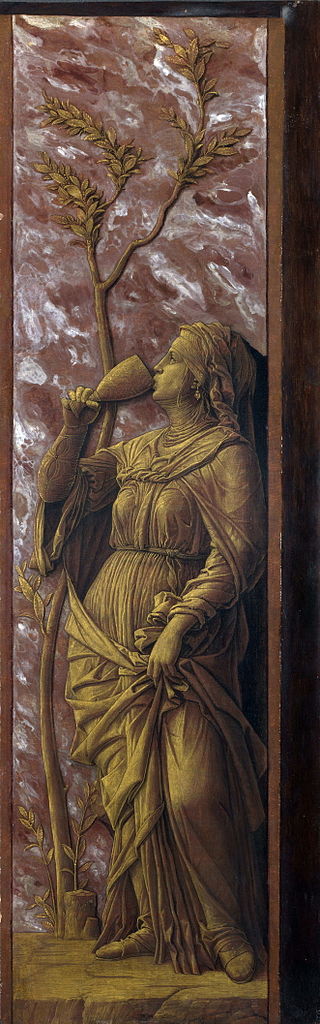
Africa is a retelling of the Second Punic War, the great third-century BC war fought between Rome and Carthage. It’s the same war with Hannibal and the elephants crossing the Alps. Petrarch’s version is a cosmic battle between good and evil, the Romans obviously playing the role of the good guys. It’s also written in a high Latin style that aimed to reflect the poetic power of the great Roman poet Vergil’s Aeneid. It doesn’t, really. I don’t think it’s a particularly good poem. But the story itself is really fascinating.
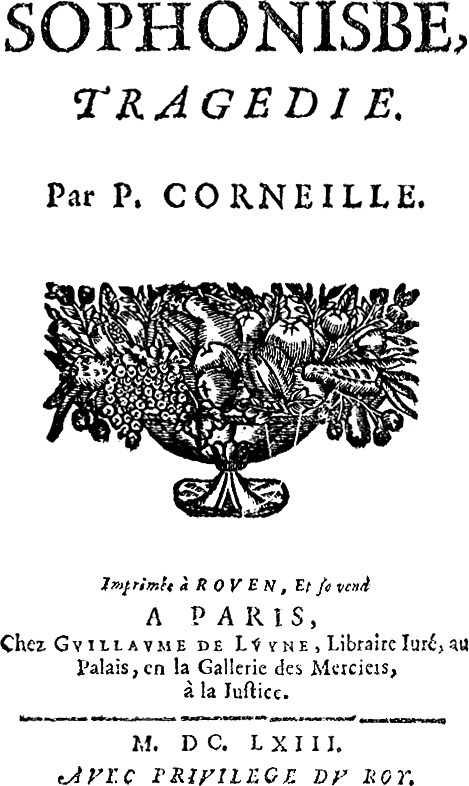
In my lecture, I discussed how Petrarch used metaphors of lightness and darkness as well as played on tropes usually reserved for Muslims in Christian romance. His goal was to make ancient Carthaginians and fourteenth-century Muslims in North Africa appear to be the same people, and to present his contemporaries in Italy as the descendants of the Romans.
What was most interesting, and what I focused on in my talk, was how he used Sophonisba to explain anxieties about race-mixing. He presented her as both an African woman who sexually tempted men into abandoning virtue as well as a blonde, blue-eyed, fair-skinned innocent virgin who was the victim of African eroticism. It really struck me how Petrarch’s Sophonisba bounced between these various roles to allow Petrarch to argue for such stark differences between Africans and Romans.
Over the centuries, writers took up Sophonisba’s story. She ranged from a temptress to an innocent victim. But she was almost always depicted from the perspective of European men. This is problematic, because it means we never really get to know the real Sophonisba. We only get the version of her that these male authors want us to get. And as you can see from Guercino’s painting, she’s usually portrayed as white despite being North African.

This is the case with Africa, too. Petrarch’s poem is a complete a work of fiction. It doesn’t even attempt to depict the Second Punic War as it actually happened. For him, it was a way to talk about the anxieties that he and his contemporaries faced and how they can confront the people they saw as great enemies, Muslims. And Sophonisba was the perfect character for him to do that.
I really enjoy giving these presentations. I always get great questions that I only love answering. But sometimes, I get questions that I can’t answer, and this leads me to think more about what my projects are trying to do.
I’m giving two more presentations this spring, both on ancient ruins and identity in the Renaissance. So stay tuned for more!
 Robert Clines, Ph.D.