
On our first day in Rome, I like to keep the students busy by throwing them right into the mayhem. I designed this first walk because I think it really captures so much of Rome and helps students get their bearings. It also helps to fight off jetlag. After a long overnight transatlantic flight, the first thing you want to do is nap. But don’t! Hit the ground running.
Here’s a nice walk, which takes about 2 hours, depending on pace and various food and drink breaks. It brings you as close to Rome as you can on day 1.

Once we arrive in our apartments and get settled, we meet at Piazza Cavour in the Prati neighborhood, which is where we stay. Prati, which means fields in English, has only been a part of Rome proper for about 150 years. As the name suggests, it was pretty rural until Rome became the capital of Italy in 1870, and then was a planned neighborhood. It kind of reminds me of Paris: fin du siècle palaces, wide avenues, and tree-lined streets.
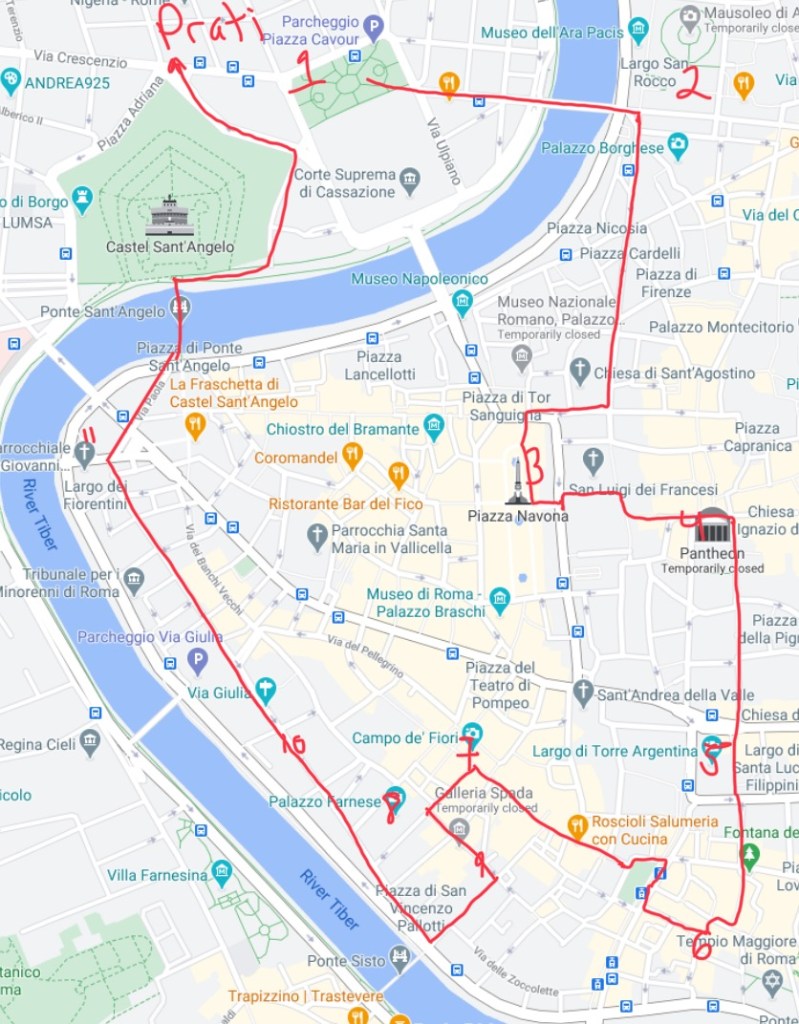
At Piazza Cavour (1), I introduce the students to the Palazzo di Giustizia, the supreme court of Italy. Locals call it the palazzaccio, or ugly palace. I start here because the palazzaccio is a pastiche of every era of Roman architectural styles. It blends classical, medieval, Renaissance, and baroque motifs to articulate how modern Italy is the legitimate successor to millennia of Roman history. Given the long history of papal rule in Rome, this building and the whole Prati neighborhood serve as propaganda for the power of the newly unified Italy, with Rome as its capital. I also really like Piazza Cavour because it’s a nice open space with palm trees surrounded by uniform buildings that always lead the eye back to the Palazzo di Giustizia.
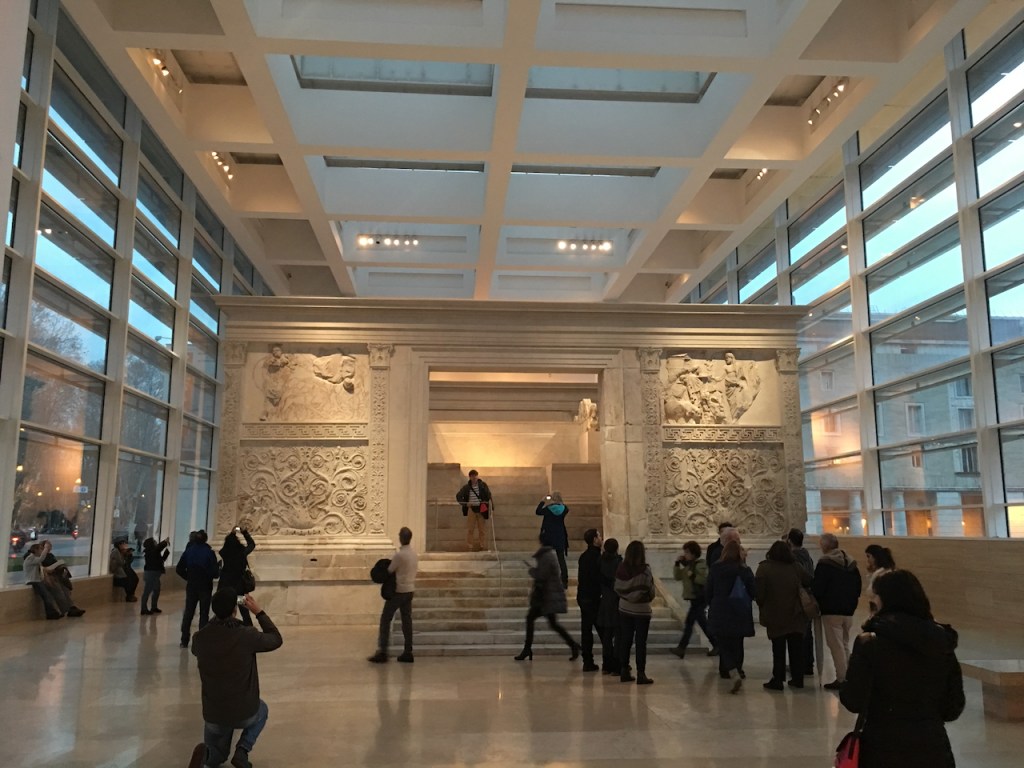
From there, we head across the Tiber River into the historic center. We arrive at the area known as the Ripetta (2). It was once a port, before the building of Rome’s revetment walls to prevent the Tiber from flooding the city. While there, I introduce the students to Piazza Augusto Imperatore, which is home to the Ara Pacis and the Mausoleum of Augustus, Rome’s first emperor. Ara Pacis, or the Altar of Peace, was built in 9BC to honor Augustus upon his return from Gaul. It was further to the north, but Mussolini, Italy’s fascist dictator, restored and rebuilt it on its current site, across from the Mausoleum of Augustus. The Ara Pacis is currently in a quite controversial building designed by American architect Richard Meier.

The Mausoleum of Augustus, which recently opened to the public, was long in a state of disrepair. Over the centuries, it was a garden, a fortress, and a theater. I use this piazza to explain to students about how history works in Rome: yes, it happens in chronological order, but the past is always constantly being repurposed.
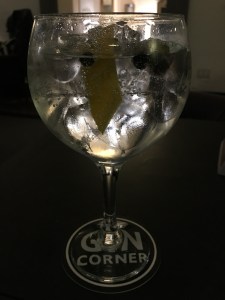
From there, we head down the Via di Ripetta toward Piazza Navona (3). I like Via di Ripetta (which becomes Via della Scrofa). It’s a quiet street that sometimes feels like you’re not even in Rome. It also has off one of its side streets one of my favorite bars in Rome, the Gin Corner, which is in the Hotel Adriano. While perhaps not the place to take a bunch of students, if you’re in Rome on your own, pop in for a gin and tonic or a fancy gin-based cocktail. It’s a great way to beat the heat.
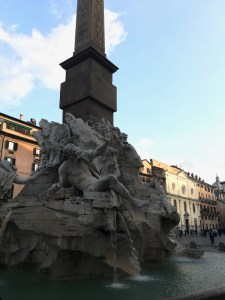
Upon arriving at Piazza Navona, I show students the ruins of the Stadium of Domitian, which Piazza Navona sits on. The Stadium of Domitian was built in the first century AD to host games. Throughout the Middle Ages, it was a marketplace. In the baroque period, it became the centerpiece of the Doria Pamphili family, whose palazzo is now the Brazilian Embassy. At the center of the piazza is Gianlorenzo Bernini’s Fountain of the Four Rivers. I like to stop at Piazza Navona for a bit and let the students wander around its course a few times. It still retains the shape of the old stadium, and the best way to get a feel for the piazza is to meander around it.
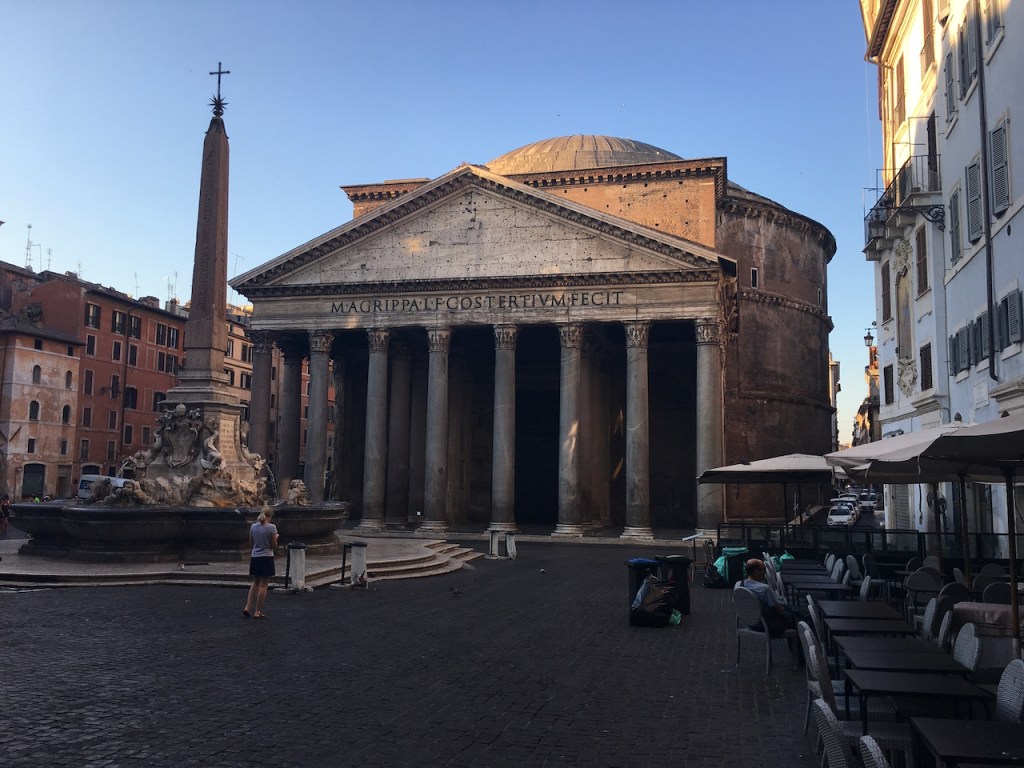
After we regroup, we head to the Pantheon (4). Man, the Pantheon. There is nothing like it. The original structure is no longer there, but the rebuilt version, still from antiquity (it was built by the emperor Hadrian), is one of the most impressive things you’ll see in Rome. I like to take the students inside so they can get the full feel of the structure. Unlike many ancient structures, it’s not a ruin. It’s technically called Santa Maria ad Martyres, and is an active church. The inside is well decorated and contains the tombs of Italy’s kings as well as that artist Raphael. The dome and its oculus, however, are the real treats. If you want to be reminded of how small you are, go in, look up, and remember to lift your jaw from the floor.


After all that, the students (and I!) need a break. From the Pantheon, we head over to Tazza d’Oro, one of Rome’s best coffee shops. But don’t get the coffee. Get the granita di caffè. It’s essentially a frozen coffee slushy with whipped cream. On a hot day, it’s the best thing ever.

After our caffeine recharge, we head to Largo Argentina (5), which is the site of a few temples and the atrium of the Theater of Pompey, which is where Julius Caesar was killed in 44BC. The ruins are fun to look at, but one of my favorite parts of this area is the cat colony. The cats are super friendly and will come right up to you. They’re all vaccinated and cared for, so you don’t need to worry about diseases. And don’t feed them! Just pet them. But that’s enough fun.

After petting cats for a while, we head to the Roman Ghetto (6). Founded in 1555, this was the area where the popes forced the Jews of Rome to live. The Ghetto is now a wonderful neighborhood with a number of delicious restaurants and bakeries. Jews have lived in Rome since antiquity, so we talk about the history of Jews in Rome, and I show them the plaque commemorating the victims of the Nazis. We discuss the history of antisemitism and how urban space becomes marked with prejudice.

From the Ghetto, we move on to Campo de’ Fiori (7). Marketplace by day and touristy watering hole by night, Campo was an execution field. Most famous was Giordano Bruno, who was executed for heresy in 1600. After Italian unification, secular Romans erected a statue to Bruno that stares directly at the Vatican. Not an accident.
We then wander our way toward the river by way of Piazza Farnese (8), home to a massive family palace, the Palazzo Farnese, which is now the French Embassy.
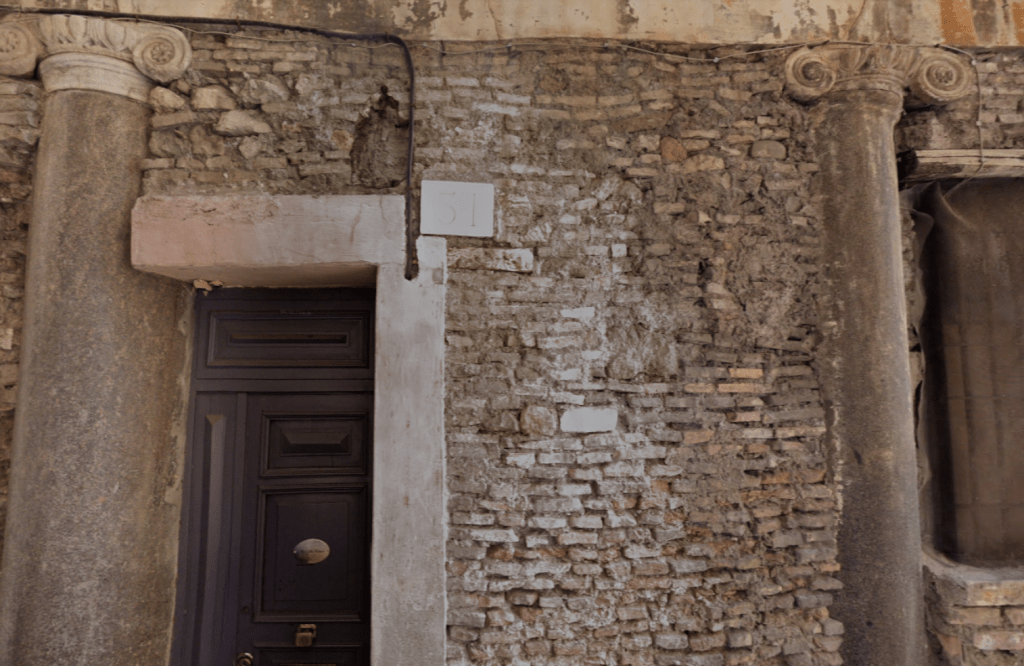
I pause on Via di Capo di Ferro (9), the type of street you’d otherwise ignore because there appears to be nothing there. I stop at #31 to show students something pretty amazing: centuries-old columns embedded in the front of a fairly unassuming building. They’re from ancient Rome, but were repurposed in this medieval building, probably in the twelfth or thirteenth centuries. We pause to talk about why anyone would do this, and what it tells us about how differently people viewed ancient Rome compared to us.
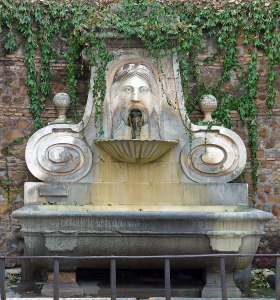
At last, we get to Via Giulia (10), a long and peaceful street built in the sixteenth century by Pope Julius II as a pilgrimage route. In the evenings, it’s perfect for a stroll. There’s some light traffic, but it’s mostly quiet. It’s lined with beautiful palaces, like the back of the Palazzo Farnese, or this cool fountain known as il Mascherone, the big or grotesque mask. At its far end, where we finish, is the church of the Florentines, San Giovanni (11). It’s a nice church to visit, mostly because most tourists skip it. It’s usually empty.
By that point, we’re all famished, and it’s time for dinner. We cross the Ponte Sant’Angelo, skirt around Castel Sant’Angelo (Rome’s old castle), and head back into Prati, where we sit down, eat our weight in pasta, and chat about everything we saw.
This is a great way to get started with Rome. Yes, it’s a lot. But this walk has few lines, no timetable, and has opportunities for pauses along the way: gin, frozen coffee, and cats. What more could you ask for on your first day in Rome?
If you want to recreate this walk, here’s a handy map that shows off my artistic talents.
 Robert Clines, Ph.D.