
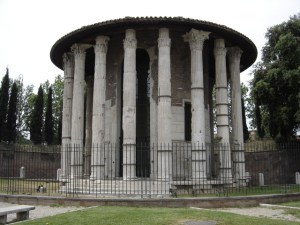
After Walk One, dinner, and a good night’s sleep, the students are usually refreshed and ready to hit the road on day 2. After a traditional Italian breakfast—espresso or cappuccino and a brioche—we head for our first stop on the day’s adventures, Rome’s early markets, the Forum Holitorium, for fruit and vegetables and the Forum Boarium, for cattle. There are a couple temples still in the Forum Boarium, which is right by the Church of Santa Maria in Cosmedin, which we’ll check out in a later walk on medieval churches. It’s a busy intersection now, but is a good place to start our jaunt through the ancient city.

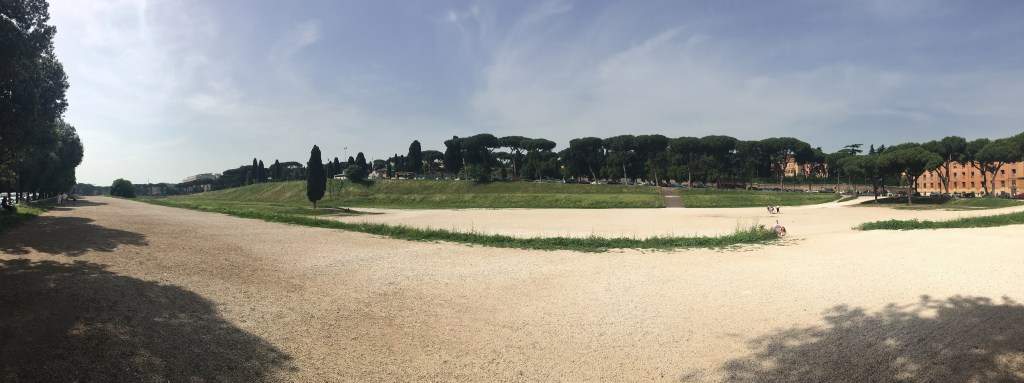
From the Forum Boarium, we walk past Santa Maria in Cosmedin toward the Circus Maximus, the ancient chariot racing course. According to ancient sources, it held between 150,000 to 385,000 spectators, depending on the period we’re talking about. Considering that modern stadiums now hold less than 100,000 people, you can imagine how many people this must have been.
Now, however, there isn’t much to see. There are some remnants of the substructure and some seats toward the south end, but for the most part it’s a large open park. Aside from tourists like us, there are Romans running and walking their dogs around the course, perhaps pretending in their minds to be an ancient chariot superstar. In the morning, when I like to be there, it’s quiet, and the sun is slowly beginning to peak over the the trees. I like to let the students wander around the Circus Maximus for a bit and really get a feel for how big the course is.
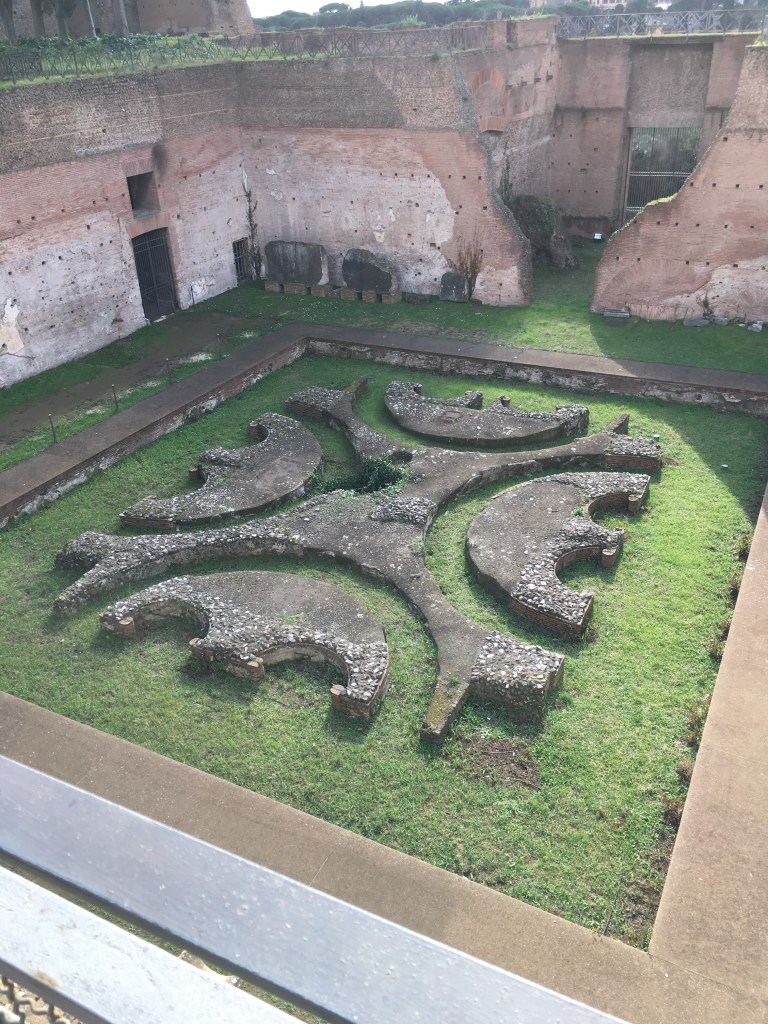
We then meet at the south end and head toward the entrance to the Forum and Palatine Hill. I like to enter at the entrance on Via di San Gregorio, as it tends to have shorter line. You can buy your ticket here, which will cover the Palatine, Forum, and Colosseum. (don’t lose your ticket!) From that entrance, it’s a straight shot up the Palatine Hill, the ancient home of the palaces of the emperors.
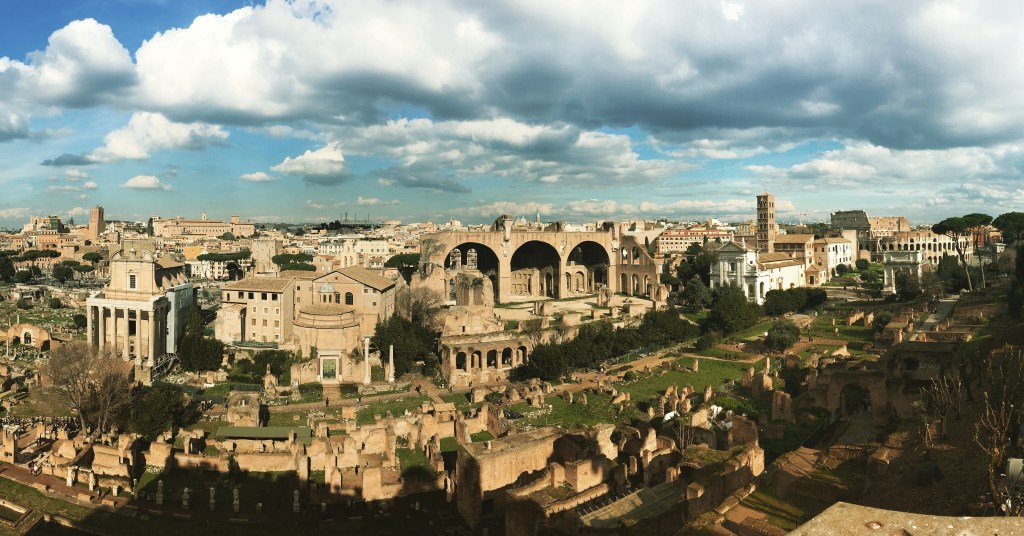
There’s a lot to see on the Palatine, so a good guidebook with a map is a must if you want to know what you’re looking at or where you’re going. Google Maps is good too. I also recommend picking out a few things to find before going, and then to wander around. My favorites are the Domus Augustana and the House of Romulus. I especially like the terrace near the House of Romulus and the Farnese Gardens because they offer great views of the Forum and Capitoline Hill.

I then give them a lot of free time on the Palatine and tell them to meet me back at the entrance. This not only gives me time to wander around myself, but it gives the students the freedom to explore on their own, take pictures, and look up various sites.


Once we reconnect at the foot of the Palatine, we head toward the Arch of Titus. I briefly show them the reliefs of the Sack of Jerusalem in 70AD on the arch, and then we head down the Via Sacra, the ancient main road of the Forum. I point out a few things, like the Senate house, the Temple of the Vestal Virgins, and the Column of Phocas, which was the last monument placed in the Forum, in the seventh century. While we’re walking, I also point out a few medieval churches built into ancient structures, like S. Lorenzo in Miranda and SS. Cosma e Damiano.
I’ve found that students get very easily overwhelmed in the Forum, as it’s hard to sort out all of the various monuments. So I try to keep my lecturing to a minimum and let them explore and discover on their own, and then tell them to meet me later in the day at the Colosseum, after lunch. Some students will stick around the Forum, or go back up to the Palatine. Others will head for the nearby neighborhood of Monti, which has some lovely shops and restaurants.
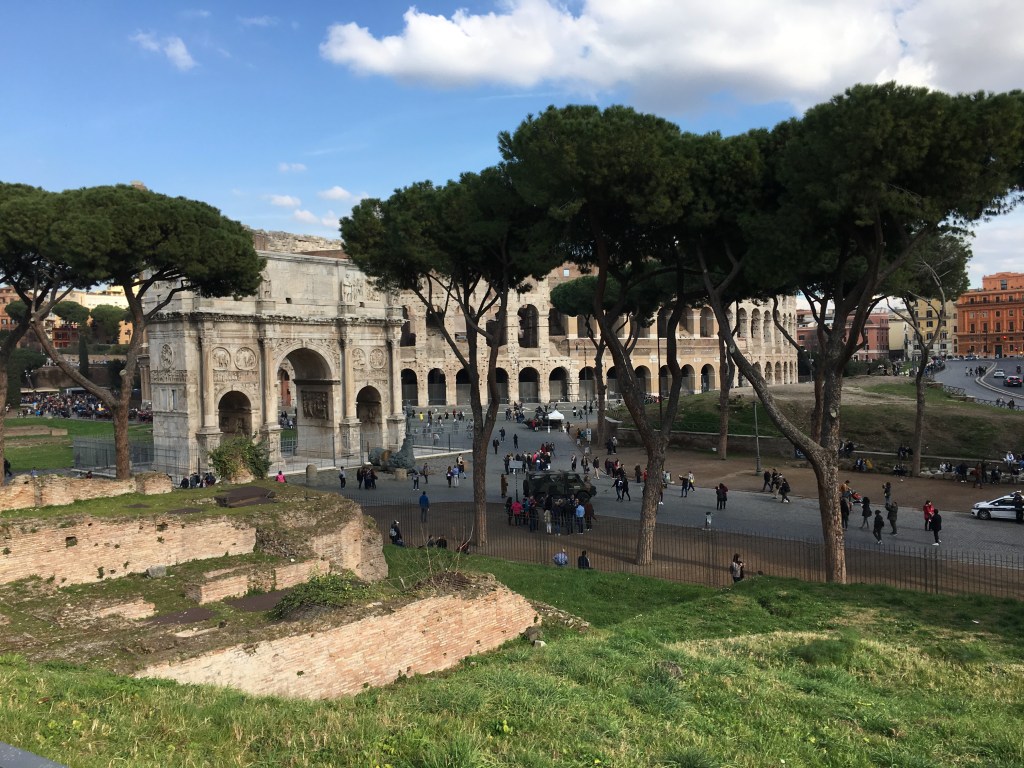
After lunch is the Colosseum. Depending on the time of year and the heat, you can either go into the Colosseum immediately after lunch, around 2 or 3, depending on how long you make your lunch, or you can wait until it cools down a bit, around 4:30, or later, if it’s still open. Check the opening times, as they change throughout the year. There are also night tours, which can be fun. I like to do the Colosseum in the late afternoon or evening.
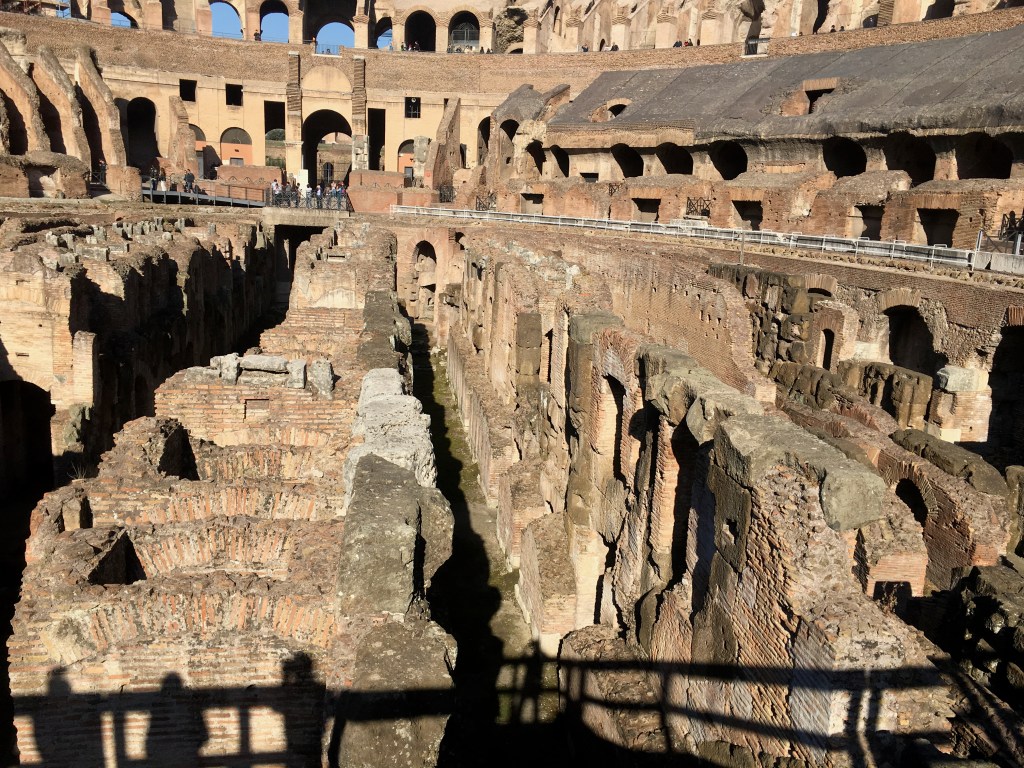
I generally let the students roam around and do their own thing, but one thing we do as a group is go down into the Hypogeum, the underpart of the Colosseum where gladiators would be staged. There is a reconstruction of an ancient elevator there as well.
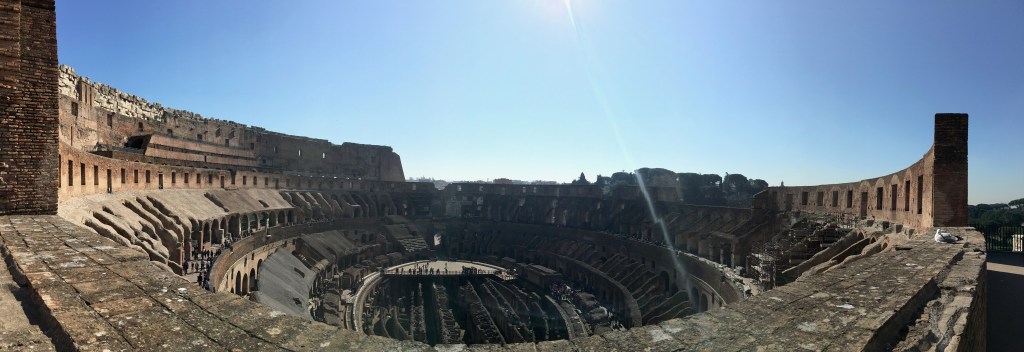
There’s a lot going on at the Colosseum. You could probably spend a whole day, or at least several hours, exploring all of its arches, stairways, levels, and crevices. One thing I always tell students is to look for flora and fauna. Once they start, they can’t stop pointing out moss, twigs, and branches, as well as lizards, birds, and even cats! It’s a reminder of the Colosseum’s complex ecosystem that is unique, even in Rome. But beyond that, they explore on their own and then I tell them I’ll see them at dinner.
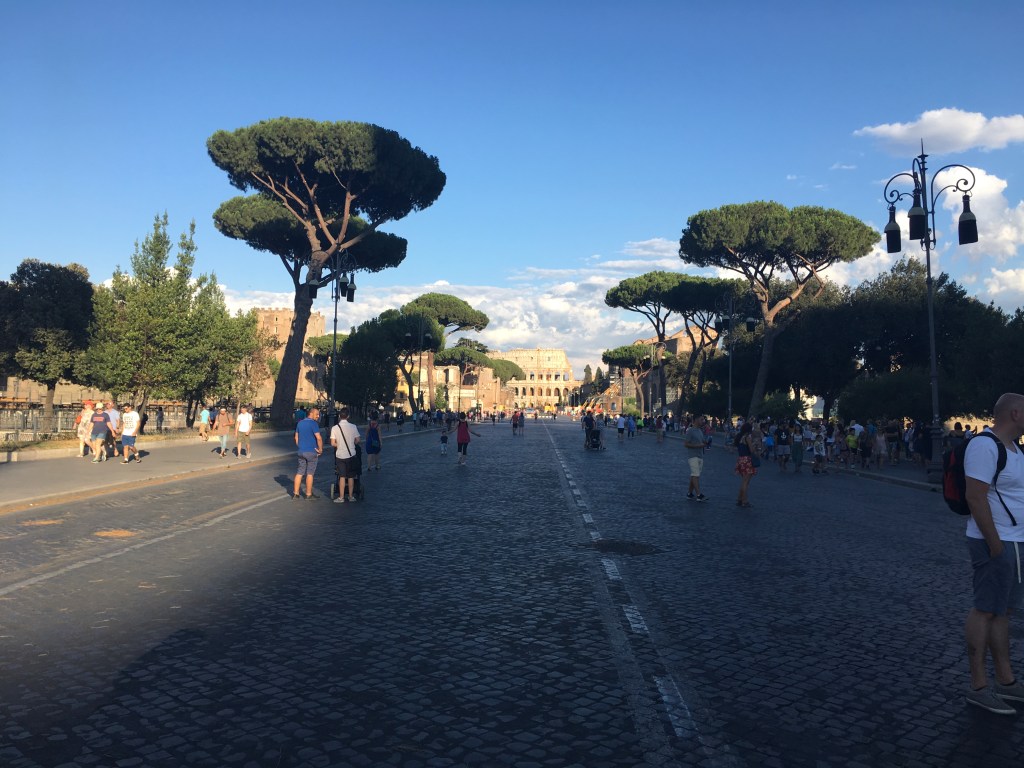
If I’m leaving the Colosseum around 4 or 5, it can be really hot. If so, I head straight for the Metro and my air conditioned apartment. But if it’s slightly later, I will head for Via dei Fori Imperiali, which is lovely in the evening. There’s a light breeze, the lights come on, and the shadows of the setting sun are really something to be seen. After that, it’s on to dinner, with perhaps a quick stop for an Aperol Spritz along the way.
It’s a long day, but a rewarding one, from beginning to end.
 Robert Clines, Ph.D.