

I’ve been fairly distracted the past few months, and so the old blog got completely ignored! But I wanted to pop in before we head off to Ohio to visit family to pick up from where I left off with my Rome course. When I last left it, we were finishing our walk along the Queen of Roads, the Via Appia Antica. Continuing on with antiquity, we head down the Appian Way and just keep going… all the way to Pompeii!
That’s right, this next walk is no walk at all. It’s a full-on overnight trip to the Gulf of Naples, where we visit the excavations at Pompeii, which was buried by the eruption of Mount Vesuvius in 79AD. In addition to Pompeii, we also check out Sorrento and Capri. They’re wonderful places to sit back and relax, but if you know what you’re looking for, there are ancient wonders right around the corner.

Pompeii is easy to access from Rome. There are trains from Roma Termini train station to Napoli Centrale, where you can pick up the Circumvesuviana commuter train, which stops right at Pompeii. With a group of 15 students, however, we opt for a private bus. This is an option too, but isn’t as cost-effective as the train. The trip takes between 2-3 hours, depending on how you get there. We usually leave Rome first thing in the morning to get to Pompeii just as it opens. This is the best way to maximize your time.
Once we arrive and we get through the ticket line, I split the tour with students up between group discussion and then free exploration. Pompeii is larger than you might think, so I find that students, and I, get overwhelmed with it if we try to do it all together. I take them to a few places I think are most important—the theater, amphitheater, forum, and House of the Vettii with its frescoes—and then I turn the students loose.
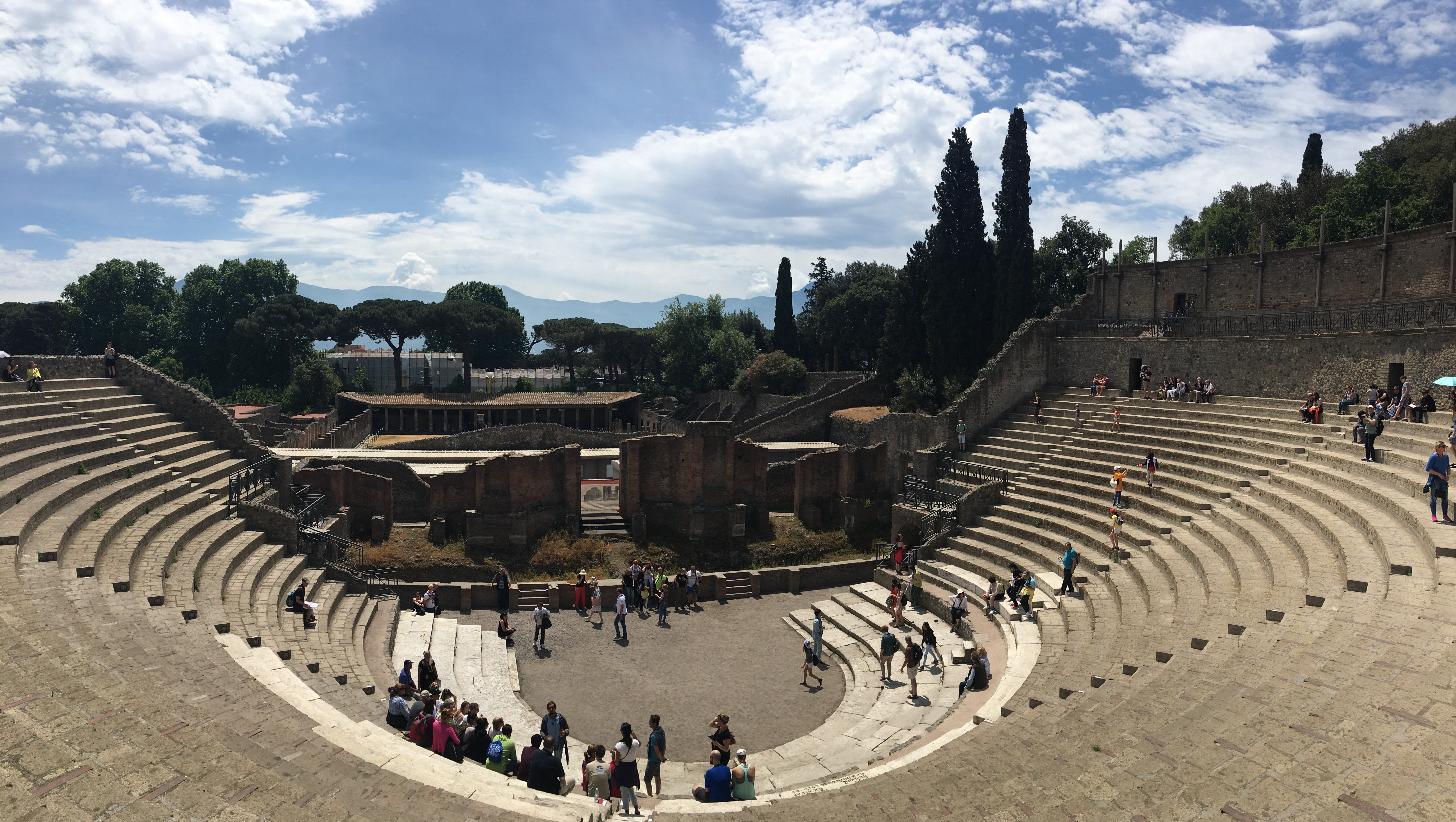
I find this is a good balance. It gives us some time to discuss Pompeii together and allows the students to wander around and imagine for themselves what it must have been like 2000 years ago. It takes us about an hour or so to do the group activities, and then we split up for at least two hours, ideally three. Depending on time or evening plans, I’ll let the students stay as long as they like. Sometimes, it can be really hot, so we only do 2 hours or so.
After Pompeii, we get back on our bus and head to Sorrento. The drive down the coast is breathtaking: shimmering waters, boats in the distance, precipitous cliffs, and verdant hills. The view on the train is pretty spectacular, but there’s something exhilarating about being on a bus on the winding roads along the coast.

Once in Sorrento, we settle into our accommodations and then hit the town. Sorrento is pretty tiny compared to Rome and is far more sleepy than Rome or Naples. It’s a resort town that is best known for il dolce far niente, the sweetness of doing nothing. You can go limoncello tasting, get great sea food, or just people watch along the Corso Italia, Sorrento’s main drag.
It’s a wonderful place to be in the evenings. Sunsets are a dream, and night breezes take the edge off after a hot day in the sun. I personally like to get an ice cold Aperol Spritz before dinner, and then fill up on whatever is fresh from the sea. I then cap it off with a limoncello and have a slow wander around town before bed in our seaside hotel.
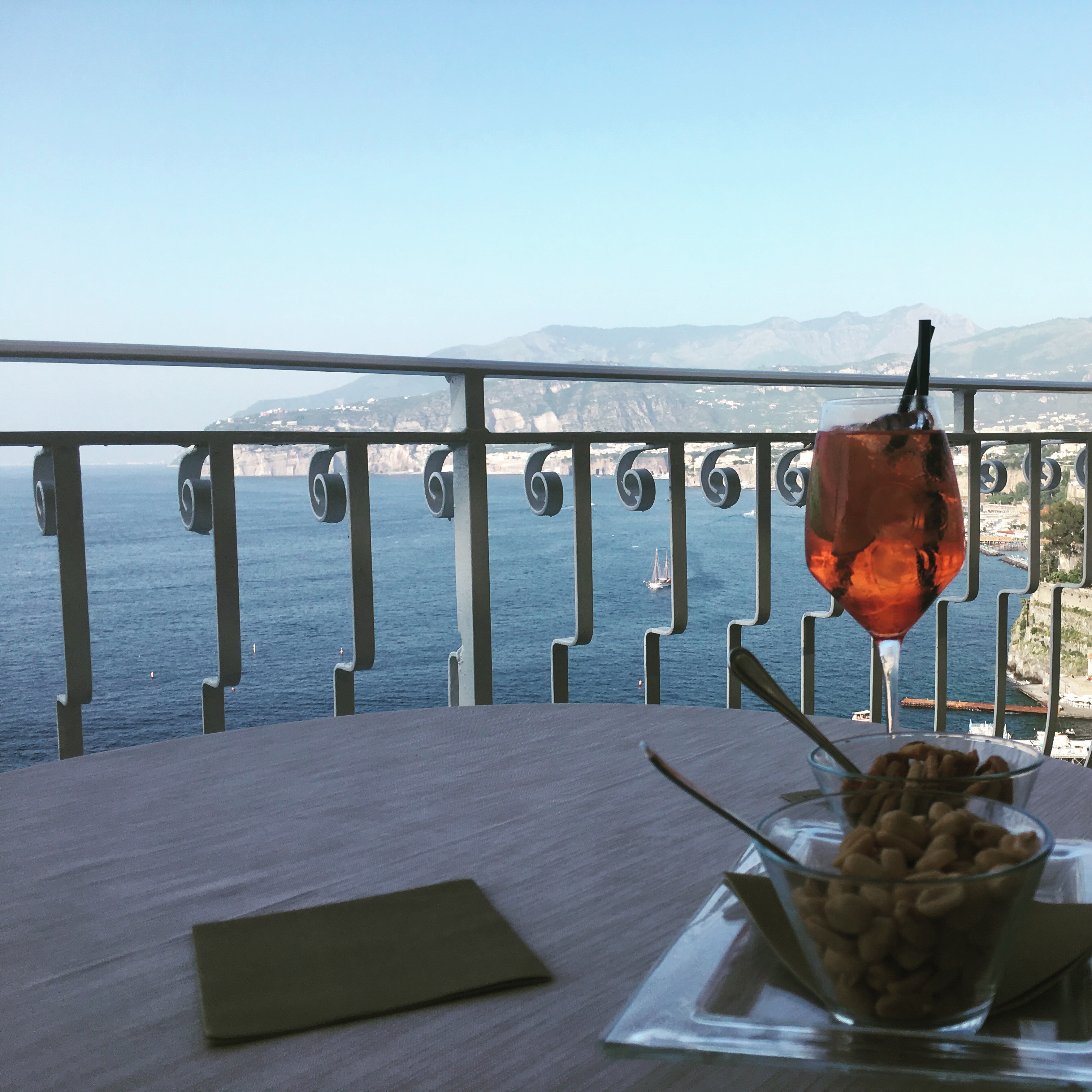
Rest is essential, because first thing in the morning, we’re off to the marina to catch the ferry to Capri. Perhaps best known for being Sorrento’s island twin—R&R are why most go to Capri—it has plenty of history. I take students up to the Villa Jovis, the Roman Emperor Tiberius’s ancient pleasure palace set at the top of a precipice on the island’s eastern side.
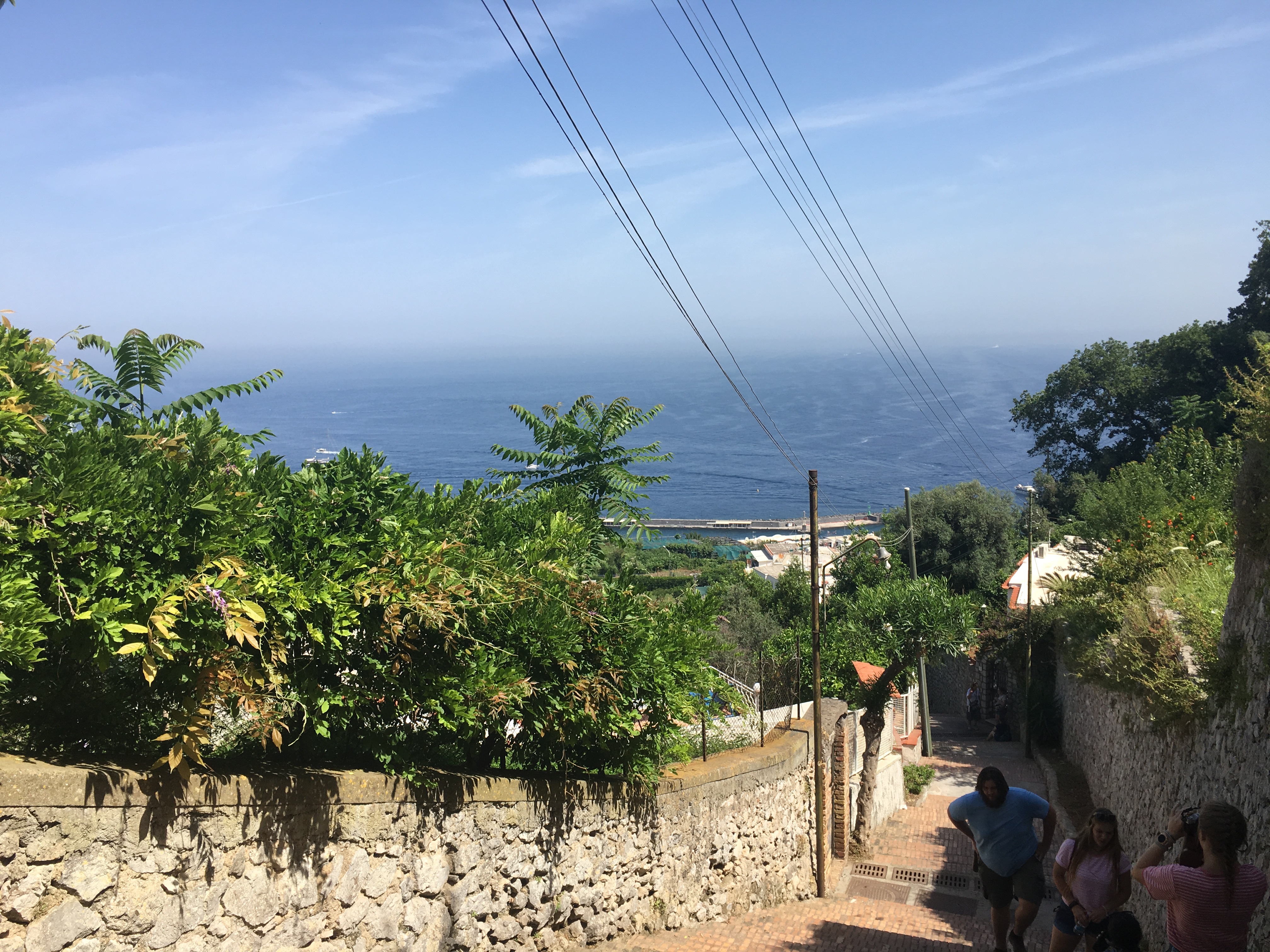
There’s no pleasure in getting there, however, as the 245M incline is not for the weak. There is the funicular that takes you to the Piazzetta, a nice place for a drink. But that only gets you about 1/3 of the way there. The rest is all on foot. But it’s so worth it. Once you get there, you realize why Tiberius wanted to be there, and why he never wanted to leave.
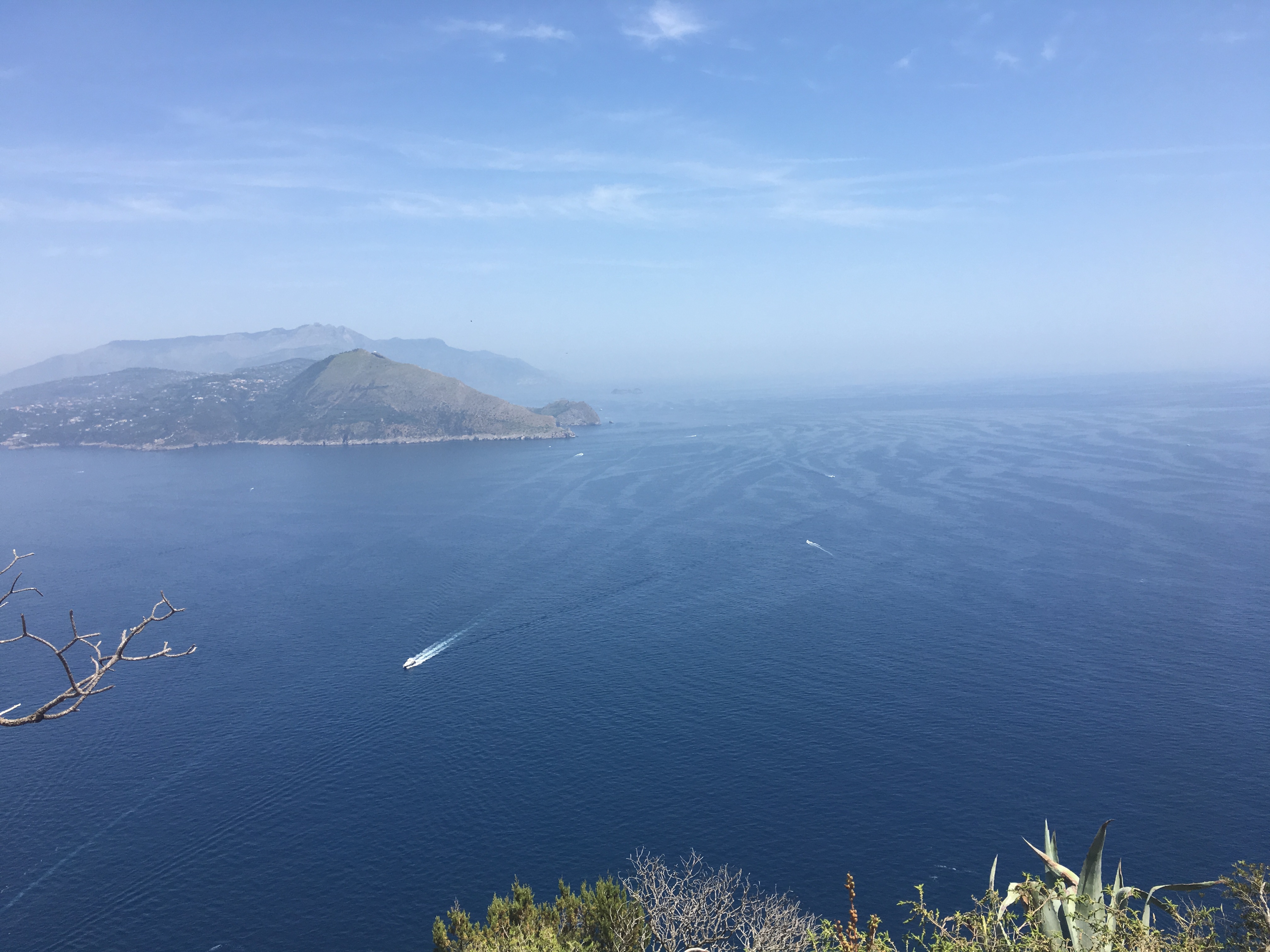
Alas, leave we must! We head back down toward the Piazzetta, and then on to the ferry to Naples, where our bus awaits to carry us back to Rome.
What a two-day journey! But it’s a nice escape from the hustle and bustle of Rome. Up next, though, is more exploration in the Eternal City, as antiquity comes to an end and the Christian Era is upon us!
 Robert Clines, Ph.D.