
The semester has been a busy one, so the blog has been forgotten. However! I submitted my application for the 2022 trip to Rome and, as long as everything goes according to plan, 15 students and I will be in Rome in May!
So, it’s time to get back to going through the itinerary. Last post, we visited Pompeii and Paestum. After returning to Rome from the South, we begin the following morning with walks through time, as we visit a number of Rome’s spolia churches.
What is a spolia church? Well, it’s basically a medieval church that uses a lot of ancient building materials that are repurposed in interesting and innovative ways. Long thought to be evidence of decline and decay in Rome, we now see it as a transition in how the city functioned architecturally, as pagan buildings ceased to be meaningful and Christians saw them as convenient quarries for high quality materials.
I have to say, this is one of my favorite walks, which I could say about any of them. But I really mean it. These are fun churches. What I love about the spolia churches is how different they are. In a sense, there’s no such thing as a spolia church. Each is unique. But what they share is this use of ancient materials in interesting ways.

We begin the walk at one of Rome’s greatest hidden gems, San Clemente. It used to be far less popular, and cheaper! But it’s gotten a lot of notice as of late for good reason. It’s really 3 buildings in one: an eleventh-century church built on top of a fourth-century church, built on top of a second-century mithraeum that was originally a republican-era villa that had been destroyed in the fire of 64AD. Each layer has something to offer, and students love to spend as much time in the church as they can. Between the beautiful apse mosaic and the space dedicated to Mithras in the lowest level, there is plenty to see and do.

We could spend hours in San Clemente. But spolia wait for no one! We’re off to Santo Stefano Rotondo, which as its name implies is a circular church. Originally built in the 5th century, the circular church is unique for its appearance as well as its acoustics. It’s one of my favorite places to hear a sung mass. Like San Clemente, it also has a Mithraeum, but it’s not as thoroughly excavated as San Clemente’s. I also like Santo Stefano because it’s not on anyone’s radar. Every time I’ve gone in, I’ve had it mostly to myself.

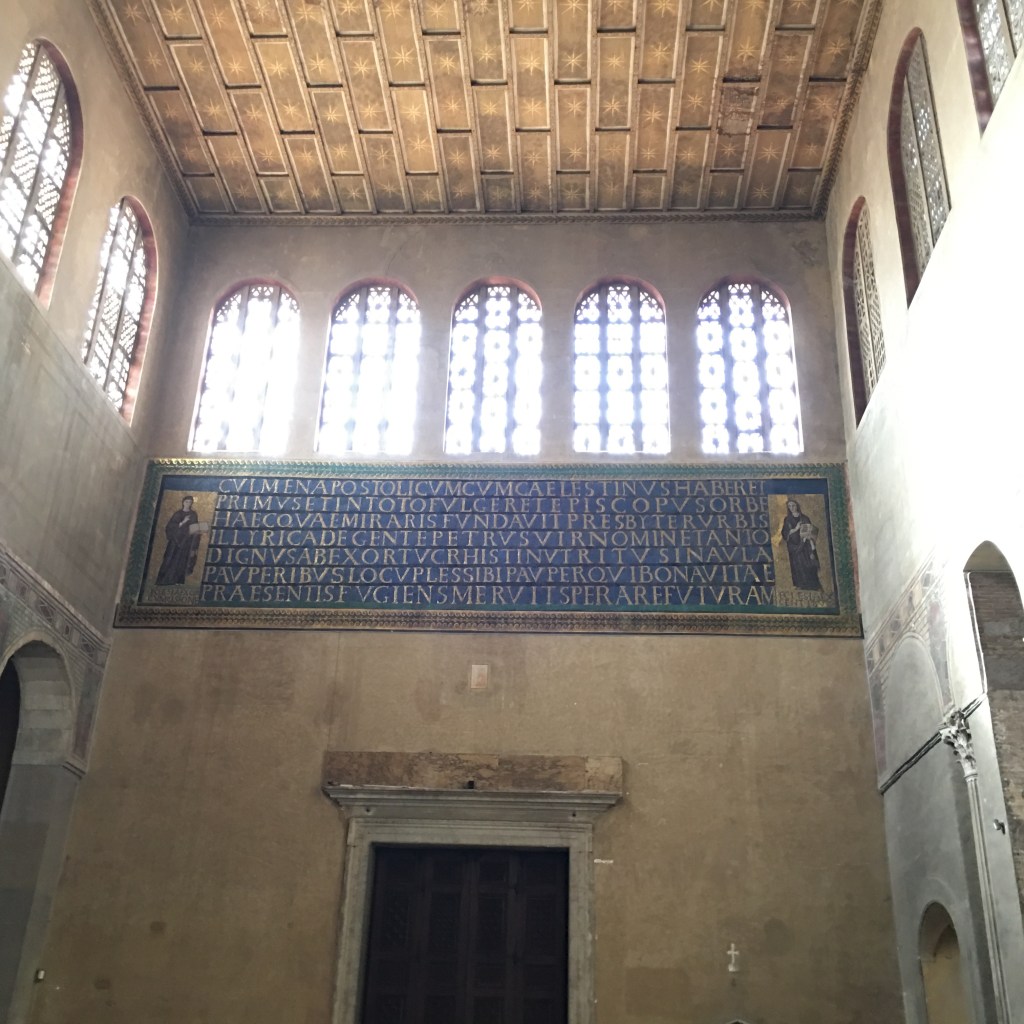
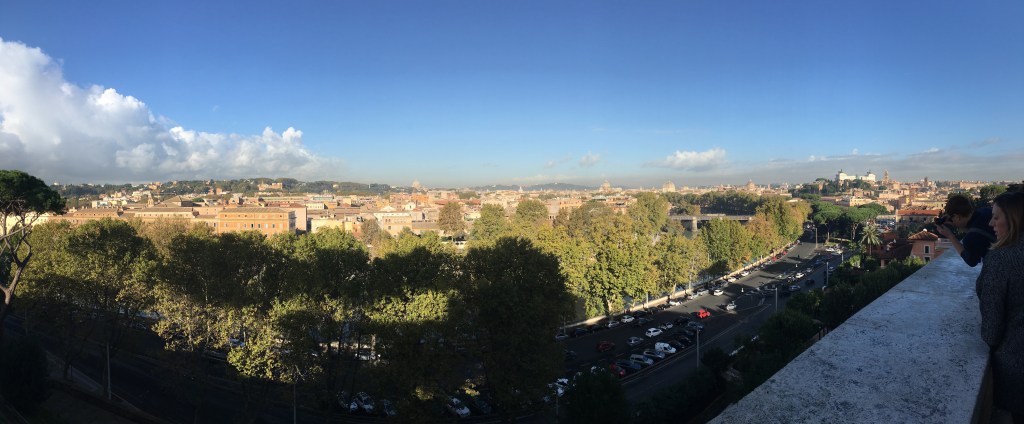
From Santo Stefano, we make our way up the Aventine Hill to visit Santa Sabina, which is the oldest basilica in Rome. It’s a simple church, but is adorned with beautiful columns and a wonderful mosaic, as well as beautiful wood doors with Bible scenes. It’s also right next to an orange garden, which is a great place to watch a sunset, as it overlooks Rome looking westward. While on the Aventine, we also look through the famous keyhole at the compound of the Knights of Malta, which allows students to see all the way to St. Peter’s!

From Santa Sabina, we head down the hill to Santa Maria in Cosmedin. Like Santa Sabina, it’s a simple church with a plain interior. But its columns are ancient and have been repurposed for the structure. It’s also home to the Mouth of Truth, most famous for almost biting off the hand of Audrey Hepburn in the classic film Roman Holiday. Santa Maria in Cosmedin was originally for the Greek community of Rome, and still serves Rome’s Greek Melkite Catholics.

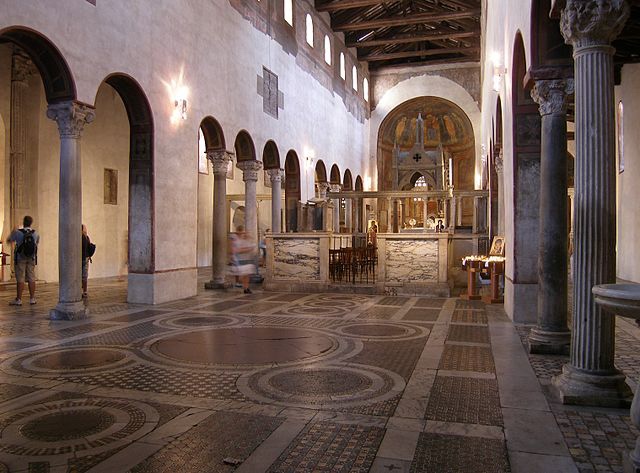
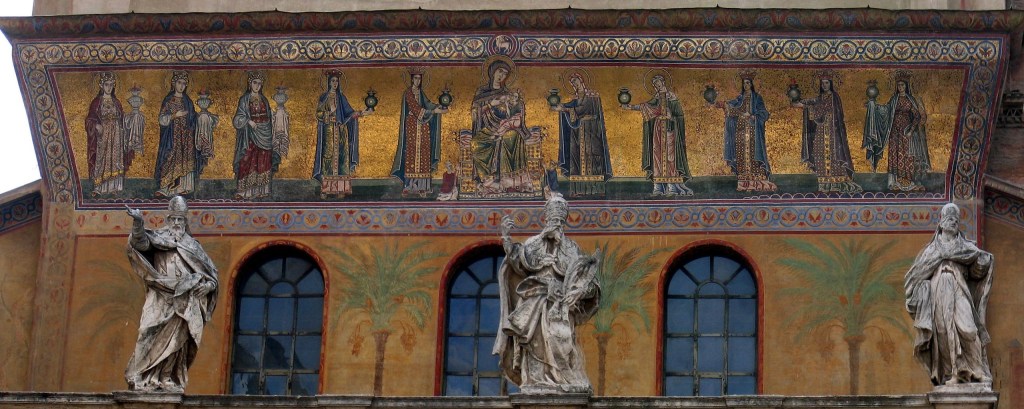
The last church we visit for the day is on the other side of the river in Trastevere, Santa Maria in Trastevere. This is a stunning early church, especially in the evening, when the church is lit up. Its portico also has a wide array of spolia to check out. And the interior is a sight to see. Like the façade, it’s littered with flickering light reflecting off the mosaics. Like the others, it makes great use of local materials.


This was just a sampling. There are many others we could have included: Sant’Agnese, Santa Constanza, San Giorgio in Velabro, San Lorenzo, San Nicola in Carcere, and others. You could spend a whole week just visiting spolia churches. And it would be a great way to see Rome.
Up next on the trip is what many see as the pinnacle of Christian Rome: The Vatican!

 Robert Clines, Ph.D.