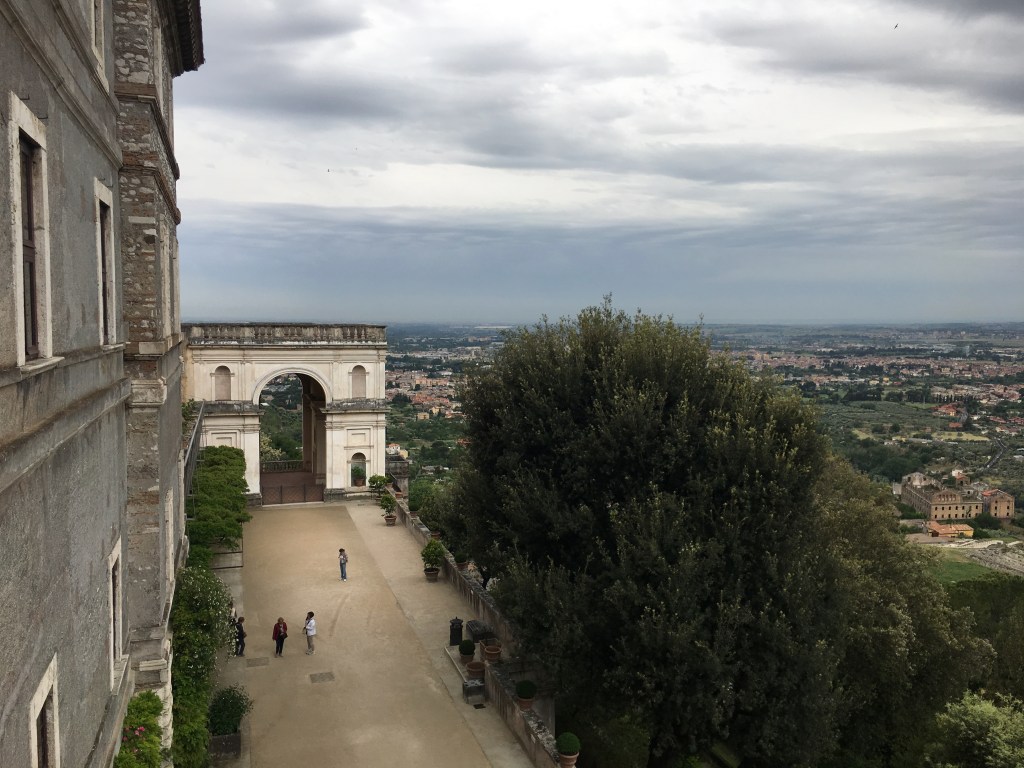
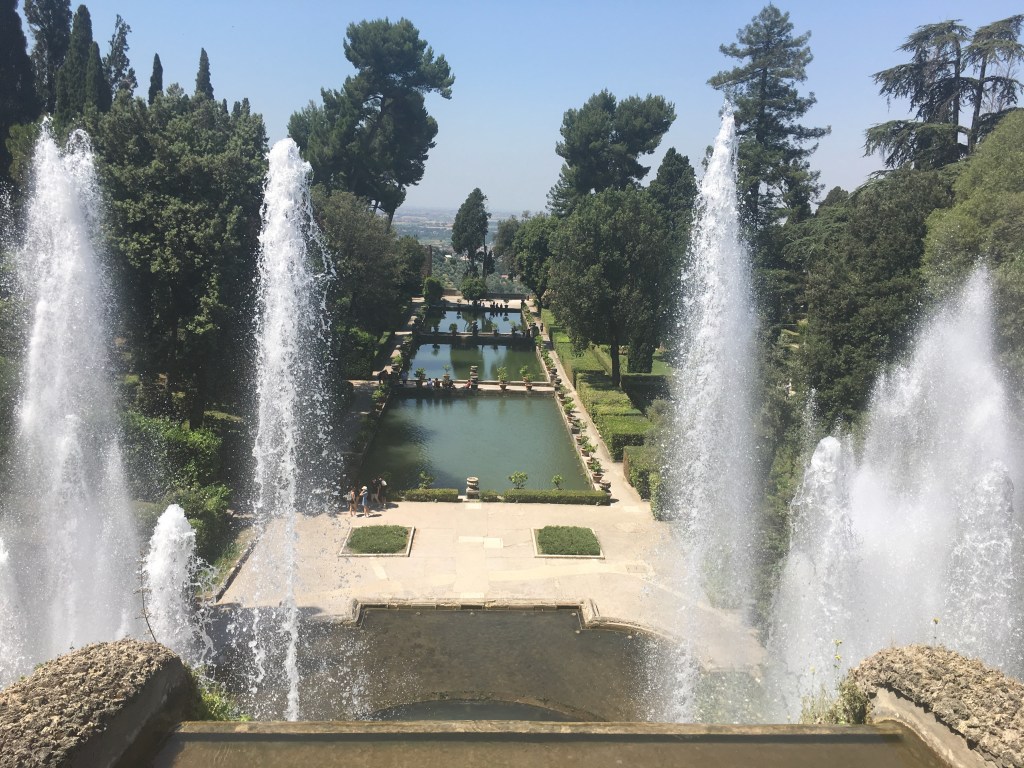
The view of the Roman countryside from the palace at Villa d’Este
Renaissance Rome might have been full of amazing art and monumental architecture. But it was also full of intrigue and violence. Assassinations, poisonings, internecine violence. Renaissance Rome could be a tough place to make a name for yourself. And even if you did reach the pinnacle of power you were hardly immune. If anything, the more power and influence you had, the more enemies you could count on.
Cardinal Ippolito II d’Este, owner of Villa d’Este
This was the experience of Cardinal Ippolito d’Este, son of Alfonso I d’Este, Duke of Ferrara, and Lucrezia Borgia, daughter of Pope Alexander VI and sister of Cesare Borgia. Born in 1509, he was the younger brother of Ercole, the heir to the Duchy of Ferrara. So he entered the Catholic Church to begin his ecclesiastical career, becoming Archbishop of Milan at the ripe old age of 10! He was made a Cardinal before he turned 30. He used all of the family money, connections, and alliances he could to ensure that his rise would continue. It was clear that Ippolito was on a fast track to the papacy itself.
When Pope Paul III died in 1549, Ippolito was sure it was his time. But it wasn’t meant to be. While he had the backing of the French, ultimately the German-favored Julius III was elected. In exchange for withdrawing his candidacy, Ippolito was granted governorship over the town of Tivoli, in the hills outside Rome. While he would try a few more times to become pope, he ultimately settled into his position in Tivoli, building a villa for the ages: Villa d’Este, a monumental Renaissance villa full of gardens, fountains, and breathtaking views of the countryside around Rome.
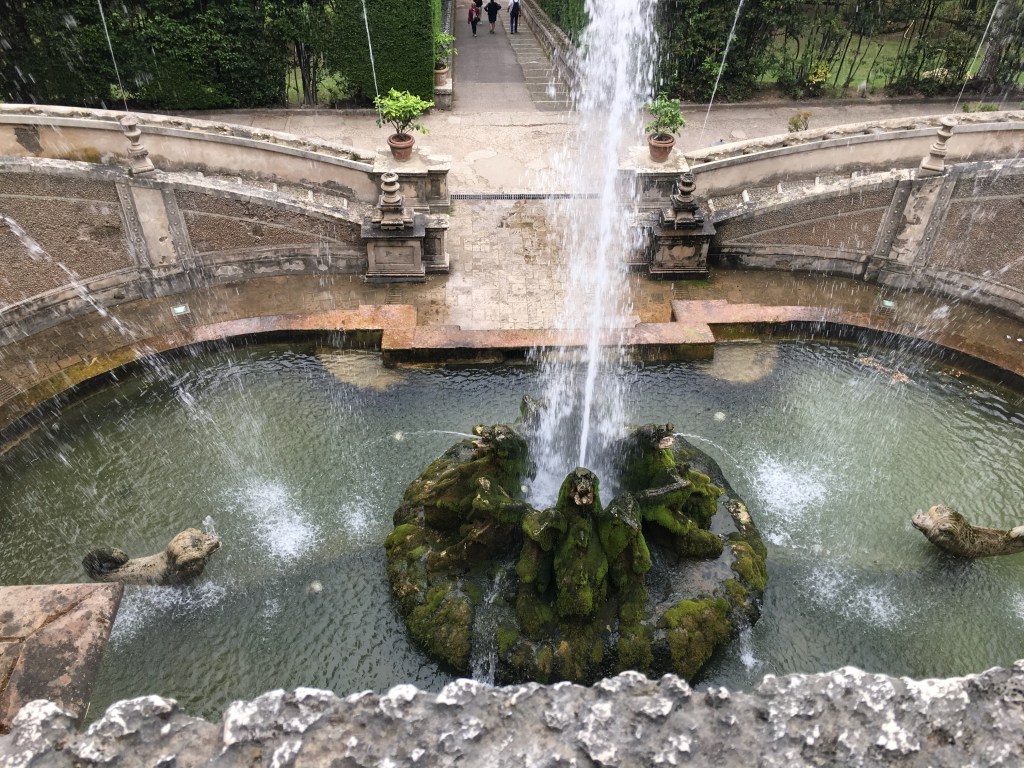
The Fountain of the Dragons
I love to take students here for a day trip. It’s a quick bus ride from Rome and is the perfect bucolic getaway after long days in the Roman sun. It’s no wonder Ippolito settled into Tivoli and built his villa there. The place really gives you a sense of how the rich and famous lived in their country estates.
The gardens of Villa d’Este on a fresco inside the Villa palace
While the palace has some beautiful frescoes, the real treat is the garden. It’s easy to get lost in the maze of plants, stone, and fountains. Villa d’Este is a marvel of Renaissance engineering. Without modern hydraulics, the fountains and ponds are a wonder to behold.
The Oval Fountain
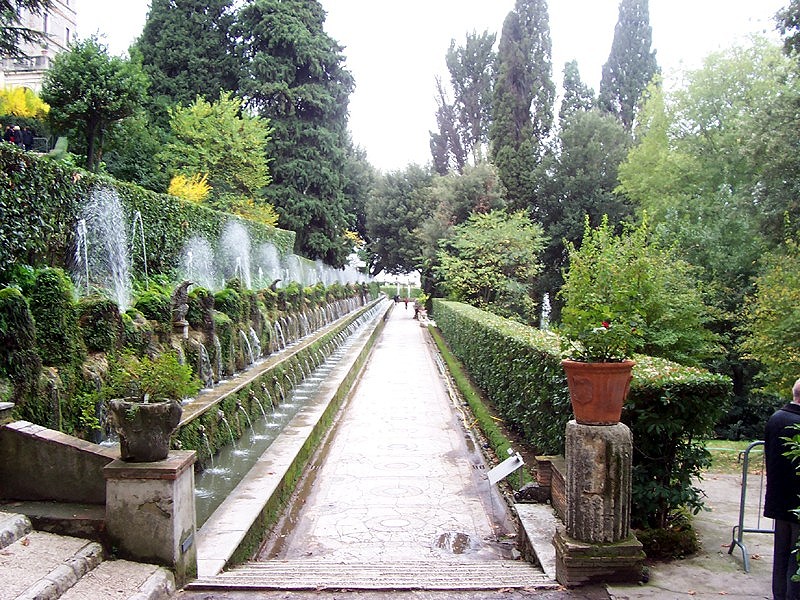
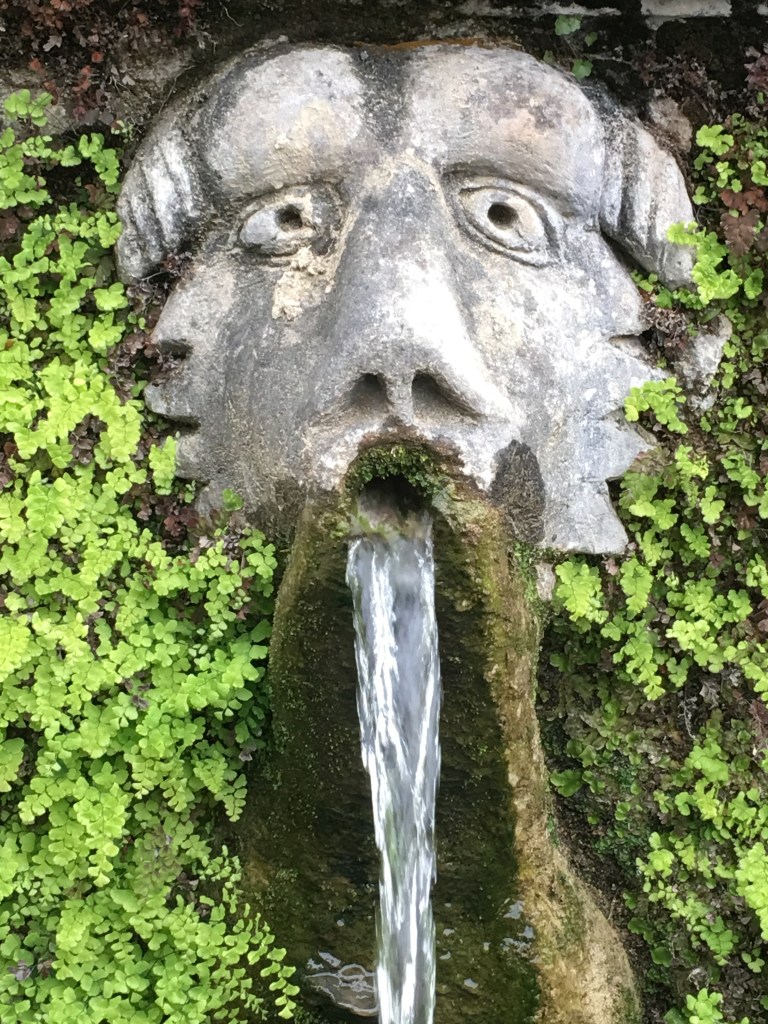
My personal favorite is the One Hundred Fountains, a long walkway linked with grotesque masks that each spew out a little stream of water. The sound of the One Hundred Fountains is tranquil, perfect for a slow walk.
The One Hundred FountainsOne of the masks of the One Hundred Fountains
I also love the Fountain of the Organ, which plays music actually created by the water itself! And when you turn around, you get a stunning view of the whole of the gardens, with the Roman countryside off in the distance.
The Organ FountainThe view of the gardens from the platform below the Organ Fountain, with the Roman countryside in the background
After visiting the gardens, I take the students into town and we have lunch in Tivoli. It’s an ancient city, so I let them wander on their own a bit after lunch before heading back to Rome. It’s a relaxing day, and after all that walking in the heat, a day in the hills is exactly what we all need.
Toward the end of the Middle Ages, the popes left Rome for southern France. In 1420, however, Martin V returned to Rome and began the long process of turning it into the city we now know: one of churches, palaces, and wide avenues.
Raphael’s School of Athens, one of many amazing works of art in the Vatican Museums
Taking the students through the Rome of the Renaissance Popes is one of my favorite parts of the trip. Not only does it mean I get to talk about some of my own research, but it also means I get to re-visit some of my favorite pieces of art!
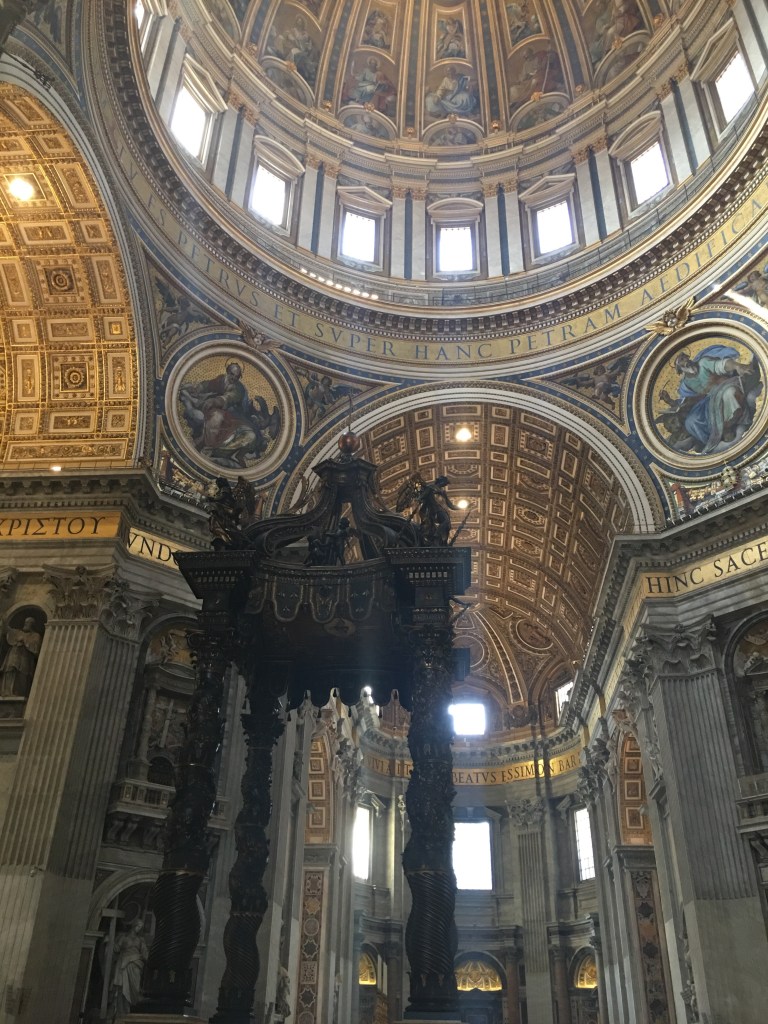
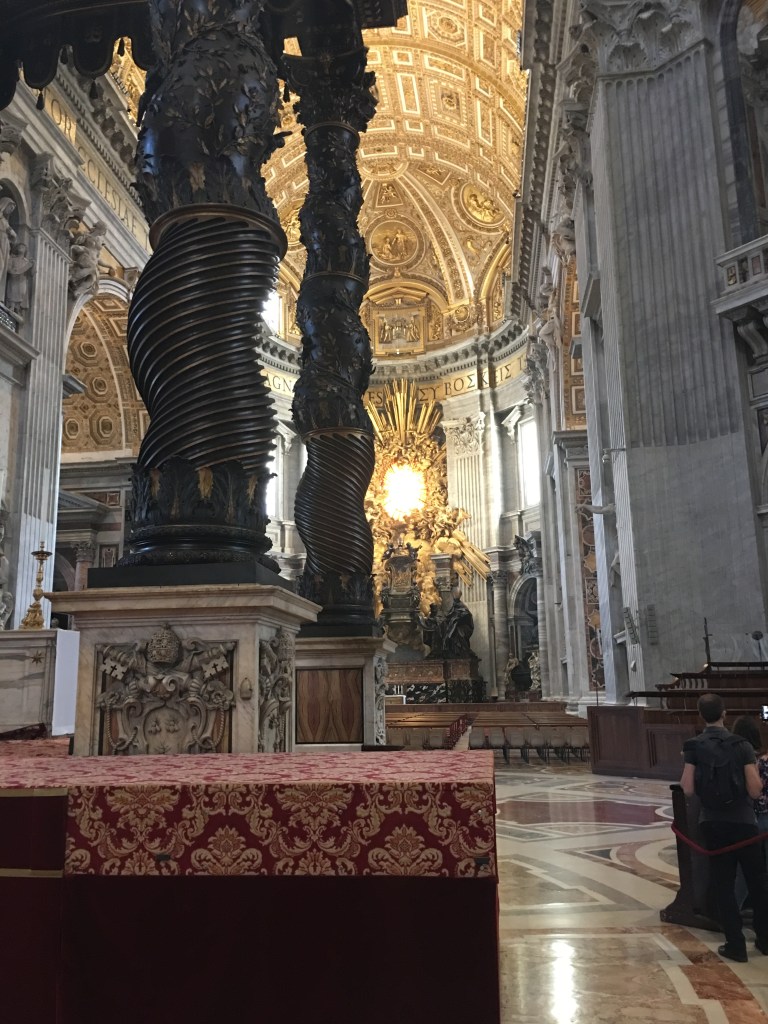
Bernini’s Baldacchino in St. Peter’s, the bronze canopy over the high altar
Renaissance Rome is a monumental city. It’s St. Peter’s, the Vatican Palace, obelisks, massive palazzi. I love showing the students all that Renaissance Rome has to offer. We start small(ish) and then finish with a bang. This is just a sampling.
The first place I take students is Villa Farnesina, which was built by the Sienese financier Agostino Chigi. Chigi made his fortune as the banker to Pope Alexander VI, as well as monopolies on salt and alum, a crucial element for textile manufacturing. Built between 1506-1510, Villa Farnesina was Chigi’s pleasure palace in the Roman neighborhood of Trastevere. It has wall frescoes from painters such as Raphael, Sebastiano del Piombo, and Giulio Romano.
The Loggia di Psiche from the garden of Villa Farnesina
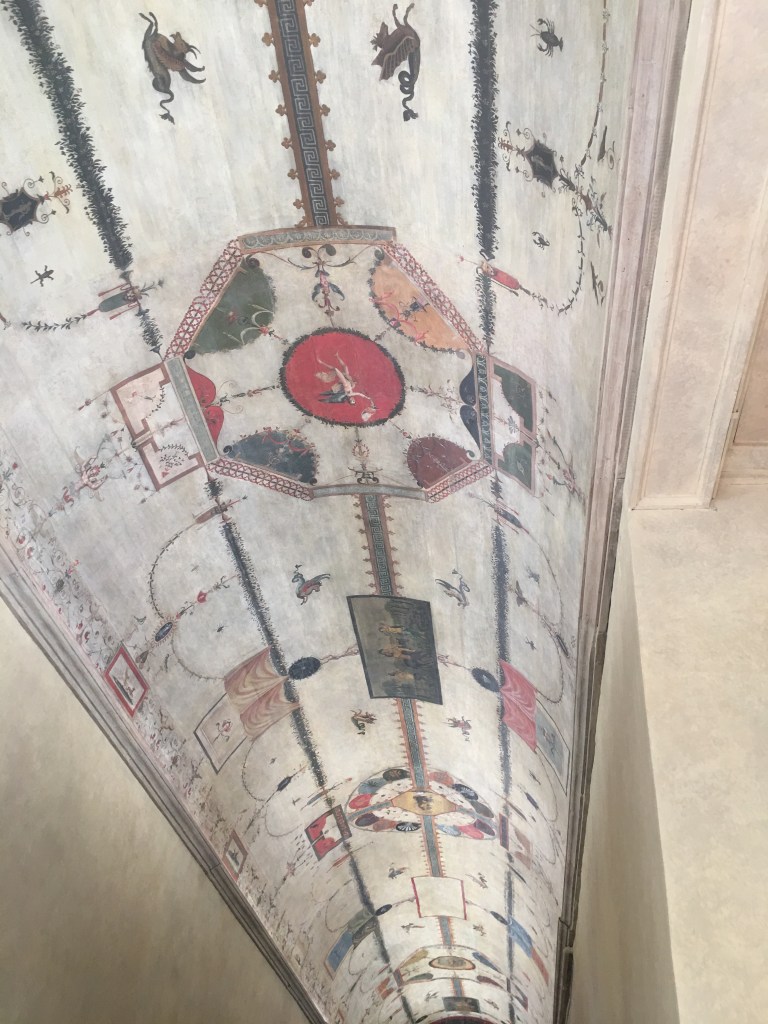
I love Villa Farnesina for a lot of reasons. The amazing frescoes in the Loggia di Psiche or the grotesque paintings in the stairwell tell us a lot about Renaissance tastes and how individuals like Agostino Chigi wanted to live in lavish homes. I especially love to point out to students how some of the earliest depictions of foods from the Americas are in the frescoes of Villa Farnesina.
The vault of the Loggia di Psiche in Villa Farnesina. The green garland contains many foods from the Americas, such as corn, pumpkins, and other gourdsGrotesque fresco in the stairwell of Villa Farnesina. This style of fresco became famous in Rome after the Renaissance discovery of similar frescoes from antiquity in the Domus Aurea of Nero.
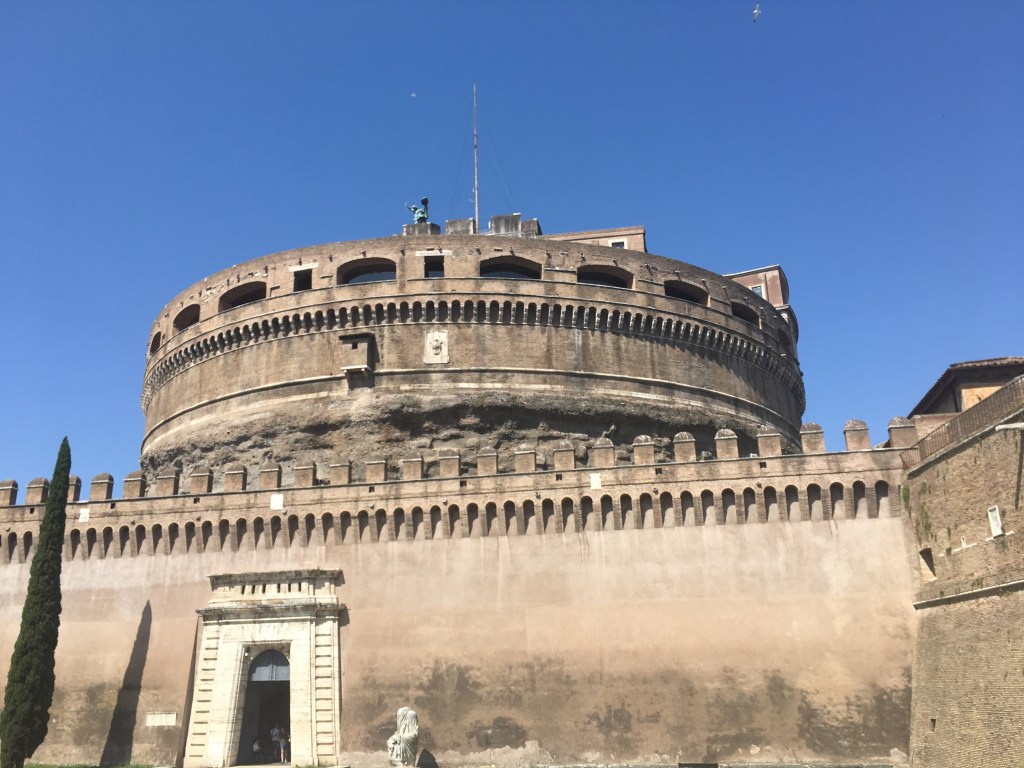
But Chigi’s wealth pales in comparison to the popes’. From Trastevere, we walk toward the Vatican, stopping off at Castel Sant’Angelo. Originally built as the mausoleum of the Emperor Hadrian in the second century AD, it was converted into a fortress in the Middle Ages. In the Renaissance, it was linked to the Vatican by a walkway atop the city walls. During the 1527 Sack of Rome, Pope Clement VII hid here along with the painter Benvenuto Cellini, who claimed he killed the attacking commander with a single shot. It was also a formidable prison, housing famous prisoners such as Cellini and Giordano Bruno. It’s now a state-run museum that hosts a number of rotating art installations.
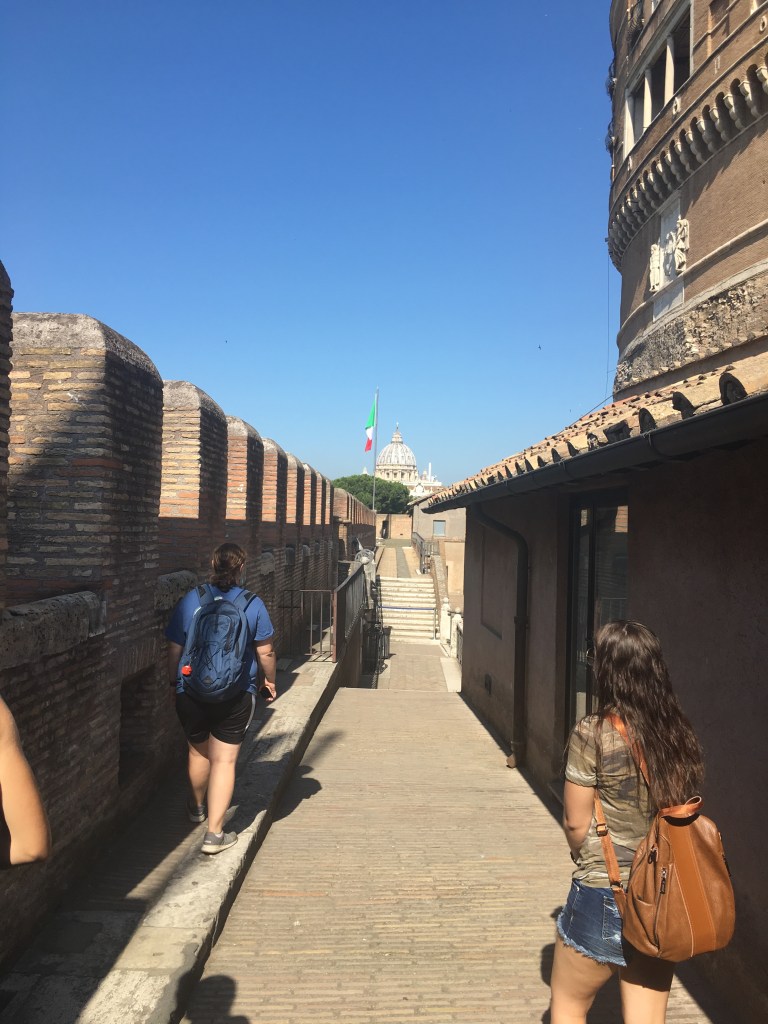
One of the many ramparts of Castel Sant’Angelo with St. Peter’s in the backgroundThe main drum of Castel Sant’Angelo
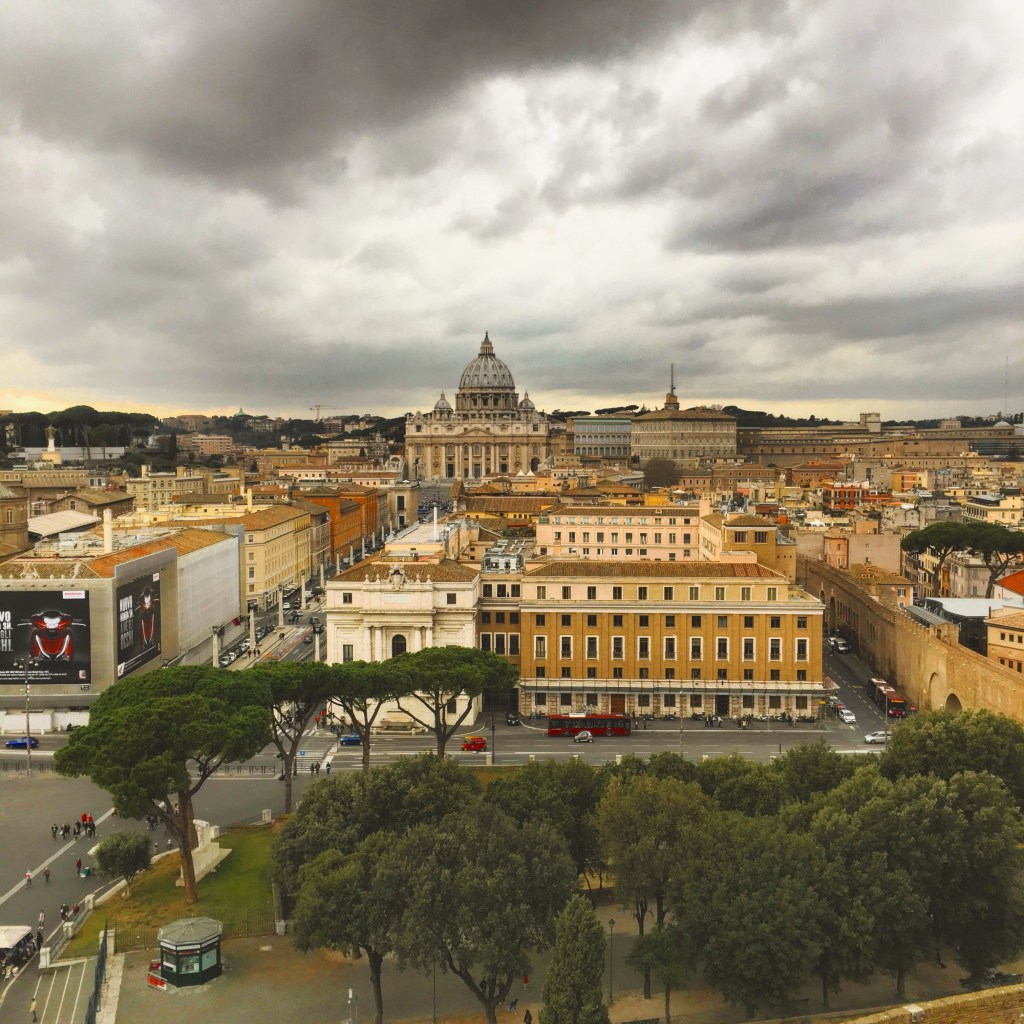
I really love Castel Sant’Angelo. I enjoy walking the walls and seeing the many rooms of the castle. There’s even a wonderful cafe, which is a great place to grab an Aperol Spritz or Negroni before dinner as the sun sets. The highlight is climbing to the terrace, where you can get a panoramic view of the city, including a direct shot to Saint Peter’s Basilica.
A view of St. Peter’s from the top of Castel Sant’Angelo
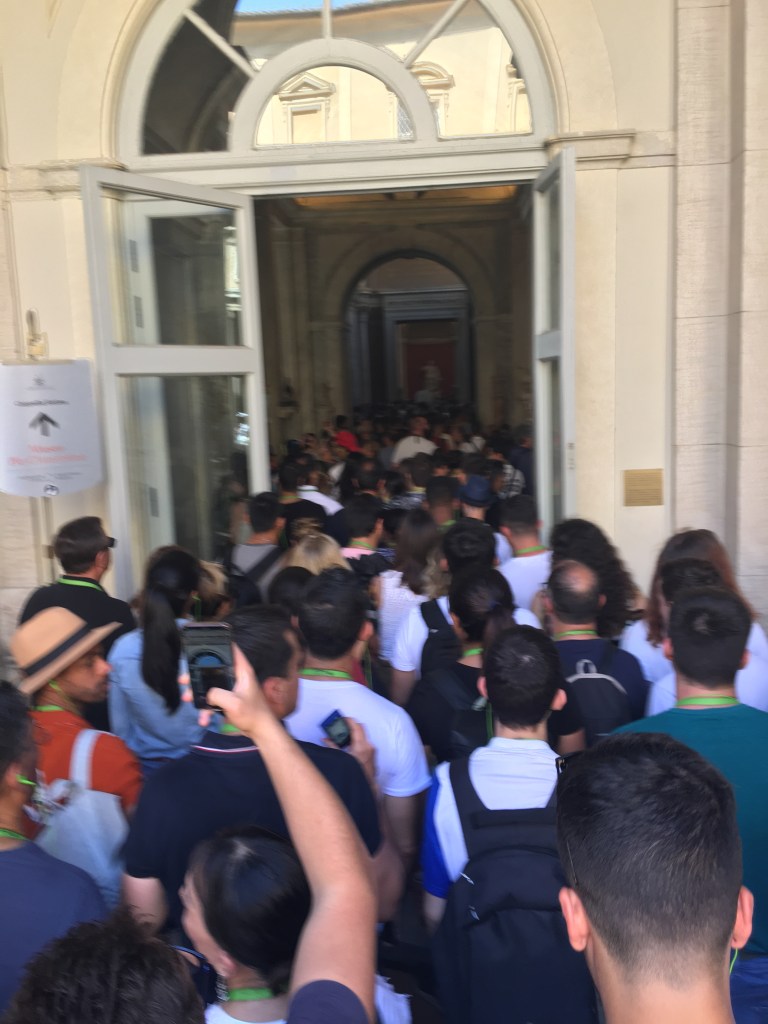
From Castel Sant’Angelo, it’s a short walk to the Vatican. The Vatican Museums, I have to admit, are a struggle to visit. They are very crowded, and much of the experience can feel like you’re being herded like cattle. But it’s a must any time you’re in Rome.
A typical crowd at the Vatican Museums
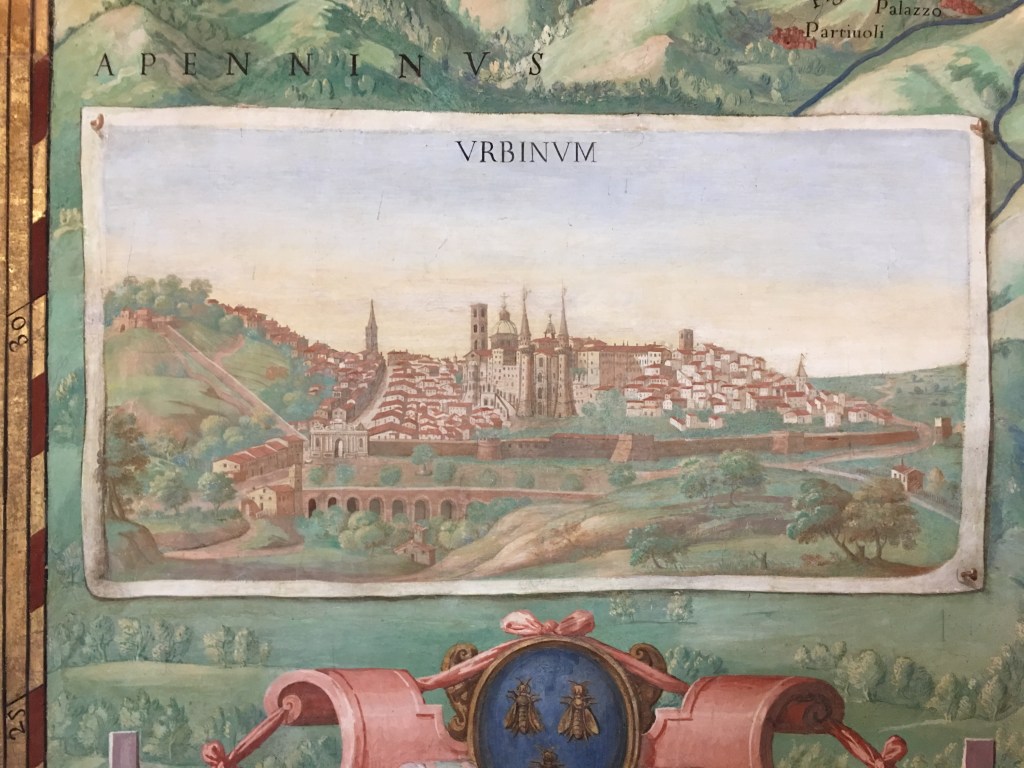
There is so much to see. The Vatican Museums are in what were the major parts of the Vatican Palace, where the popes still reside. I personally prefer to check out the Galleria delle carte geografiche, with its dozens of 16th-century maps of Italy. I also stop and gaze at the Laocoon, a Hellenistic sculture group discovered in a farm in Rome in 1506. It’s my wife’s favorite, and students love it too. It tells us so much about what the Romans appreciated in art, and it came to be a major influence on Renaissance art as well.
A depiction of the Italian city of Urbino in the Galleria delle carte geograficheThe Laocoon Group, in the Vatican Museums
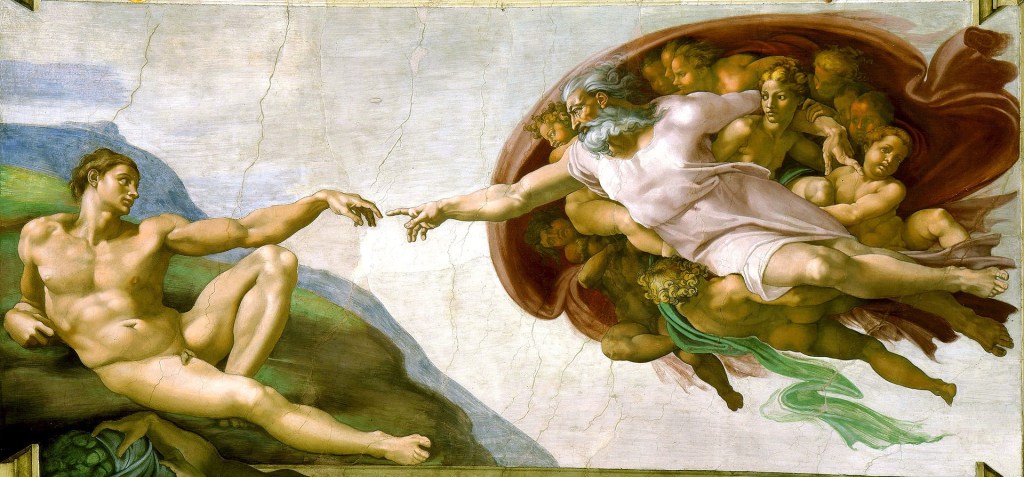
The highlight, of course, is the Sistine Chapel, Michelangelo’s masterpiece. There really is no way to capture what it’s like to experience the Sistine Chapel. Its depictions of Old Testament scenes will leave you with a neck ache as you try to look up at stare at them. It’s almost impossible nowadays, but years ago I got in with a small group and had the chapel to ourselves. It was really something else.
Michelangelo’s Creation, arguably the most famous scene from the ceiling of the Sistine Chapel
With students, I like to linger in the chapel and let them really soak it in. The students could spend all day in there, and honestly I could too. Unfortunately, as is so often the case in the world of mass tourism, the Vatican Museum guards have other ideas, and usher us out seemingly as soon as we entered. But for a brief 10 minutes, we are in heaven.
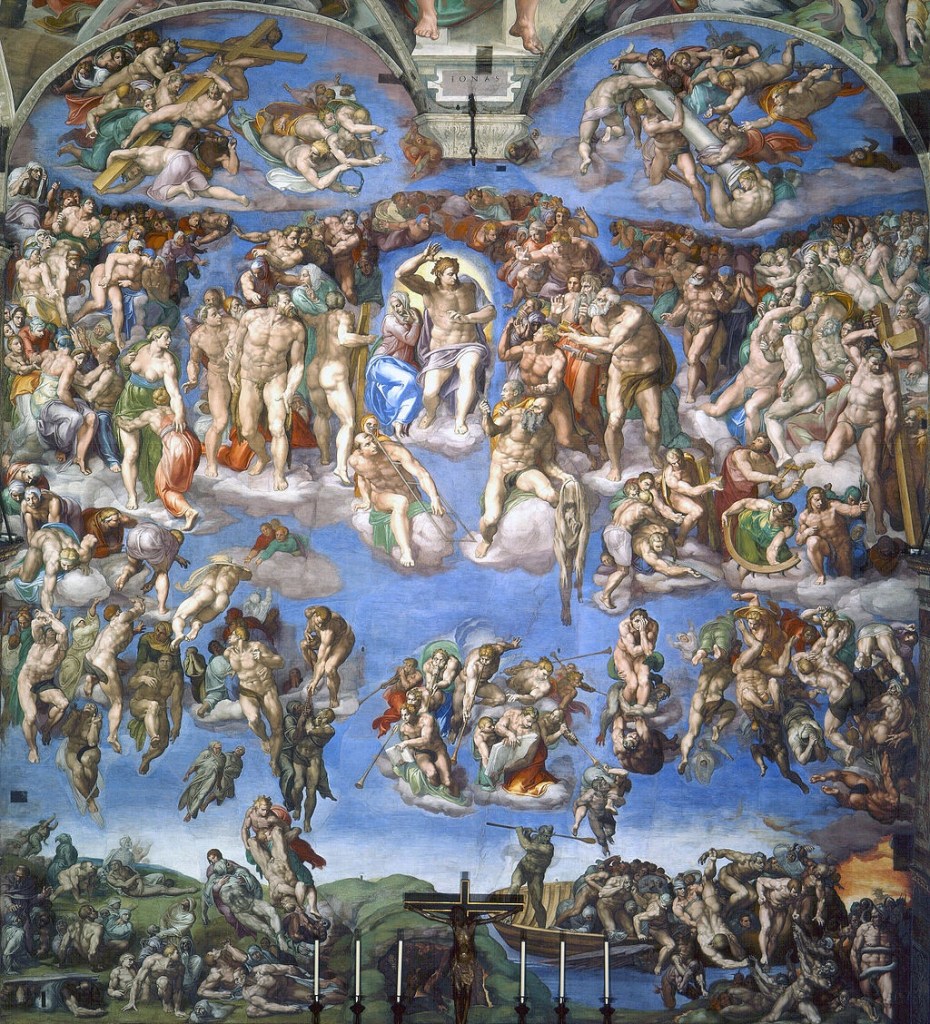
Michelangelo’s Last Judgment, a later addition that now sits above the altar of the Sistine Chapel
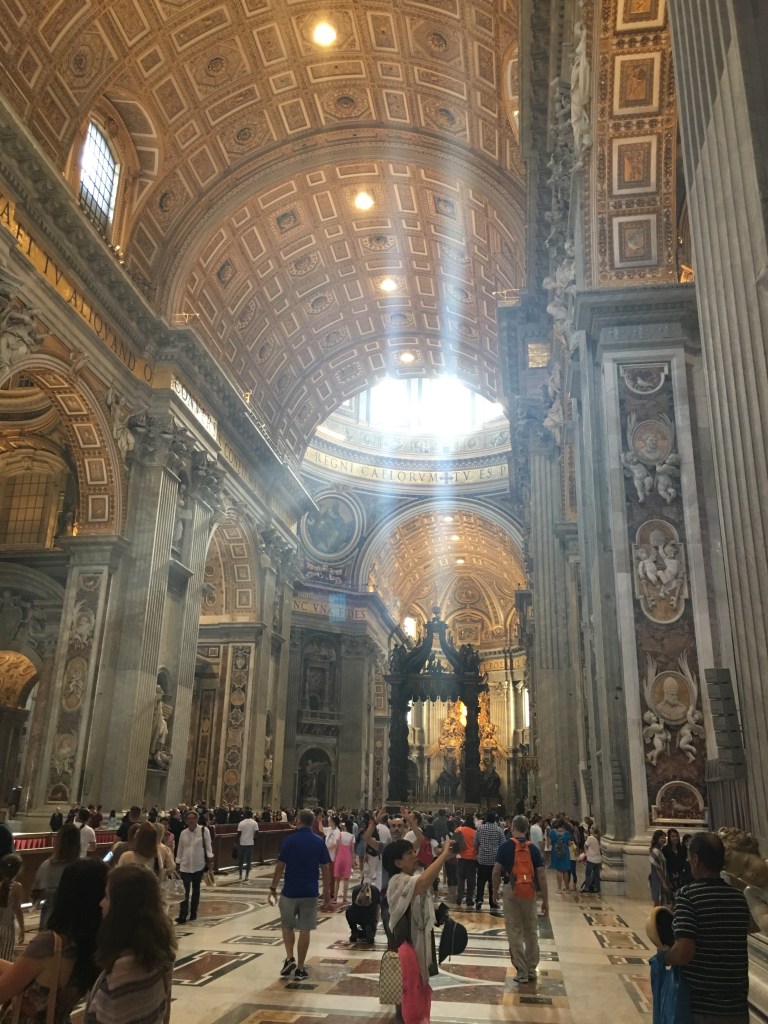
Or so we think! Because truly, there is nothing like walking into St. Peter’s Basilica. If you ever want to feel small, I mean immensely small, so small that you question how much room you actually take up in the world and whether your existence is ephemeral, enter St. Peter’s. It is, simply, massive.
The nave of St. Peter’s, which gives you a sense of the building’s scale
What always shocks me every time I enter Saint Peter’s is just how much of a testament to human engineering it truly is. With no modern technology, stonemasons, goldsmiths, architects, artists, sculptors, you name it, came together to build a church that is worthy of its patron, the legendary founder of the first Christian community in Rome, Peter.
The dome of St. Peter’s
Walking around St. Peter’s can take hours. There is so much to see: Bernini’s baldacchino and cathedra; Michelangelo’s dome and Pietà; Arnolfo di Cambio’s bronze St. Peter’s, whose foot is worn down by the kisses of pilgrims. For me, nothing beats standing there quietly and taking in the immensity of the space.
A look at Berini’s Cathedra Petri, or the Throne of Peter, behind Bernini’s BaldacchinoMichelangelo’s Pietà
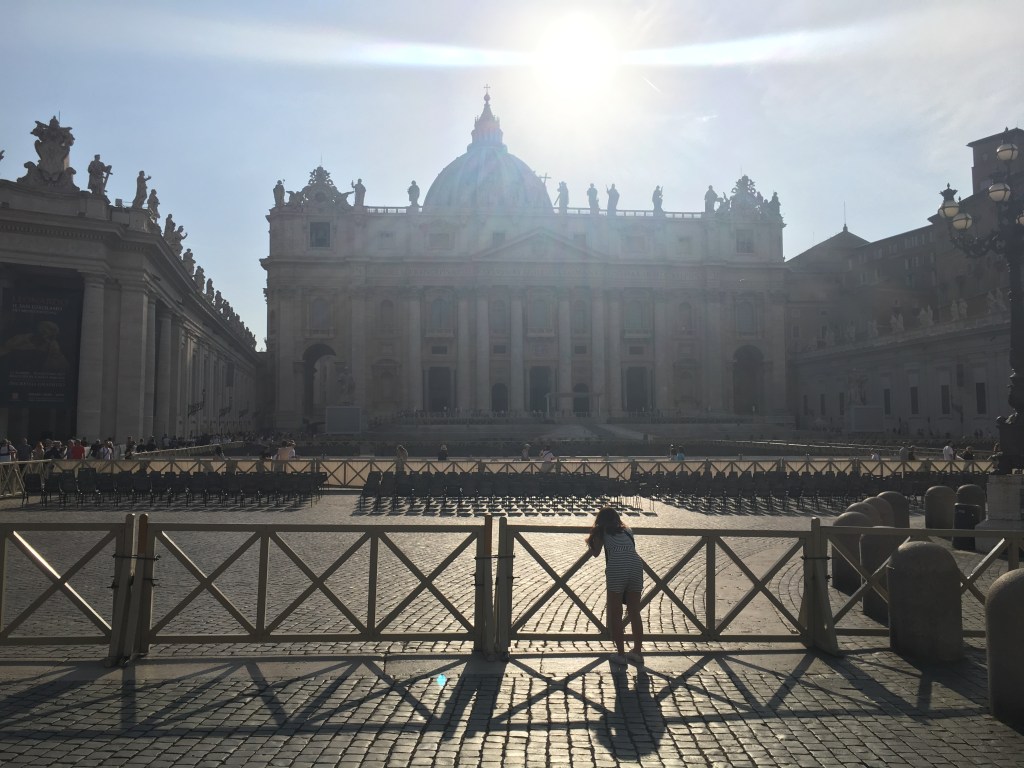
After a while, students begin to flow out the main doors and into the piazza, which is worth checking out in its own right. We meet at the obelisk, where we hang about for a bit and talk about everything we saw. Students like to check out Bernini’s colonnade and listen to the waters of the fountains trickle in the hot sun. I’m usually the last one out, as I like to do one last lap or two inside St. Peter’s, which I could probably visit every day, if they let me.
The Obelisk of St. Peter’s
After a full day in Renaissance Rome, we’re all exhausted, and ready to take a long break from the heat and crowds of Rome. Which we will do. Up next is a day trip to Tivoli to check out two villas: Villa d’Este and Villa Gregoriana. It’s the perfect way to recharge.
The sun setting behind St. Peter’s after a long day in Renaissance Rome
The semester has been a busy one, so the blog has been forgotten. However! I submitted my application for the 2022 trip to Rome and, as long as everything goes according to plan, 15 students and I will be in Rome in May!
So, it’s time to get back to going through the itinerary. Last post, we visited Pompeii and Paestum. After returning to Rome from the South, we begin the following morning with walks through time, as we visit a number of Rome’s spolia churches.
What is a spolia church? Well, it’sbasically a medieval church that uses a lot of ancient building materials that are repurposed in interesting and innovative ways. Long thought to be evidence of decline and decay in Rome, we now see it as a transition in how the city functioned architecturally, as pagan buildings ceased to be meaningful and Christians saw them as convenient quarries for high quality materials.
I have to say, this is one of my favorite walks, which I could say about any of them. But I really mean it. These are fun churches. What I love about the spolia churches is how different they are. In a sense, there’s no such thing as a spolia church. Each is unique. But what they share is this use of ancient materials in interesting ways.
The choir and apse of San Clemente al Laterano
We begin the walk at one of Rome’s greatest hidden gems, San Clemente. It used to be far less popular, and cheaper! But it’s gotten a lot of notice as of late for good reason. It’s really 3 buildings in one: an eleventh-century church built on top of a fourth-century church, built on top of a second-century mithraeum that was originally a republican-era villa that had been destroyed in the fire of 64AD. Each layer has something to offer, and students love to spend as much time in the church as they can. Between the beautiful apse mosaic and the space dedicated to Mithras in the lowest level, there is plenty to see and do.
San Clemente’s Mithraeum, the Temple dedicated to Mithras
We could spend hours in San Clemente. But spolia wait for no one! We’re off to Santo Stefano Rotondo, which as its name implies is a circular church. Originally built in the 5th century, the circular church is unique for its appearance as well as its acoustics. It’s one of my favorite places to hear a sung mass. Like San Clemente, it also has a Mithraeum, but it’s not as thoroughly excavated as San Clemente’s. I also like Santo Stefano because it’s not on anyone’s radar. Every time I’ve gone in, I’ve had it mostly to myself.
The interior of Santo Stefano Rotondo
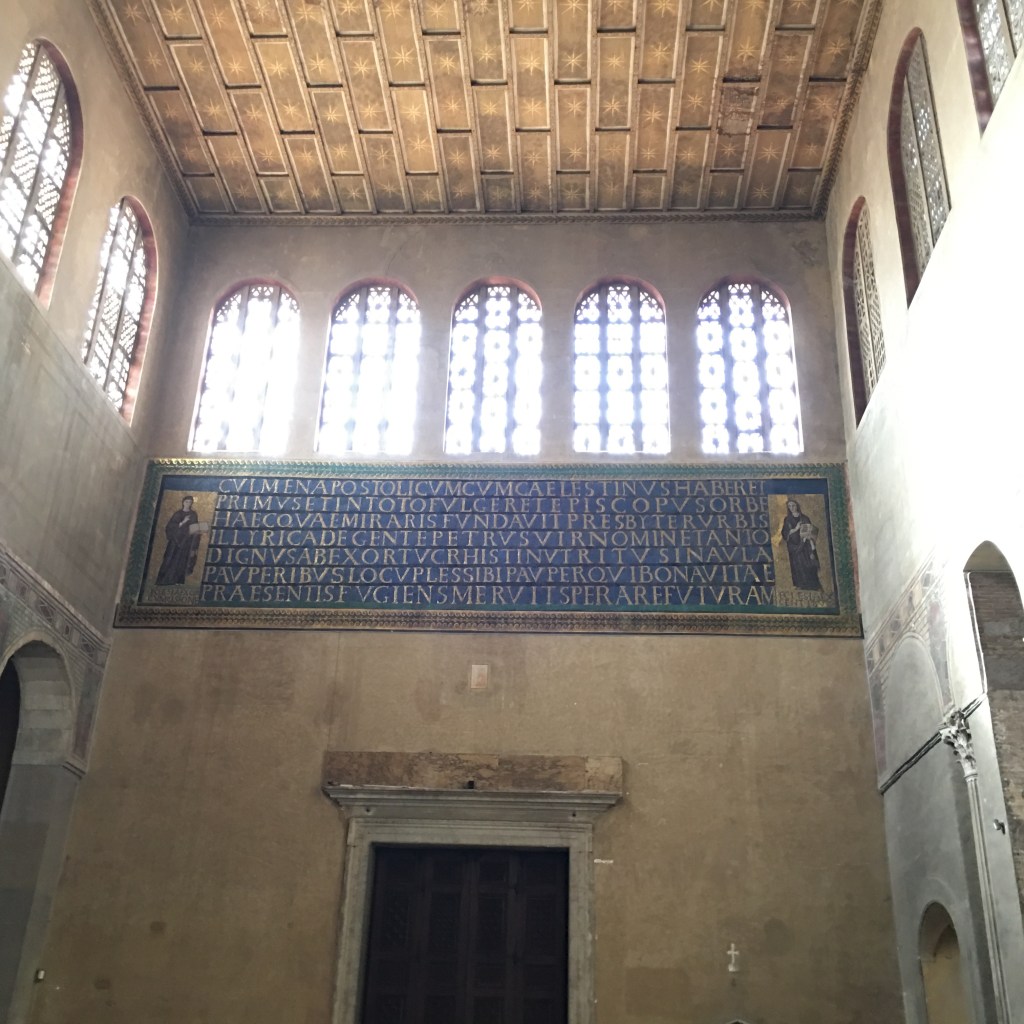
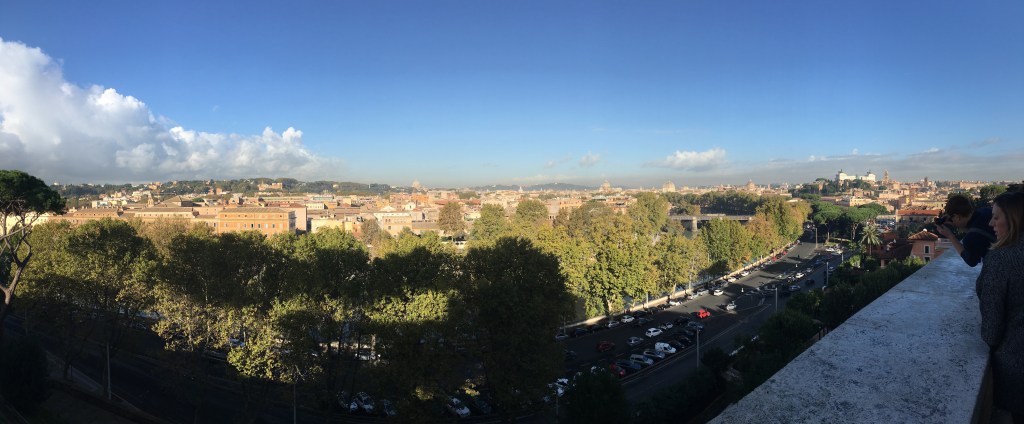
From Santo Stefano, we make our way up the Aventine Hill to visit Santa Sabina, which is the oldest basilica in Rome. It’s a simple church, but is adorned with beautiful columns and a wonderful mosaic, as well as beautiful wood doors with Bible scenes. It’s also right next to an orange garden, which is a great place to watch a sunset, as it overlooks Rome looking westward. While on the Aventine, we also look through the famous keyhole at the compound of the Knights of Malta, which allows students to see all the way to St. Peter’s!
The Spartan interior of Santa SabinaScenes from the Bible on the wooden doors of Santa Sabina, which date from the period of construction, roughly around the year 430.A panoramic view of Rome from the Orange Garden on the Aventine Hill
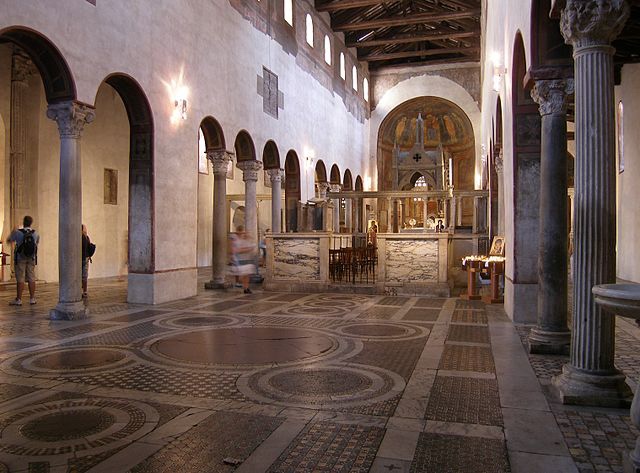
From Santa Sabina, we head down the hill to Santa Maria in Cosmedin. Like Santa Sabina, it’s a simple church with a plain interior. But its columns are ancient and have been repurposed for the structure. It’s also home to the Mouth of Truth, most famous for almost biting off the hand of Audrey Hepburn in the classic film Roman Holiday. Santa Maria in Cosmedin was originally for the Greek community of Rome, and still serves Rome’s Greek Melkite Catholics.
The mouth of Truth, in the entrance of Santa Maria in CosmedinThe interior of Santa Maria in Cosmedin. Note the variety of column types, all of which came from local ancient structures.
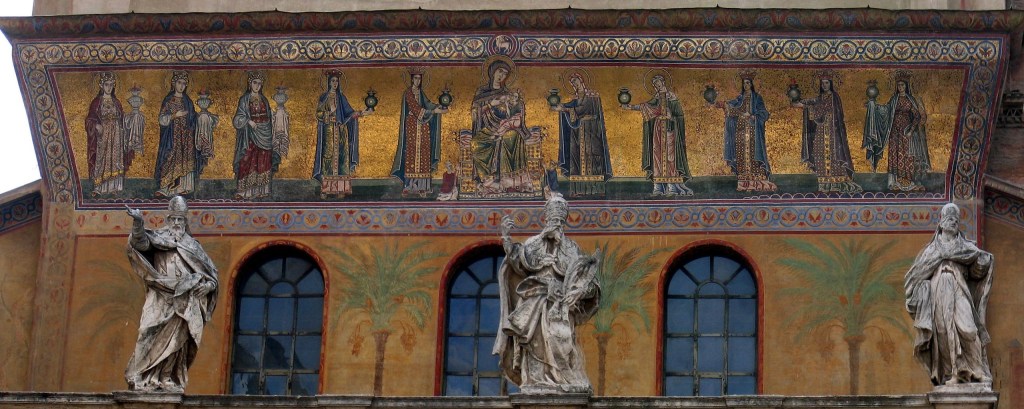
The last church we visit for the day is on the other side of the river in Trastevere, Santa Maria in Trastevere. This is a stunning early church, especially in the evening, when the church is lit up. Its portico also has a wide array of spolia to check out. And the interior is a sight to see. Like the façade, it’s littered with flickering light reflecting off the mosaics. Like the others, it makes great use of local materials.
Mosaics on the façade of Santa Maria in TrastevereOne of the church’s many spolia. I like this one because it looks like Ohio, where I grew up.The interior of Santa Maria in Trastevere. it has everything you want out of an early church in Rome: beautiful mosaics and ancient columns
This was just a sampling. There are many others we could have included: Sant’Agnese, Santa Constanza, San Giorgio in Velabro, San Lorenzo, San Nicola in Carcere, and others. You could spend a whole week just visiting spolia churches. And it would be a great way to see Rome.
Up next on the trip is what many see as the pinnacle of Christian Rome: The Vatican!
San Pietro in Vincoli, with its 20 fluted columns with Doric capitals, all which which probably came from the nearby Portico of Livia
I’ve been fairly distracted the past few months, and so the old blog got completely ignored! But I wanted to pop in before we head off to Ohio to visit family to pick up from where I left off with my Rome course. When I last left it, we were finishing our walk along the Queen of Roads, the Via Appia Antica. Continuing on with antiquity, we head down the Appian Way and just keep going… all the way to Pompeii!
That’s right, this next walk is no walk at all. It’s a full-on overnight trip to the Gulf of Naples, where we visit the excavations at Pompeii, which was buried by the eruption of Mount Vesuvius in 79AD. In addition to Pompeii, we also check out Sorrento and Capri. They’re wonderful places to sit back and relax, but if you know what you’re looking for, there are ancient wonders right around the corner.
The train station at Pompeii. It’s a very short walk from the entrance to the excavations.
Pompeii is easy to access from Rome. There are trains from Roma Termini train station to Napoli Centrale, where you can pick up the Circumvesuviana commuter train, which stops right at Pompeii. With a group of 15 students, however, we opt for a private bus. This is an option too, but isn’t as cost-effective as the train. The trip takes between 2-3 hours, depending on how you get there. We usually leave Rome first thing in the morning to get to Pompeii just as it opens. This is the best way to maximize your time.
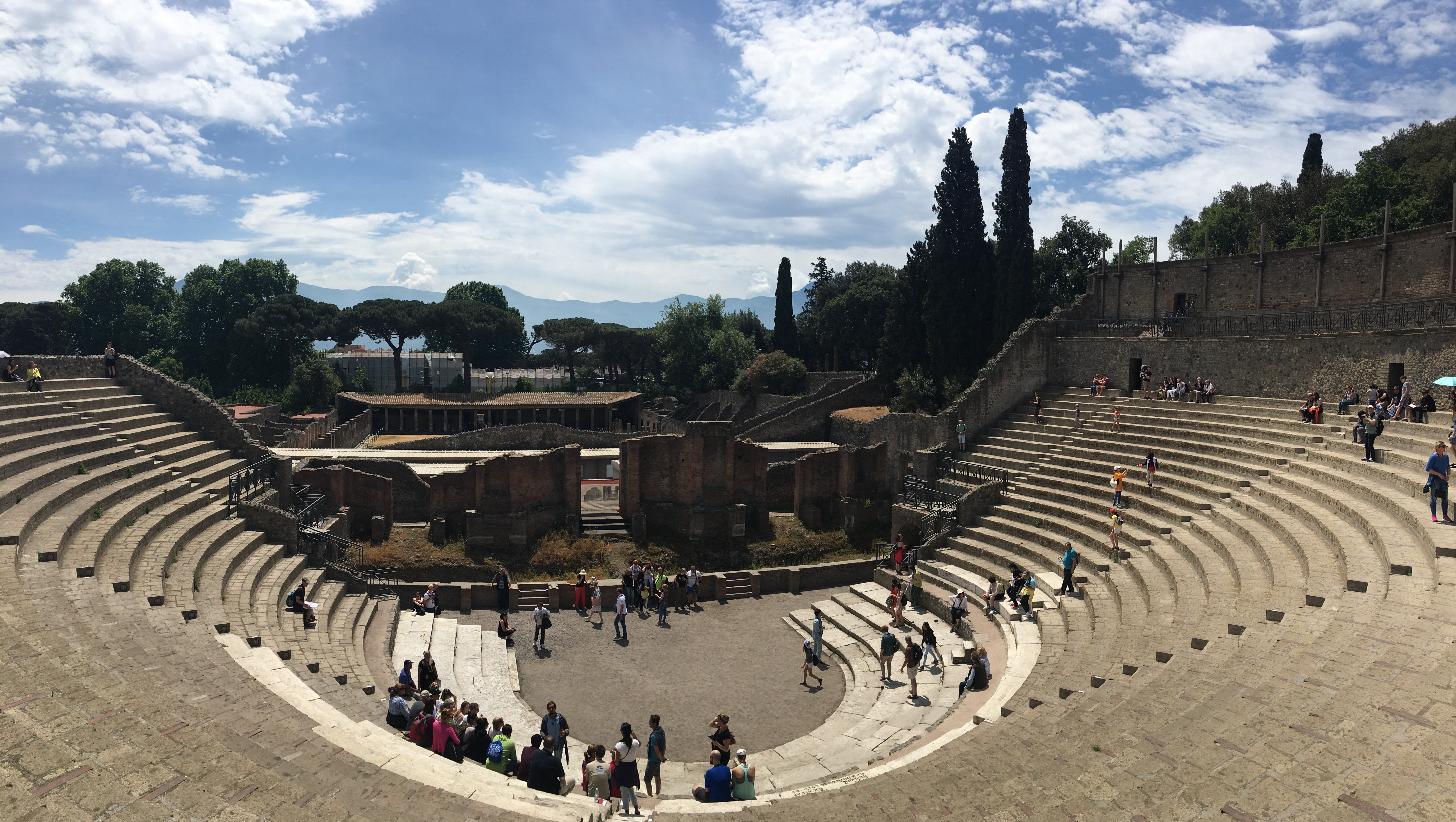
Once we arrive and we get through the ticket line, I split the tour with students up between group discussion and then free exploration. Pompeii is larger than you might think, so I find that students, and I, get overwhelmed with it if we try to do it all together. I take them to a few places I think are most important—the theater, amphitheater, forum, and House of the Vettii with its frescoes—and then I turn the students loose.
Pompeii’s theater
I find this is a good balance. It gives us some time to discuss Pompeii together and allows the students to wander around and imagine for themselves what it must have been like 2000 years ago. It takes us about an hour or so to do the group activities, and then we split up for at least two hours, ideally three. Depending on time or evening plans, I’ll let the students stay as long as they like. Sometimes, it can be really hot, so we only do 2 hours or so.
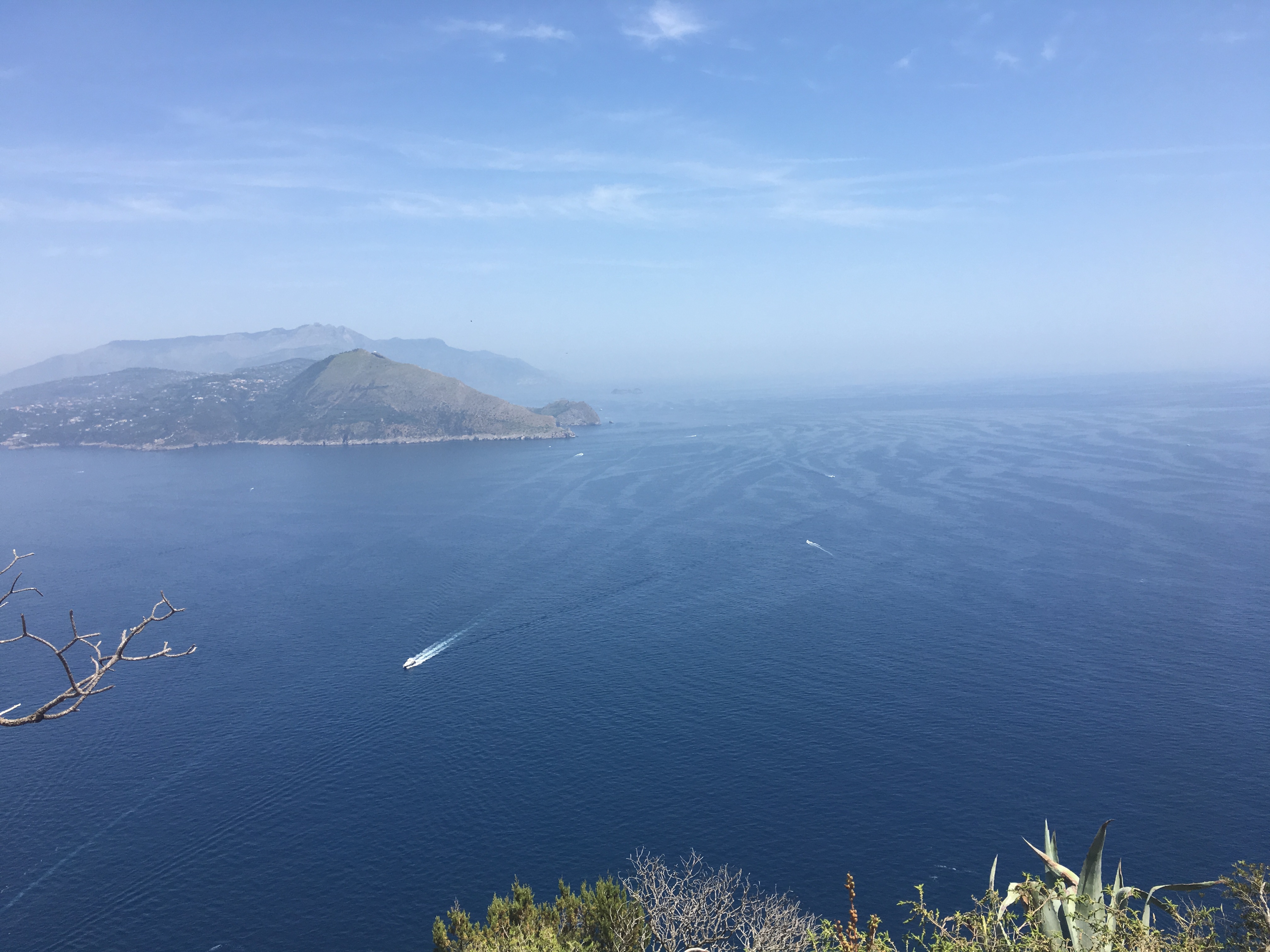
After Pompeii, we get back on our bus and head to Sorrento. The drive down the coast is breathtaking: shimmering waters, boats in the distance, precipitous cliffs, and verdant hills. The view on the train is pretty spectacular, but there’s something exhilarating about being on a bus on the winding roads along the coast.
The Sorrento peninsula from the bus
Once in Sorrento, we settle into our accommodations and then hit the town. Sorrento is pretty tiny compared to Rome and is far more sleepy than Rome or Naples. It’s a resort town that is best known for il dolce far niente, the sweetness of doing nothing. You can go limoncello tasting, get great sea food, or just people watch along the Corso Italia, Sorrento’s main drag.
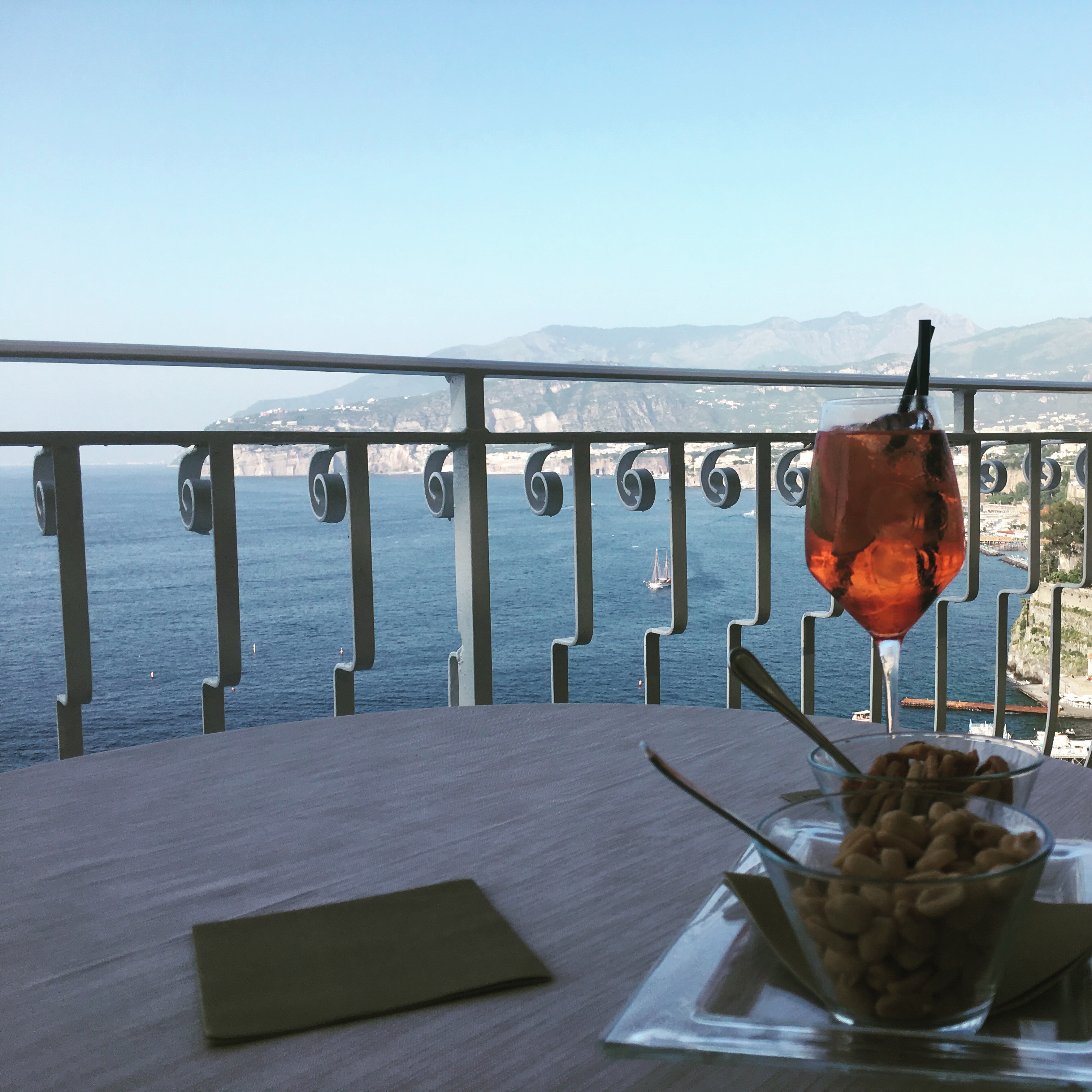
It’s a wonderful place to be in the evenings. Sunsets are a dream, and night breezes take the edge off after a hot day in the sun. I personally like to get an ice cold Aperol Spritz before dinner, and then fill up on whatever is fresh from the sea. I then cap it off with a limoncello and have a slow wander around town before bed in our seaside hotel.
A spritz with a view
Rest is essential, because first thing in the morning, we’re off to the marina to catch the ferry to Capri. Perhaps best known for being Sorrento’s island twin—R&R are why most go to Capri—it has plenty of history. I take students up to the Villa Jovis, the Roman Emperor Tiberius’s ancient pleasure palace set at the top of a precipice on the island’s eastern side.
Looking back on tired students and blue water on Capri
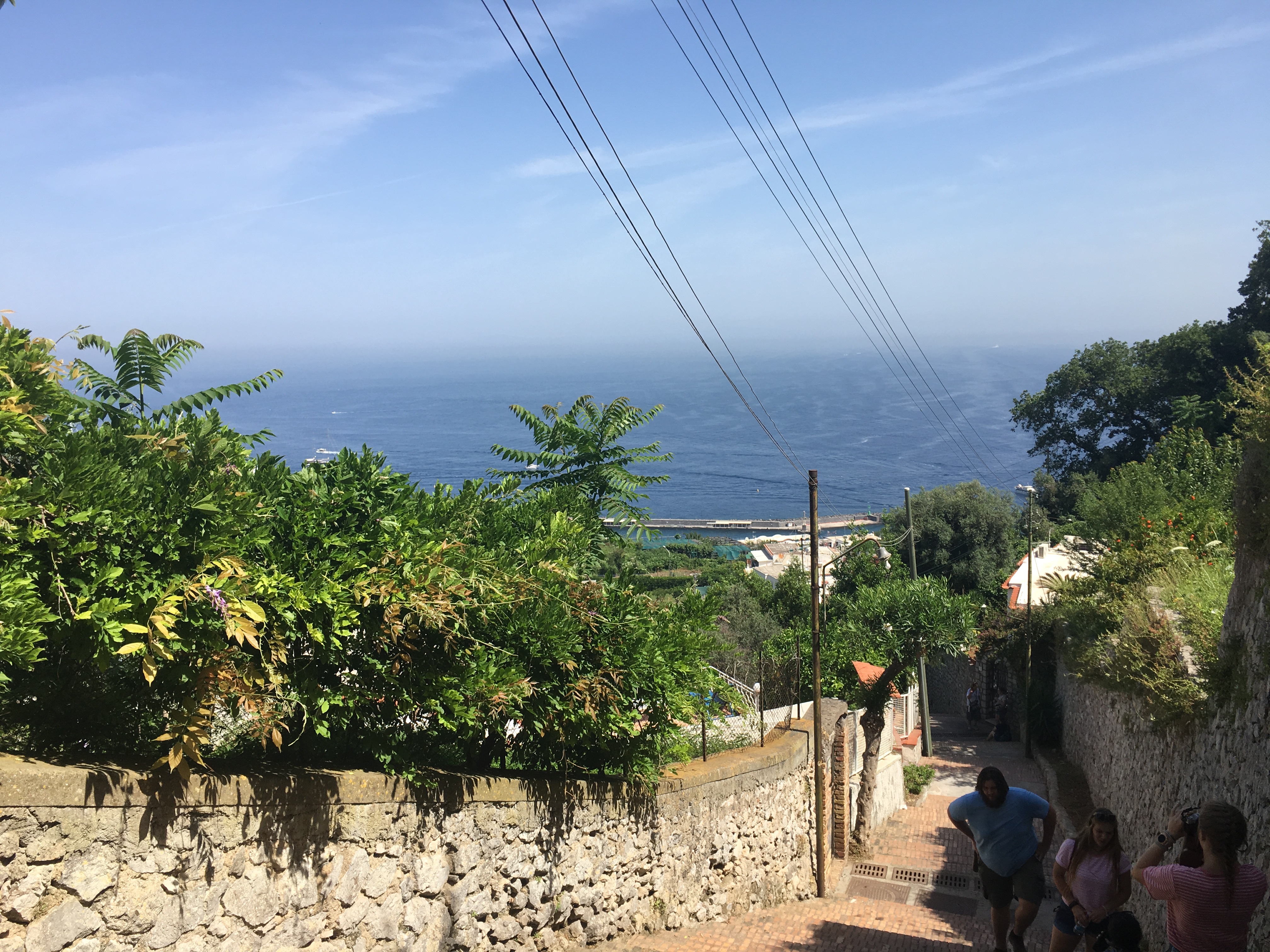
There’s no pleasure in getting there, however, as the 245M incline is not for the weak. There is the funicular that takes you to the Piazzetta, a nice place for a drink. But that only gets you about 1/3 of the way there. The rest is all on foot. But it’s so worth it. Once you get there, you realize why Tiberius wanted to be there, and why he never wanted to leave.
The ultimate reward: a breathtaking view of the mainland
Alas, leave we must! We head back down toward the Piazzetta, and then on to the ferry to Naples, where our bus awaits to carry us back to Rome.
What a two-day journey! But it’s a nice escape from the hustle and bustle of Rome. Up next, though, is more exploration in the Eternal City, as antiquity comes to an end and the Christian Era is upon us!
After a full day in the ancient core of the city, I like to move beyond the Aurelian Walls. These walls, built in the late third century during the reigns of Emperors Aurelian and Probus, were for centuries the confines of the city. Really, there wasn’t much outside the walls after antiquity until Rome became the capital of Italy in 1870 and the population boomed. Now, much of the city has sprawled across what used to be vineyards and countryside. But, if you know where to look, there is plenty of that old rustic Rome left just outside the walls.
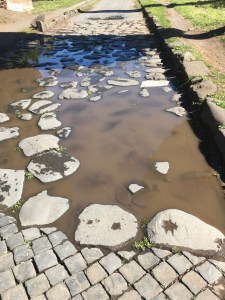
I am talking about the Queen of Roads, the Via Appia Antica! In English we call it the Appian Way, but its nickname “regina viarum,” Queen of Roads, captures how important this first superhighway was for Rome. It was its lifeblood, connecting the city with Southern Italy. Begun in 312BC, the road was extended a few times and reached all the way to Calabria and Puglia.
The students and I don’t walk the whole thing, of course, but I like to have the students walk a little bit of it so they can get a feel of what it must have been like to approach or leave ancient Rome. Either direction has much to offer, as you either leave the deafening city madness or are wowed by Rome’s immensity. We’ll do this walk as an exit of Rome, mainly because one of our first stops on the walk, the Museo delle Mura, is only open in the morning.
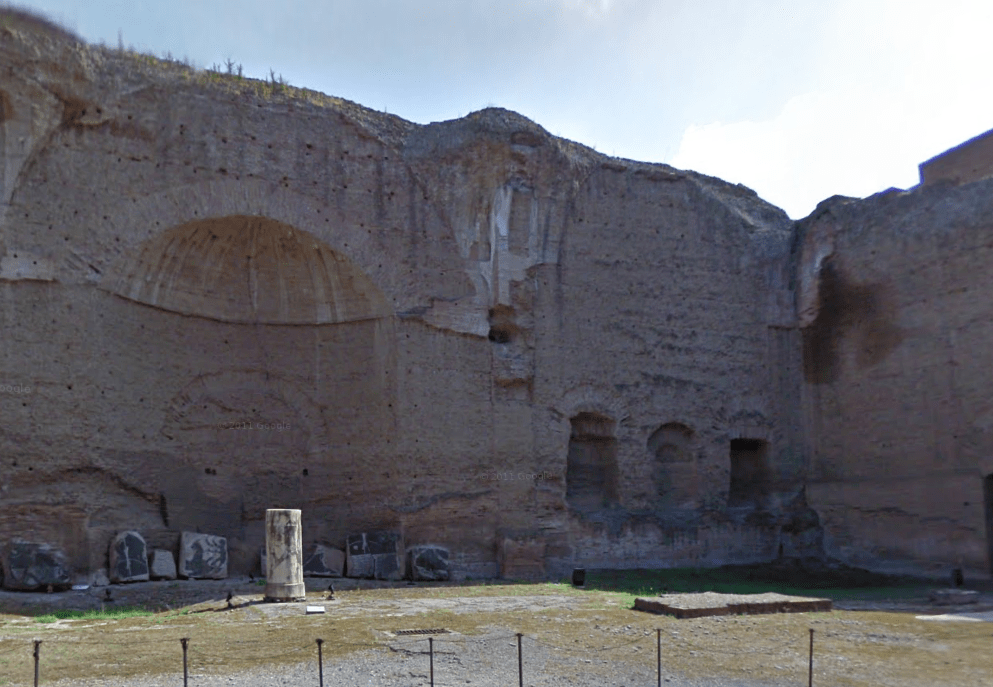
An inside view of the Baths of Caracalla
We begin our walk at the Circus Maximus. From there, we pass the Baths of Caracalla, a massive third-century bath complex that give the students a sense of the immensity of Roman infrastructure and engineering. There, I usually give the students a brief overview of Roman bath culture and why such structures were not really considered luxuries, but essential parts of Roman life. From the Baths, we continue down the Via di Porta San Sebastiano and pass the Tomb of the Scipios, one of Rome’s most famous families. Depending on time, we might pop in. But since it’s reservation only for groups of 12, it can be a challenge.
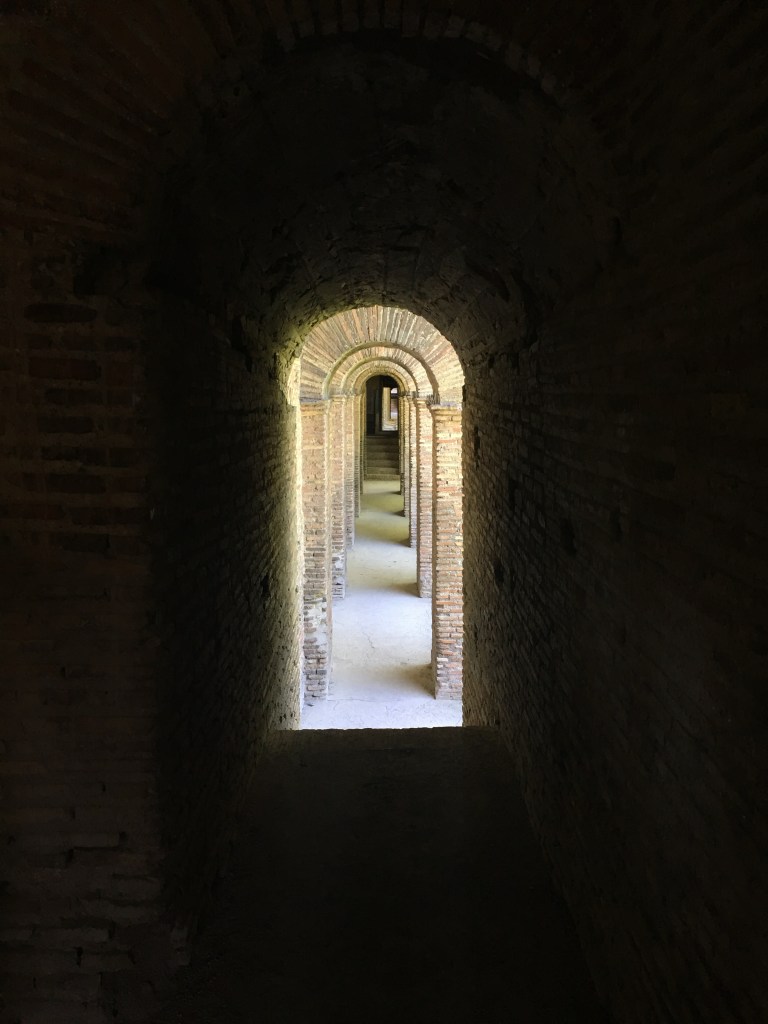
A corridor inside Rome’s walls
As you head south from the Porta San Sebastiano, watch out! Via Appia Antica is a narrow street with little room for pedestrians, so pay attention to the traffic patterns.
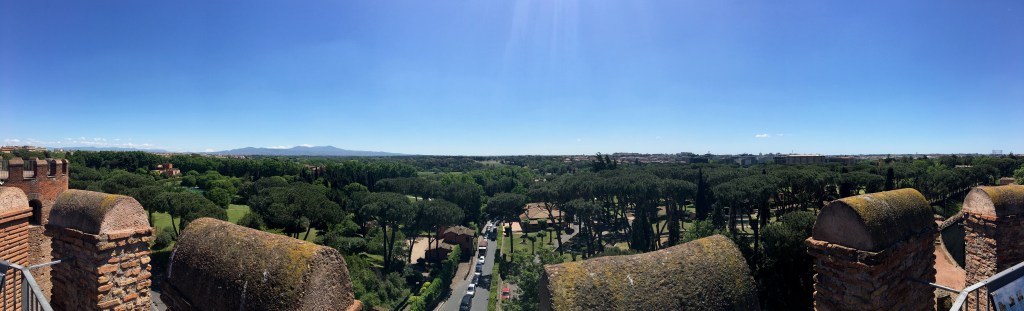
Eventually, we reach the end of Via di Porta San Sebastiano, which is, of course, the Porta San Sebastiano, in antiquity the Porta Appia. Inside the gate is the Museo delle Mura, or the Museum of the Walls. I love this little museum. It’s free admission and has cool explorations of the history of the Aurelian Walls. You can climb the turrets of the gate and walk on the inside corridors of the walls themselves. I really love to climb the turrets and stare south. The views are really fantastic. There’s even a chart to show you what various structures in the distance are.
Panoramic view south from Rome on the turret of the Porta San Sebastiano
As you’re walking a few sites pop up. First is the Church of Domine Quo Vadis, which is named after the legendary moment when Peter was fleeing Rome and the resurrected Christ stopped him along the Via Appia. Peter asked Christ “Domine, quo vadis,” “Master, where are you going?” and Christ told him that he was going to Rome to be crucified again. Peter decided to turn around and meet his own crucifixion in Rome under Emperor Nero.
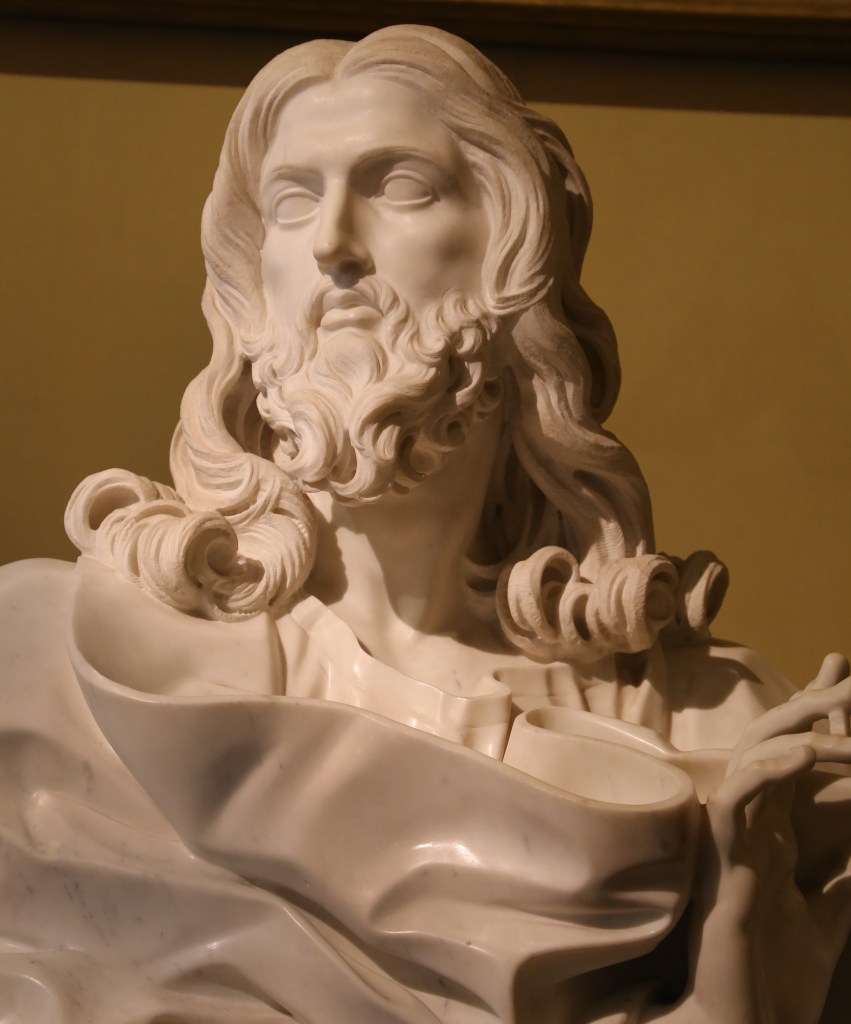
Bernini’s Christ the Savior, in the Church of San Sebastiano
We then come to the Catacombs of San Callisto. This is a massive complex with miles of tunnels that were used to house the remains of early Christians. Because they tend to be quite crowded and the tour is long, I skip them and head to the next catacomb on the Via Appia, the Catacombs at San Sebastiano, which is just down the road from San Callisto. I also prefer San Sebastiano because of the wonderful art in the church there. When we are waiting our turn for our tour to start, I like to wander around the church. My favorite piece is Gian Lorenzo Bernini’s bust of Christ, carved when Bernini was 80 years old.
After all that, it’s time for a break. The Via Appia Antica is the perfect spot for a picnic lunch. A slab of Roman-style pizza bianca, some mortadella, and a chunk of Pecorino Romano are my staples. They’re the perfect combo to keep you going, and they’re quite popular among Romans. I usually buy these ahead of time, but there are also a number of cafes and such along the route.
After lunch, and a quick caffè to help us recharge, we carry on. The afternoon part of the walk, though, is where things get idyllic. The traffic dies down, the Appia Antica becomes increasingly pedestrianized, and the views become more and more rustic. There’s even the occasional shepherd and his sheep!
The Circus of Maxentius
As we mosey down the Appia Antica, we stop first at the villa of the Roman emperor Maxentius that includes a tomb for his son, his palace, and a giant circus, which is actually better preserved than the Circus Maximus. It’s a wide open green space that’s perfect for wandering around, hanging out in the shade, and listening to the wildlife. It’s really the first part of the Appia Antica that feels like you’ve truly left Rome.
The Mausoleum of Caecilia Matella
Up next is the Mausoleum of Caecilia Metella, a first-century BC Roman noblewoman. It’s a distinctive building, with its rotunda and large fortress-like structure that in the Middle Ages was used as exactly that by the Caetani family. And right across the street is the Church of San Nicola, a ruined medieval church that fits right into the scene.
The ruins of the thermal baths at Capo di Bove
Just beyond this is Capo di Bove, an archaeological site that contains the private thermal baths of Herodes Atticus, a second-century AD Roman elite. I like to remind students about the Baths of Caracalla and how, while baths were public and for all people, there were elites who preferred to have private spaces to keep away from the plebs. I like Capo di Bove because of how tucked away and quiet it is. It also has a great gallery space with infographics on the history of the Via Appia up to the modern day.
From Capo di Bove, we can walk for miles, check out the many tombs and villas along the way. Inevitably, at some point, you’ll realize you’re still technically in Rome. But for a moment, it feels like you’ve left the city for an entirely different world. Sheep, ancient cobblestones, craggy rocks, wild vegetation. It really doesn’t feel like Rome.
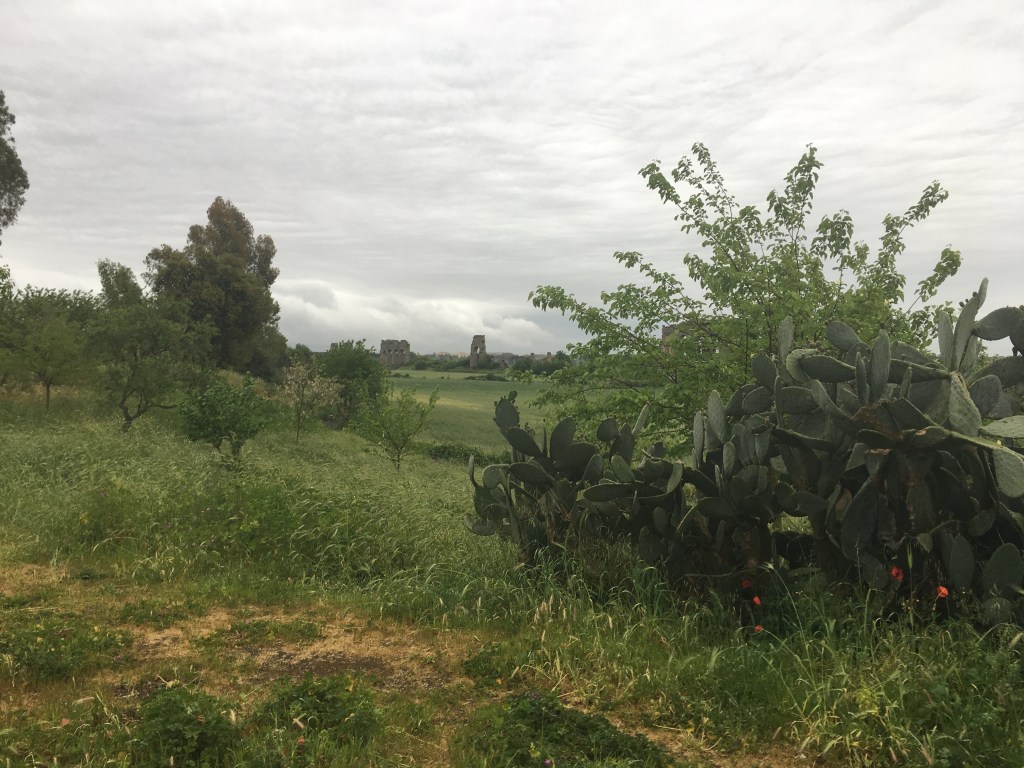
There are many miles left to go on the Via Appia. But rather than continue on the Via Appia, I like to hop onto a bus (this is still Rome, after all!) and finish the day at the Parco degli Acquedotti, where a number of ancient aqueducts still dot the countryside. I love this park because it’s quiet, has wonderful flowers in bloom in the spring, and allows you to get lost without losing your way. It’s a lovely way to wrap up such a long day on your feet. It’s also right by the Metro and is a quick shot back to Prati, where we stay.
Cacti and the ruins of aqueducts at the Parco degli Acquedotti
You can do any or all of this walk. You can even bike it! But it’s definitely not to be missed.
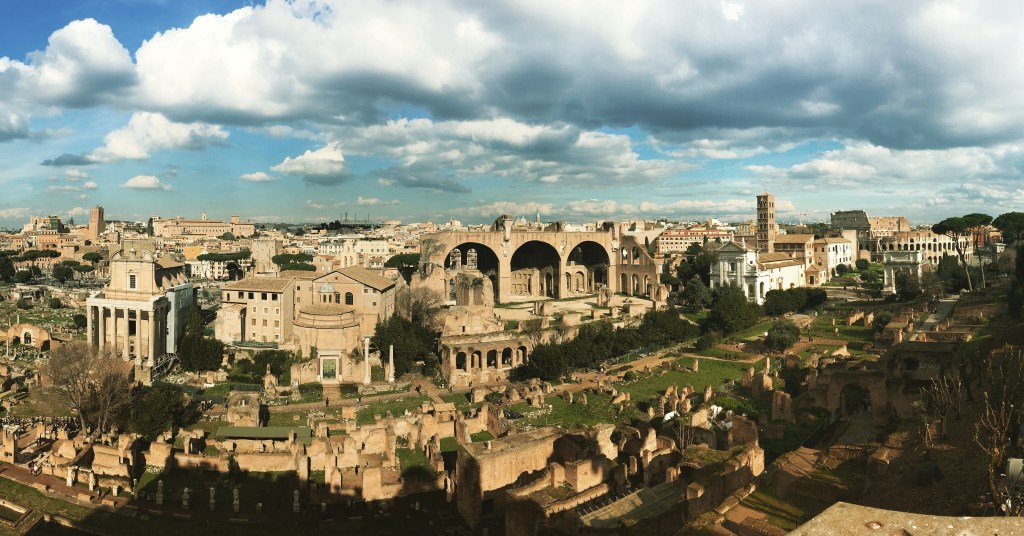
Rome’s Forum from the Farnese Gardens on the Palatine Hill
Temple of Hercules Victor in the Forum Boarium
After Walk One, dinner, and a good night’s sleep, the students are usually refreshed and ready to hit the road on day 2. After a traditional Italian breakfast—espresso or cappuccino and a brioche—we head for our first stop on the day’s adventures, Rome’s early markets, the Forum Holitorium, for fruit and vegetables and the Forum Boarium, for cattle. There are a couple temples still in the Forum Boarium, which is right by the Church of Santa Maria in Cosmedin, which we’ll check out in a later walk on medieval churches. It’s a busy intersection now, but is a good place to start our jaunt through the ancient city.
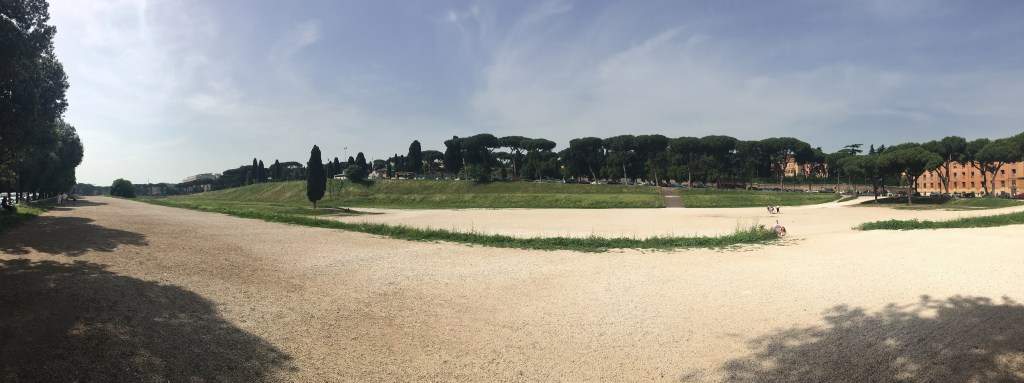
A look down the Circus Maximus
From the Forum Boarium, we walk past Santa Maria in Cosmedin toward the Circus Maximus, the ancient chariot racing course. According to ancient sources, it held between 150,000 to 385,000 spectators, depending on the period we’re talking about. Considering that modern stadiums now hold less than 100,000 people, you can imagine how many people this must have been.
Now, however, there isn’t much to see. There are some remnants of the substructure and some seats toward the south end, but for the most part it’s a large open park. Aside from tourists like us, there are Romans running and walking their dogs around the course, perhaps pretending in their minds to be an ancient chariot superstar. In the morning, when I like to be there, it’s quiet, and the sun is slowly beginning to peak over the the trees. I like to let the students wander around the Circus Maximus for a bit and really get a feel for how big the course is.
Panoramic view of the Circus Maximus looking toward the Aventine Hill
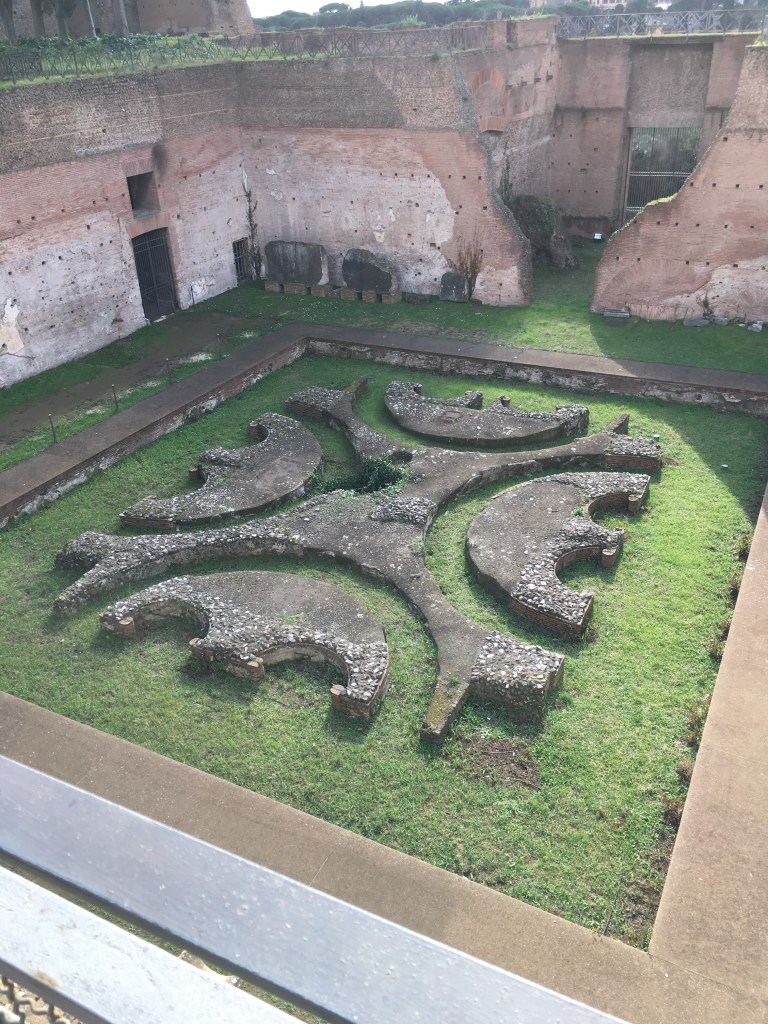
Part of the Domus Augustana
We then meet at the south end and head toward the entrance to the Forum and Palatine Hill. I like to enter at the entrance on Via di San Gregorio, as it tends to have shorter line. You can buy your ticket here, which will cover the Palatine, Forum, and Colosseum. (don’t lose your ticket!) From that entrance, it’s a straight shot up the Palatine Hill, the ancient home of the palaces of the emperors.
There’s a lot to see on the Palatine, so a good guidebook with a map is a must if you want to know what you’re looking at or where you’re going. Google Maps is good too. I also recommend picking out a few things to find before going, and then to wander around. My favorites are the Domus Augustana and the House of Romulus. I especially like the terrace near the House of Romulus and the Farnese Gardens because they offer great views of the Forum and Capitoline Hill.
The Capitoline Hill from the Palatine
I then give them a lot of free time on the Palatine and tell them to meet me back at the entrance. This not only gives me time to wander around myself, but it gives the students the freedom to explore on their own, take pictures, and look up various sites.
The reliefs of the Sack of Jerusalem in 70AD
The Column of Phocas and the Arch of Septimius Severus
Once we reconnect at the foot of the Palatine, we head toward the Arch of Titus. I briefly show them the reliefs of the Sack of Jerusalem in 70AD on the arch, and then we head down the Via Sacra, the ancient main road of the Forum. I point out a few things, like the Senate house, the Temple of the Vestal Virgins, and the Column of Phocas, which was the last monument placed in the Forum, in the seventh century. While we’re walking, I also point out a few medieval churches built into ancient structures, like S. Lorenzo in Miranda and SS. Cosma e Damiano.
I’ve found that students get very easily overwhelmed in the Forum, as it’s hard to sort out all of the various monuments. So I try to keep my lecturing to a minimum and let them explore and discover on their own, and then tell them to meet me later in the day at the Colosseum, after lunch. Some students will stick around the Forum, or go back up to the Palatine. Others will head for the nearby neighborhood of Monti, which has some lovely shops and restaurants.
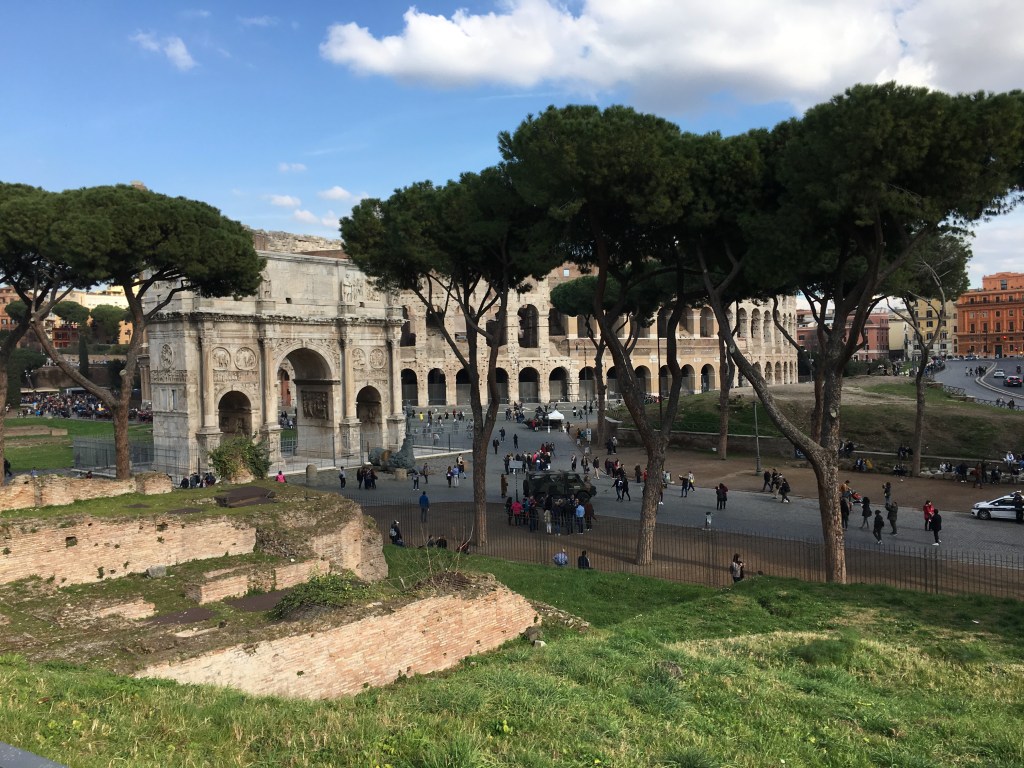
The Colosseum with the Arch of Constantine in the foreground
After lunch is the Colosseum. Depending on the time of year and the heat, you can either go into the Colosseum immediately after lunch, around 2 or 3, depending on how long you make your lunch, or you can wait until it cools down a bit, around 4:30, or later, if it’s still open. Check the opening times, as they change throughout the year. There are also night tours, which can be fun. I like to do the Colosseum in the late afternoon or evening.
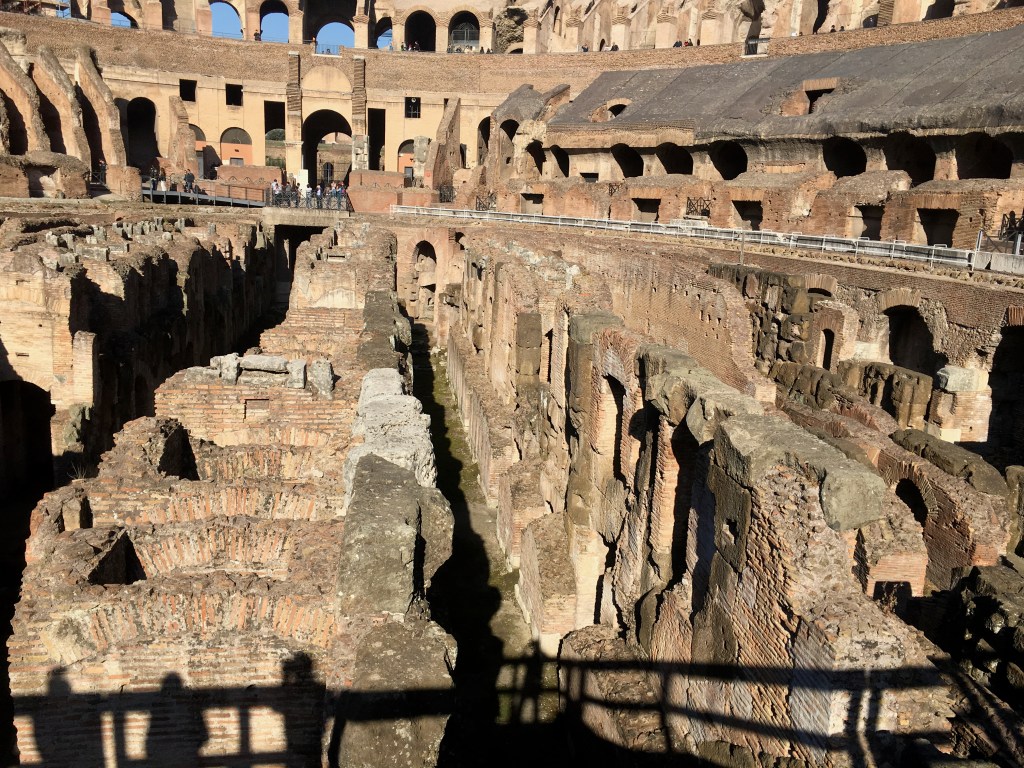
The underground maze of the Colosseum
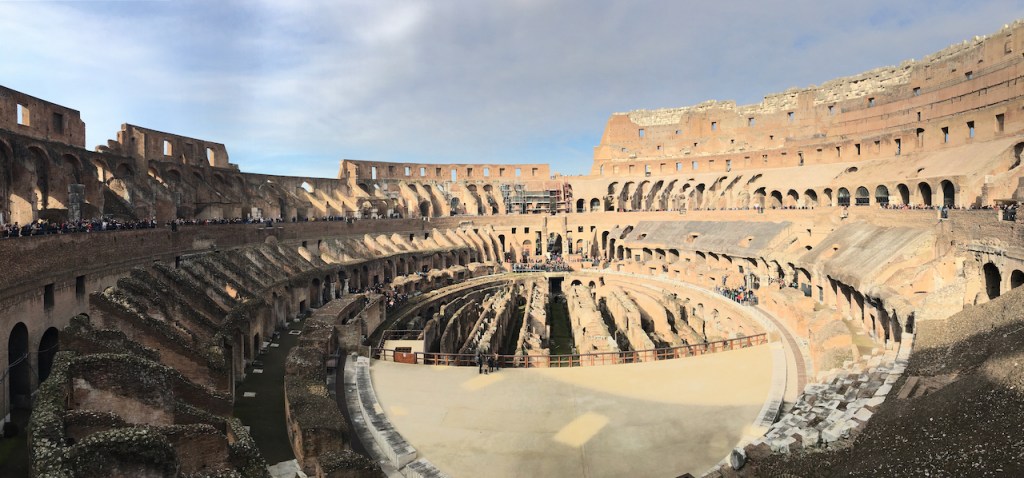
I generally let the students roam around and do their own thing, but one thing we do as a group is go down into the Hypogeum, the underpart of the Colosseum where gladiators would be staged. There is a reconstruction of an ancient elevator there as well.
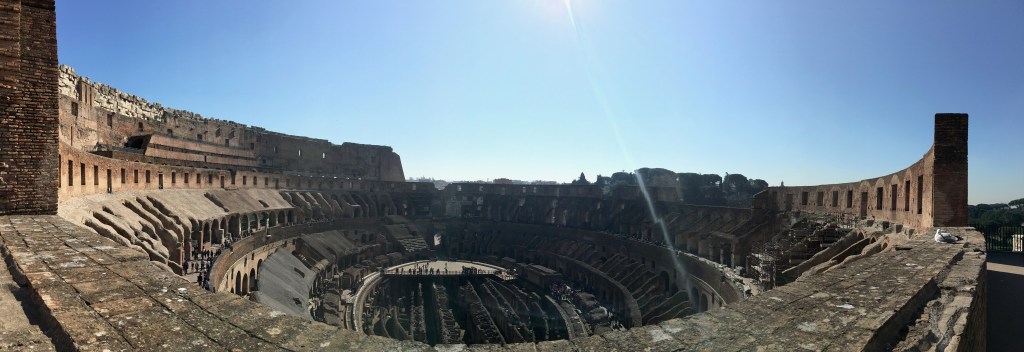
There’s a lot going on at the Colosseum. You could probably spend a whole day, or at least several hours, exploring all of its arches, stairways, levels, and crevices. One thing I always tell students is to look for flora and fauna. Once they start, they can’t stop pointing out moss, twigs, and branches, as well as lizards, birds, and even cats! It’s a reminder of the Colosseum’s complex ecosystem that is unique, even in Rome. But beyond that, they explore on their own and then I tell them I’ll see them at dinner.
Panoramic view of the Colosseum from its top tier
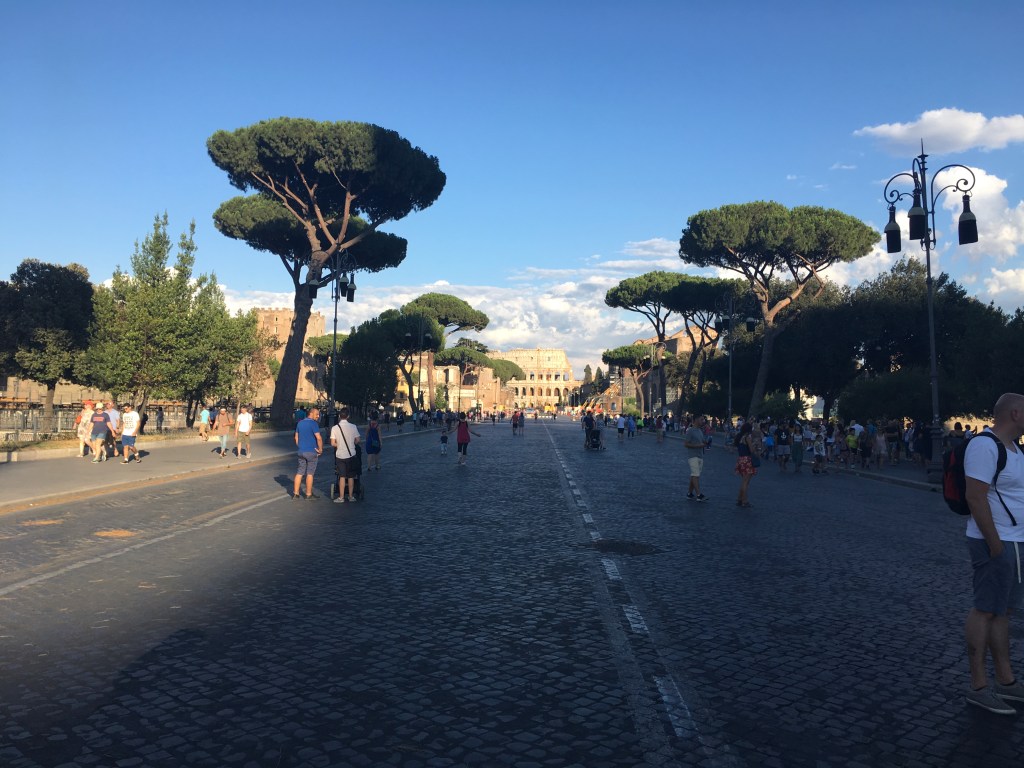
Via dei Fori Imperiali around 7:30PM
If I’m leaving the Colosseum around 4 or 5, it can be really hot. If so, I head straight for the Metro and my air conditioned apartment. But if it’s slightly later, I will head for Via dei Fori Imperiali, which is lovely in the evening. There’s a light breeze, the lights come on, and the shadows of the setting sun are really something to be seen. After that, it’s on to dinner, with perhaps a quick stop for an Aperol Spritz along the way.
It’s a long day, but a rewarding one, from beginning to end.
On our first day in Rome, I like to keep the students busy by throwing them right into the mayhem. I designed this first walk because I think it really captures so much of Rome and helps students get their bearings. It also helps to fight off jetlag. After a long overnight transatlantic flight, the first thing you want to do is nap. But don’t! Hit the ground running.
Here’s a nice walk, which takes about 2 hours, depending on pace and various food and drink breaks. It brings you as close to Rome as you can on day 1.
Piazza Cavour and the Palazzo di Giustizia, called the Palazzaccio
Once we arrive in our apartments and get settled, we meet at Piazza Cavour in the Prati neighborhood, which is where we stay. Prati, which means fields in English, has only been a part of Rome proper for about 150 years. As the name suggests, it was pretty rural until Rome became the capital of Italy in 1870, and then was a planned neighborhood. It kind of reminds me of Paris: fin du siècle palaces, wide avenues, and tree-lined streets.
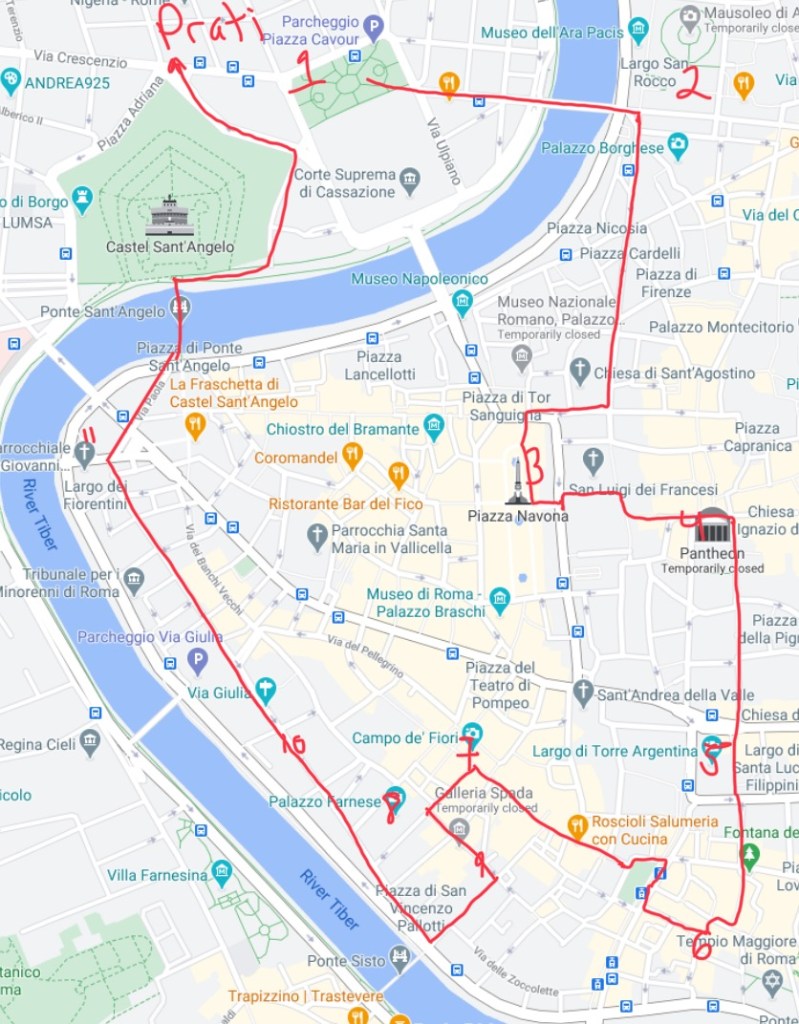
At Piazza Cavour (1), I introduce the students to the Palazzo di Giustizia, the supreme court of Italy. Locals call it the palazzaccio, or ugly palace. I start here because the palazzaccio is a pastiche of every era of Roman architectural styles. It blends classical, medieval, Renaissance, and baroque motifs to articulate how modern Italy is the legitimate successor to millennia of Roman history. Given the long history of papal rule in Rome, this building and the whole Prati neighborhood serve as propaganda for the power of the newly unified Italy, with Rome as its capital. I also really like Piazza Cavour because it’s a nice open space with palm trees surrounded by uniform buildings that always lead the eye back to the Palazzo di Giustizia.
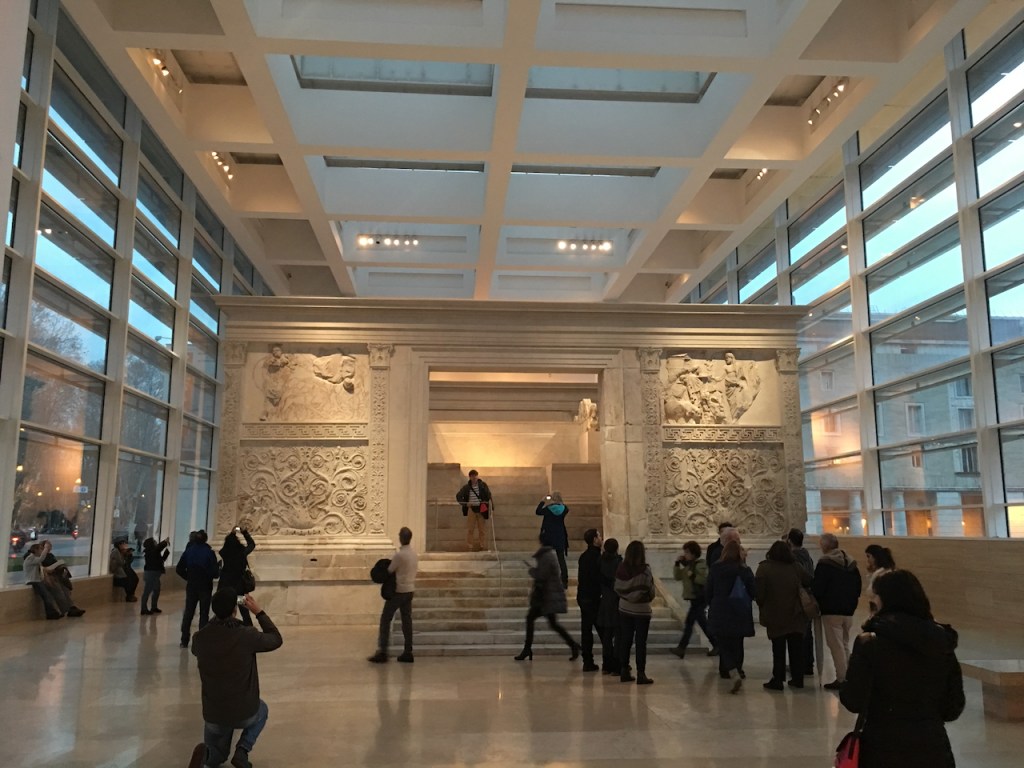
The Ara Pacis
From there, we head across the Tiber River into the historic center. We arrive at the area known as the Ripetta (2). It was once a port, before the building of Rome’s revetment walls to prevent the Tiber from flooding the city. While there, I introduce the students to Piazza Augusto Imperatore, which is home to the Ara Pacis and the Mausoleum of Augustus, Rome’s first emperor. Ara Pacis, or the Altar of Peace, was built in 9BC to honor Augustus upon his return from Gaul. It was further to the north, but Mussolini, Italy’s fascist dictator, restored and rebuilt it on its current site, across from the Mausoleum of Augustus. The Ara Pacis is currently in a quite controversial building designed by American architect Richard Meier.
Mausoleum of Augustus, before the restorations were complete
The Mausoleum of Augustus, which recently opened to the public, was long in a state of disrepair. Over the centuries, it was a garden, a fortress, and a theater. I use this piazza to explain to students about how history works in Rome: yes, it happens in chronological order, but the past is always constantly being repurposed.
A giant goblet of gin and tonic at the Gin Corner
From there, we head down the Via di Ripetta toward Piazza Navona (3). I like Via di Ripetta (which becomes Via della Scrofa). It’s a quiet street that sometimes feels like you’re not even in Rome. It also has off one of its side streets one of my favorite bars in Rome, the Gin Corner, which is in the Hotel Adriano. While perhaps not the place to take a bunch of students, if you’re in Rome on your own, pop in for a gin and tonic or a fancy gin-based cocktail. It’s a great way to beat the heat.
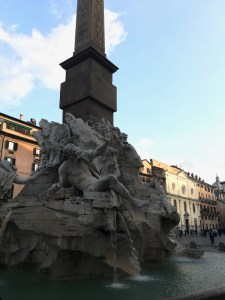
Bernini’s Fountain of the Four Rivers
Upon arriving at Piazza Navona, I show students the ruins of the Stadium of Domitian, which Piazza Navona sits on. The Stadium of Domitian was built in the first century AD to host games. Throughout the Middle Ages, it was a marketplace. In the baroque period, it became the centerpiece of the Doria Pamphili family, whose palazzo is now the Brazilian Embassy. At the center of the piazza is Gianlorenzo Bernini’s Fountain of the Four Rivers. I like to stop at Piazza Navona for a bit and let the students wander around its course a few times. It still retains the shape of the old stadium, and the best way to get a feel for the piazza is to meander around it.
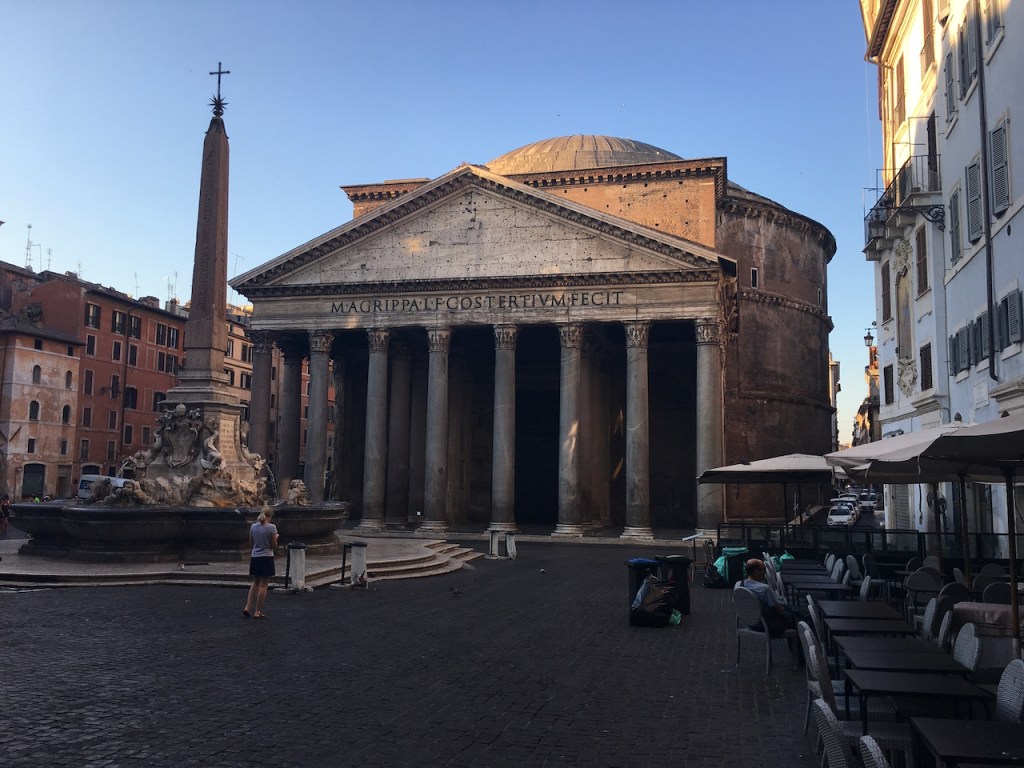
Rome’s Pantheon
After we regroup, we head to the Pantheon (4). Man, the Pantheon. There is nothing like it. The original structure is no longer there, but the rebuilt version, still from antiquity (it was built by the emperor Hadrian), is one of the most impressive things you’ll see in Rome. I like to take the students inside so they can get the full feel of the structure. Unlike many ancient structures, it’s not a ruin. It’s technically called Santa Maria ad Martyres, and is an active church. The inside is well decorated and contains the tombs of Italy’s kings as well as that artist Raphael. The dome and its oculus, however, are the real treats. If you want to be reminded of how small you are, go in, look up, and remember to lift your jaw from the floor.
The dome and oculus of Rome’s Pantheon
Granita di Caffè from Tazza d’Oro.
After all that, the students (and I!) need a break. From the Pantheon, we head over to Tazza d’Oro, one of Rome’s best coffee shops. But don’t get the coffee. Get the granita di caffè. It’s essentially a frozen coffee slushy with whipped cream. On a hot day, it’s the best thing ever.
Largo Argentina
After our caffeine recharge, we head to Largo Argentina (5), which is the site of a few temples and the atrium of the Theater of Pompey, which is where Julius Caesar was killed in 44BC. The ruins are fun to look at, but one of my favorite parts of this area is the cat colony. The cats are super friendly and will come right up to you. They’re all vaccinated and cared for, so you don’t need to worry about diseases. And don’t feed them! Just pet them. But that’s enough fun.
Giuseppe Vasi’s 1752 etching of the center of the Roman Ghetto
After petting cats for a while, we head to the Roman Ghetto (6). Founded in 1555, this was the area where the popes forced the Jews of Rome to live. The Ghetto is now a wonderful neighborhood with a number of delicious restaurants and bakeries. Jews have lived in Rome since antiquity, so we talk about the history of Jews in Rome, and I show them the plaque commemorating the victims of the Nazis. We discuss the history of antisemitism and how urban space becomes marked with prejudice.
Campo de’ Fiori with the market and statue of Bruno
From the Ghetto, we move on to Campo de’ Fiori (7). Marketplace by day and touristy watering hole by night, Campo was an execution field. Most famous was Giordano Bruno, who was executed for heresy in 1600. After Italian unification, secular Romans erected a statue to Bruno that stares directly at the Vatican. Not an accident.
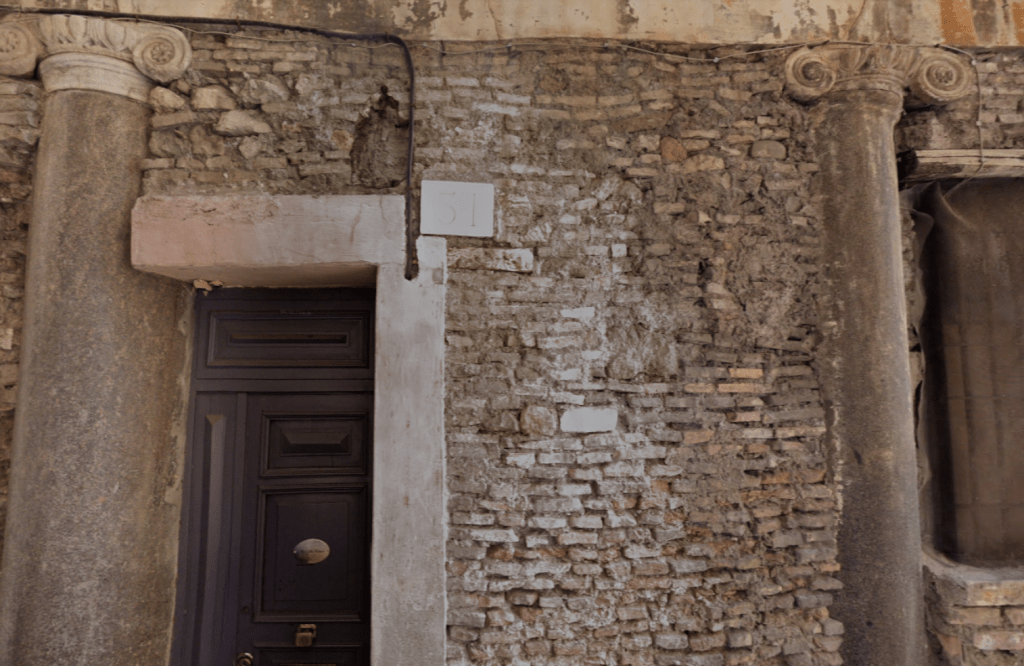
Ancient columns at Via Capo di Ferro 31
We then wander our way toward the river by way of Piazza Farnese (8), home to a massive family palace, the Palazzo Farnese, which is now the French Embassy.
I pause on Via di Capo di Ferro (9), the type of street you’d otherwise ignore because there appears to be nothing there. I stop at #31 to show students something pretty amazing: centuries-old columns embedded in the front of a fairly unassuming building. They’re from ancient Rome, but were repurposed in this medieval building, probably in the twelfth or thirteenth centuries. We pause to talk about why anyone would do this, and what it tells us about how differently people viewed ancient Rome compared to us.
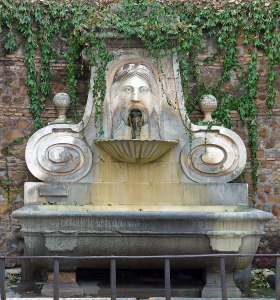
Il Mascherone
At last, we get to Via Giulia (10), a long and peaceful street built in the sixteenth century by Pope Julius II as a pilgrimage route. In the evenings, it’s perfect for a stroll. There’s some light traffic, but it’s mostly quiet. It’s lined with beautiful palaces, like the back of the Palazzo Farnese, or this cool fountain known as il Mascherone, the big or grotesque mask. At its far end, where we finish, is the church of the Florentines, San Giovanni (11). It’s a nice church to visit, mostly because most tourists skip it. It’s usually empty.
By that point, we’re all famished, and it’s time for dinner. We cross the Ponte Sant’Angelo, skirt around Castel Sant’Angelo (Rome’s old castle), and head back into Prati, where we sit down, eat our weight in pasta, and chat about everything we saw.
This is a great way to get started with Rome. Yes, it’s a lot. But this walk has few lines, no timetable, and has opportunities for pauses along the way: gin, frozen coffee, and cats. What more could you ask for on your first day in Rome?
If you want to recreate this walk, here’s a handy map that shows off my artistic talents.
The Via Appia Antica – The first superhighway, often called the Queen of Roads
Yesterday, I met with my university’s Director of International Programs and our Study Abroad Coordinator to begin the process of reviving my student trips to Rome. We chatted for about an hour about the potential for the trip, and they are thrilled to assist me in providing an opportunity for students to go to Rome and to earn real college credit while using Rome as our classroom. Because of Covid-19, our plans for 2020 got derailed and 2021 never got off the ground. With any luck, I’ll be in Rome in May 2022 with a group of students, sharing my love and passion for Rome.
Rome at sunrise from the Gianicolo, a large hill opposite the city center across the Tiber river. It’s my preferred neighborhood to stay in when I’m in Rome
I love taking students to Rome. Their initial reactions upon seeing the Eternal City’s many treasures bring me back to my first time going to Rome as a teenager. That’s not to say I am sick of Rome, or that seeing the Colosseum doesn’t still leave me dumbfounded. But there’s nothing quite like that initial awe and wonder of discovering Rome. I remember when my wife came over with me for the first time. She could only describe that first week as “surreal.”
Our plan is a two-week trip across the city. From ancient ruins to modern museums, we’ll walk and eat our way through everything Rome has to offer. Well, not all of it. Anyone who knows Rome knows that two weeks is hardly enough time. I’ve been visiting and living there off and on for decades and I still feel like I learn something new or discover some hidden gem every time I go.
The Colosseum (obviously)
Over the next few weeks, I’ll post here about our daily itinerary: what we’ll see, where it is in Rome, why it’s historically important, and why I love it. I built this itinerary because I think it’s the best way to see Rome and also because it covers some of my favorite things along the way. Some sites are well known: The Vatican, the Colosseum, we’ll even take a trip to Pompeii. But others are less known to the casual traveler: Small churches, tiny museums, parks, and galleries not on the typical tourist track but definitely worth checking out.
Stay tuned for more Rome. Up first: millennia of history on a walking tour of Rome’s center.
Last month, I joined the Appalachian Premodernists to give a talk on a chapter draft of my current book project on representations of foreigners in the Italian Renaissance. I’m a relative newcomer to this group, but it’s been a great experience to get to know everyone in the group.
The material from this lecture will be a part of the first chapter of my book, which will look at a few other writers and how they used antiquity to work out anxieties about identity that forced them to think about who they were and who their ancestors are.
In my presentation, I focused on Petrarch, a fourteenth-century writer often known as the father of the Renaissance, and how he depicted an African woman named Sophonisba in his epic poem Africa.
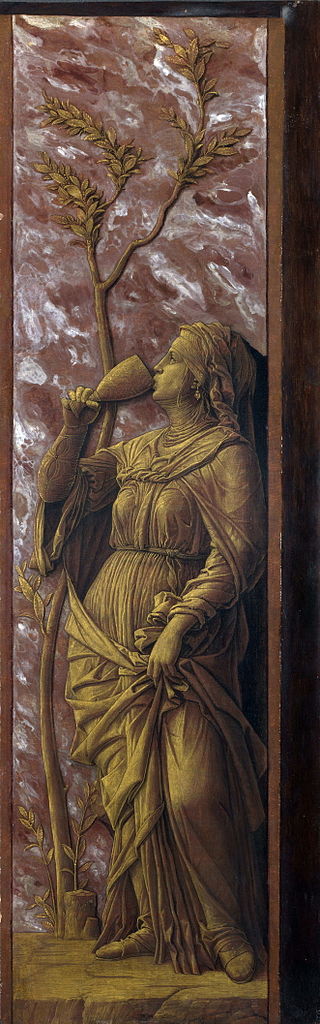
Andrea Mantegna’s Sophonisba (1490) in the National Gallery, London
Africa is a retelling of the Second Punic War, the great third-century BC war fought between Rome and Carthage. It’s the same war with Hannibal and the elephants crossing the Alps. Petrarch’s version is a cosmic battle between good and evil, the Romans obviously playing the role of the good guys. It’s also written in a high Latin style that aimed to reflect the poetic power of the great Roman poet Vergil’s Aeneid. It doesn’t, really. I don’t think it’s a particularly good poem. But the story itself is really fascinating.
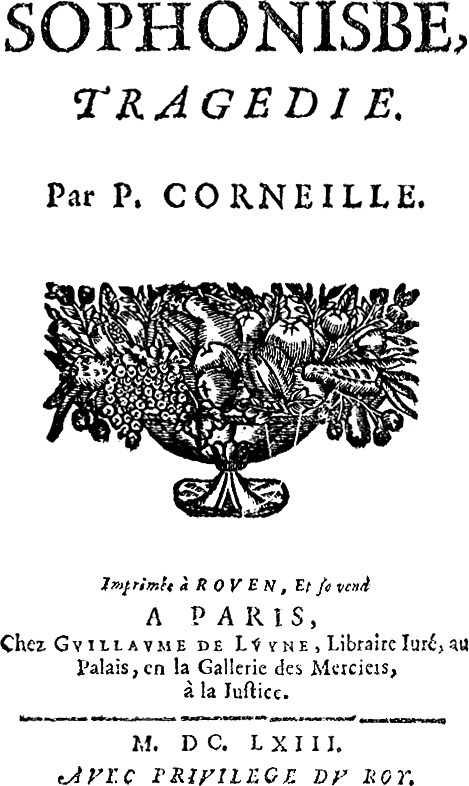
The Frontispiece of Pierre Corneille’s Sophonisbe, a 17th-century tragedy about her life
In my lecture, I discussed how Petrarch used metaphors of lightness and darkness as well as played on tropes usually reserved for Muslims in Christian romance. His goal was to make ancient Carthaginians and fourteenth-century Muslims in North Africa appear to be the same people, and to present his contemporaries in Italy as the descendants of the Romans.
What was most interesting, and what I focused on in my talk, was how he used Sophonisba to explain anxieties about race-mixing. He presented her as both an African woman who sexually tempted men into abandoning virtue as well as a blonde, blue-eyed, fair-skinned innocent virgin who was the victim of African eroticism. It really struck me how Petrarch’s Sophonisba bounced between these various roles to allow Petrarch to argue for such stark differences between Africans and Romans.
Over the centuries, writers took up Sophonisba’s story. She ranged from a temptress to an innocent victim. But she was almost always depicted from the perspective of European men. This is problematic, because it means we never really get to know the real Sophonisba. We only get the version of her that these male authors want us to get. And as you can see from Guercino’s painting, she’s usually portrayed as white despite being North African.
Gercino’s Sophonisba (1630)
This is the case with Africa, too. Petrarch’s poem is a complete a work of fiction. It doesn’t even attempt to depict the Second Punic War as it actually happened. For him, it was a way to talk about the anxieties that he and his contemporaries faced and how they can confront the people they saw as great enemies, Muslims. And Sophonisba was the perfect character for him to do that.
I really enjoy giving these presentations. I always get great questions that I only love answering. But sometimes, I get questions that I can’t answer, and this leads me to think more about what my projects are trying to do.
I’m giving two more presentations this spring, both on ancient ruins and identity in the Renaissance. So stay tuned for more!
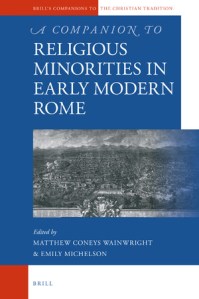
My essay, “Pope as Arbiter: The Place of Early Modern Rome in the Pan-Mediterranean Ecumenical Visions of Eastern Rite Christians,” appeared in A Companion to Religious Minorities in Early Modern Rome, edited by Matthew Coneys Wainwright and Emily Michelson. The book brought together a dozen scholars whose various perspectives on the experiences of religious minorities in the Eternal City provide wonderful insights into what it meant to be in Rome in the age of the Inquisition and Index of Forbidden Books when you weren’t Catholic. For an overview of the book as a whole, the editors held this fantastic webinar book launch that explores all of the essays.
Pizza from Dar Poeta, where culinary and intellectual dreams come true
I first became involved with this project several years ago, when I met Emily Michelson, a brilliant historian at St Andrews, while I was a Fellow at the American Academy in Rome. We chatted about Rome, religious minorities, and other things over pizza at the famed Dar Poeta.
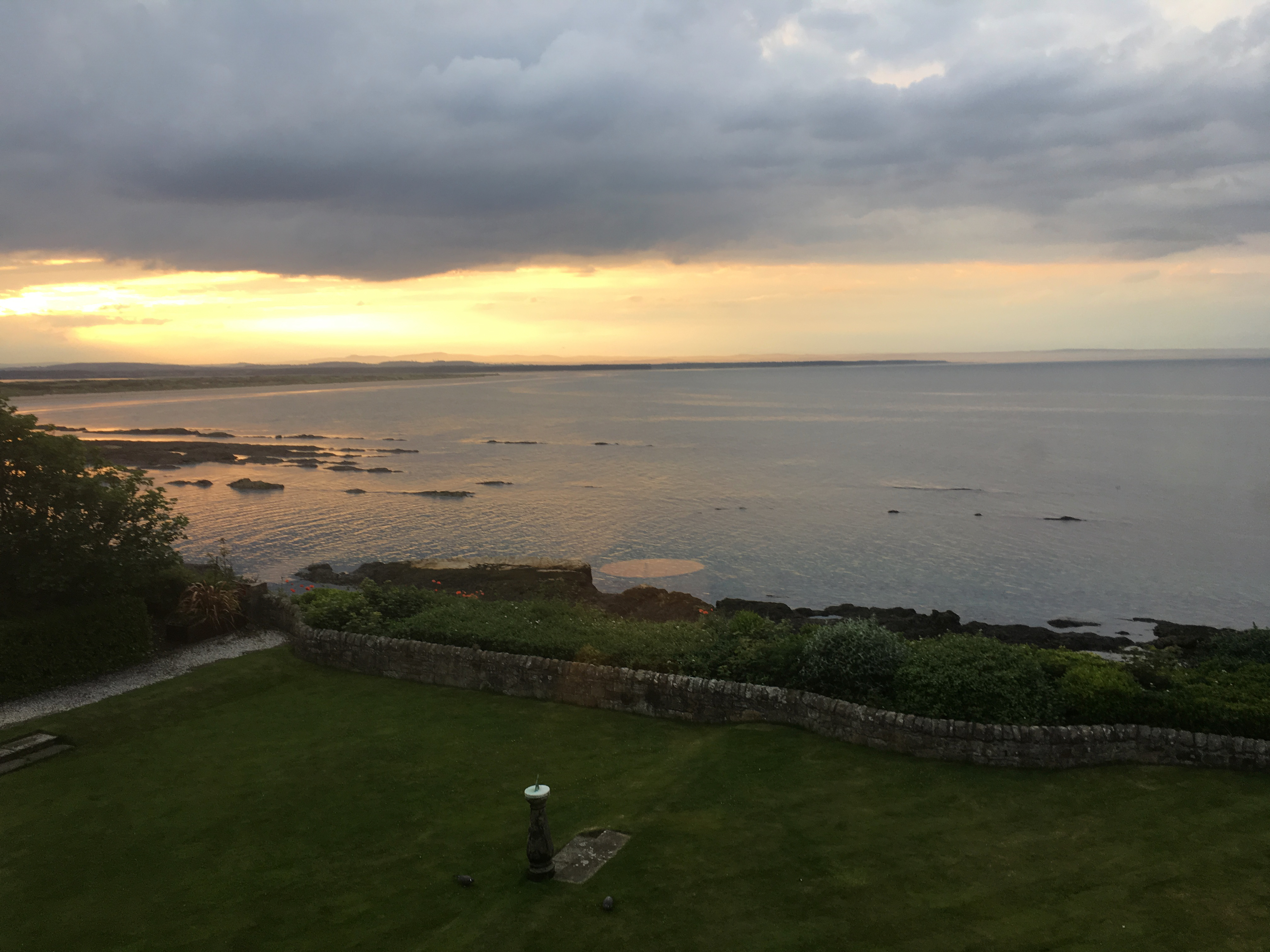
The view from my hotel room in St Andrews in June 2017
She then invited me to come present some of my research at St Andrews in June, which was my first trip to Scotland. It was a great time to go. Anyone who’s been to Rome in mid-June knows how it can be stiflingly hot. I remember getting off the plane in Rome at about 10pm. It must’ve been 80º and unbelievably humid. How I wished I were still in Scotland, where I needed a sweater in the evenings.
The product of that presentation was my essay on Eastern Christians who came to Rome. My essay traced the experiences of a Syrian patriarch, Tibetan cousins, and a renegade cleric who all mysteriously showed up in Rome without anyone expecting their arrival. Each came for different reasons, left when they felt it was time to do so, or stayed because it was expedient. They saw Rome not as the center of some powerful force that dominated the world, but as a place to get something they wanted or leave if they didn’t get it. They went to pilgrimage churches, celebrated Easter, helped popes reform the calendar, and tried to convince important Catholics to help them out in some way in their homelands.
The important thing that I hoped to convey in this essay was that Eastern Christians had their own view of themselves, their community, and Rome that was totally independent of Rome’s view of itself and of them. I aimed to show that Eastern Rite Christian communities, though often at odds with one another, all saw the sitting pope as an esteemed Christian leader, even if not the head of all Christians.
What I enjoyed most about writing about these traveling Christians were the anecdotes that range from the unexpectedly amazing to the downright bizarre. Popes washed their feet, alligators ate previous pilgrims who never made it, and some lied through their teeth to convince popes to send missionaries, money, and goods back to their homelands.
These stories showed a really complex story, one where Christians regardless of denomination understood that they shared the same faith, even if they didn’t always agree on how it worked. This led them to believe that they just might be able to find common ground. This didn’t always work, of course. But it’s a reminder that early modern Rome was a global city, but what that meant was not always Rome’s to define.

































 Robert Clines, Ph.D.