Along the Queen of Roads

Over the past few weeks, prep for my travel course to Rome has ramped up. I’ve begun writing lectures, compiling visuals, and—by far my favorite part—mapping out our walks. Right now, my current darling is our walk along ancient aqueducts and the Via Appia Antica.

I love this walk because it’s a reminder that Roman history is Mediterranean history on several levels. We look at how Rome used the surrounding landscape to provide the city with water both to drink and to admire. Then, we put to test the old adage that all roads lead to Rome by walking on one of its oldest and most famous: the Appian Way.

Ruins of the quite magnificent Aqua Claudia in the Parco degli Acquedotti

First, we start in the Parco degli Acquedotti, some ruins of aqueducts that now are the centerpiece of a rather lovely public park. The two main aqueducts that pass through this park, the Aqua Felix and the Aqua Claudia, pumped clean, fresh water into Rome. The Aqua Claudia, build by Caligula and then Claudius in the first century after Christ, demonstrated the ingenuity as well as the prosperity of Rome, as the city of 1 million residents needed water but also needed everyone else to know they lived in the capital of the world.
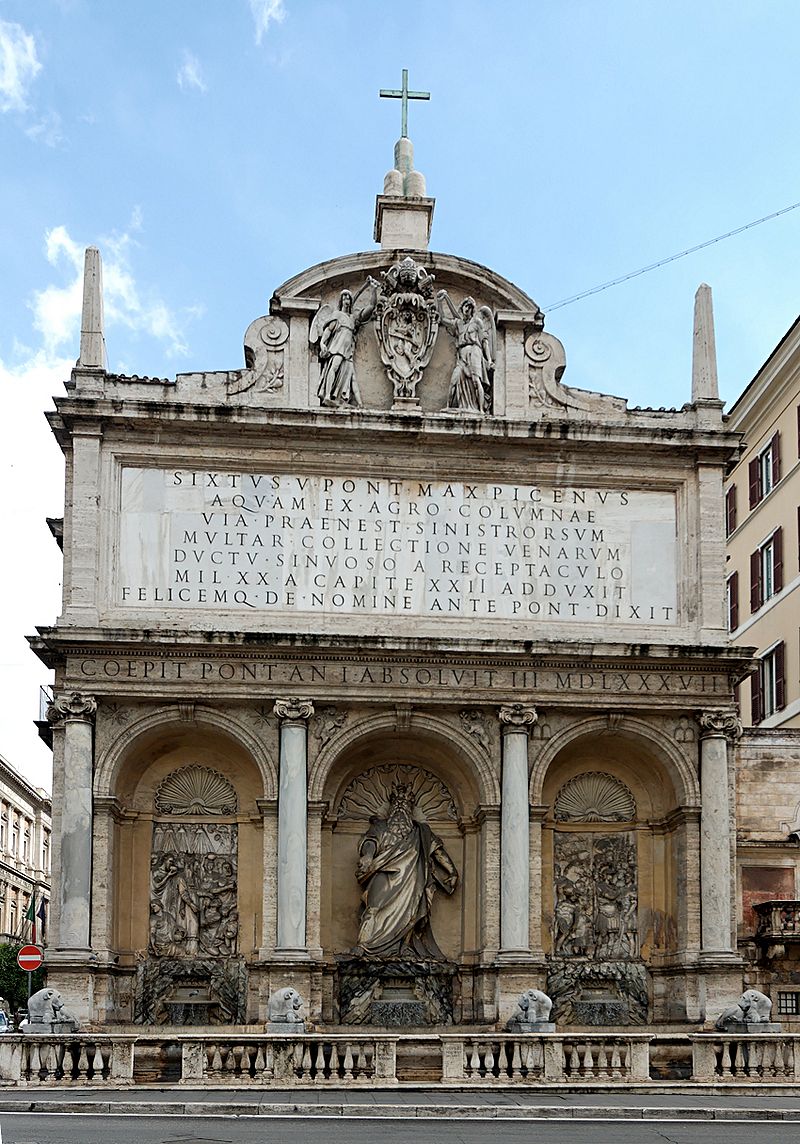
The Statue of Moses, powered by Sixtus V’s Acqua Felice

The Aqua Felix, better known by its Italian name Acqua Felice, was built by Pope Sixtus V in the 1590s. His first name was Felice (happy or lucky), which gives you a sense of Sixtus’s sense of himself. It’s an attempt to prove the booming Baroque city with much needed drinking water; but it’s also designed to revive and reflect its predecessor, the Aqua Claudia. It bring potable water to the city, but it also fuels some of the city’s great fountains, such as the Fountain of Moses. Sixtus’s goal was to turn Rome into a global capital, and this was one way he did it.
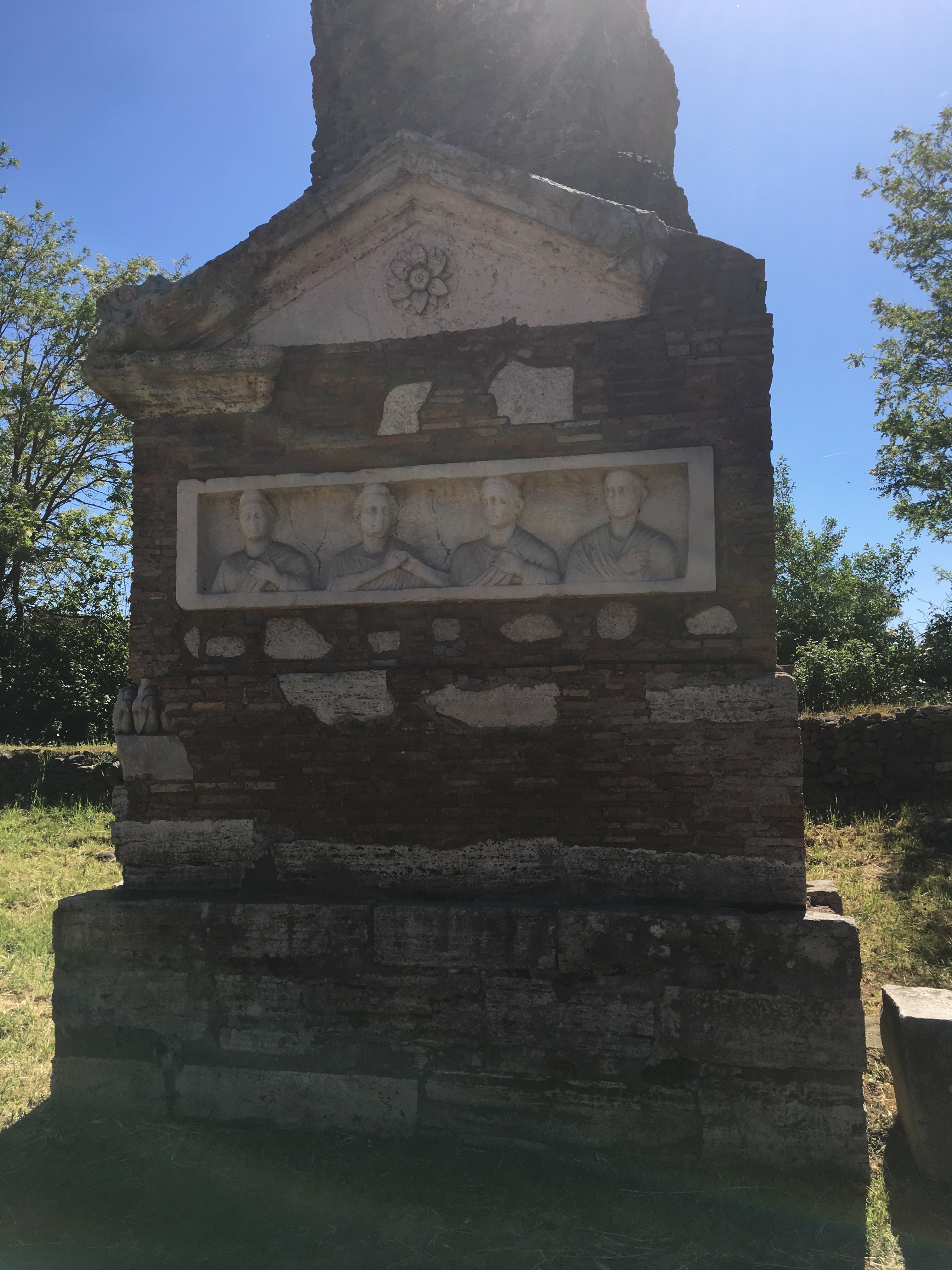
One of many tombs (mostly copies) that line the Via Appia Antica as you approach Rome

From the aqueducts, we cut through a pretty unattractive suburb to get to the Via Appia Antica. We begin the walk toward Rome by admiring the many tombs, much of which are copies, that follow the road. In ancient times, the rich and powerful, but not just, wished to be remembered in this life by having passers by stop to admire their tombs. Many of these tombs actually invite the traveler over to pause and contemplate the lives the dead lived. It’s a reminder that the dead are still with us, even 2,000 years later, and that the living’s concerns about their legacies have changed very little.

Capo di Bove, in antiquity a private thermal bath

We then pass by an archaeological site known as Capo di Bove, which means Ox Head. This is what it was called in the Middle Ages. In ancient times, it was home to a thermal bath. While almost certainly a private bath, I sort of like to think that its owner offered travelers a nice respite on their approach to Rome. But this is usually more my tired feet talking than what I as a historian know about how things worked in the past. Either way, the baths were a big part of Roman social life and could be found, both in public and private forms, all over the empire. The city Bath in England is named because of its extensive baths the Romans built when they put down roots there.

The entrance to the tomb of the Roman patrician woman Caecilia Metella

After Capo di Bove, we pass by the tomb of Caecilia Metella, who was the wife of Marcus Licinius Crassus, the son of Marcus Crassus, one of Julius Caesar’s soldiers and once seen as the richest man in Rome. The sheer size of the tomb illustrates her wealth and power as a patrician wife in the first century. Her family, the Caecilii Metelli, were insanely powerful too. With estates across the Mediterranean, these two families’ political alliance through the marriage of Caecilia and Marcus only magnified their influence and their ability to build on a massive scale.
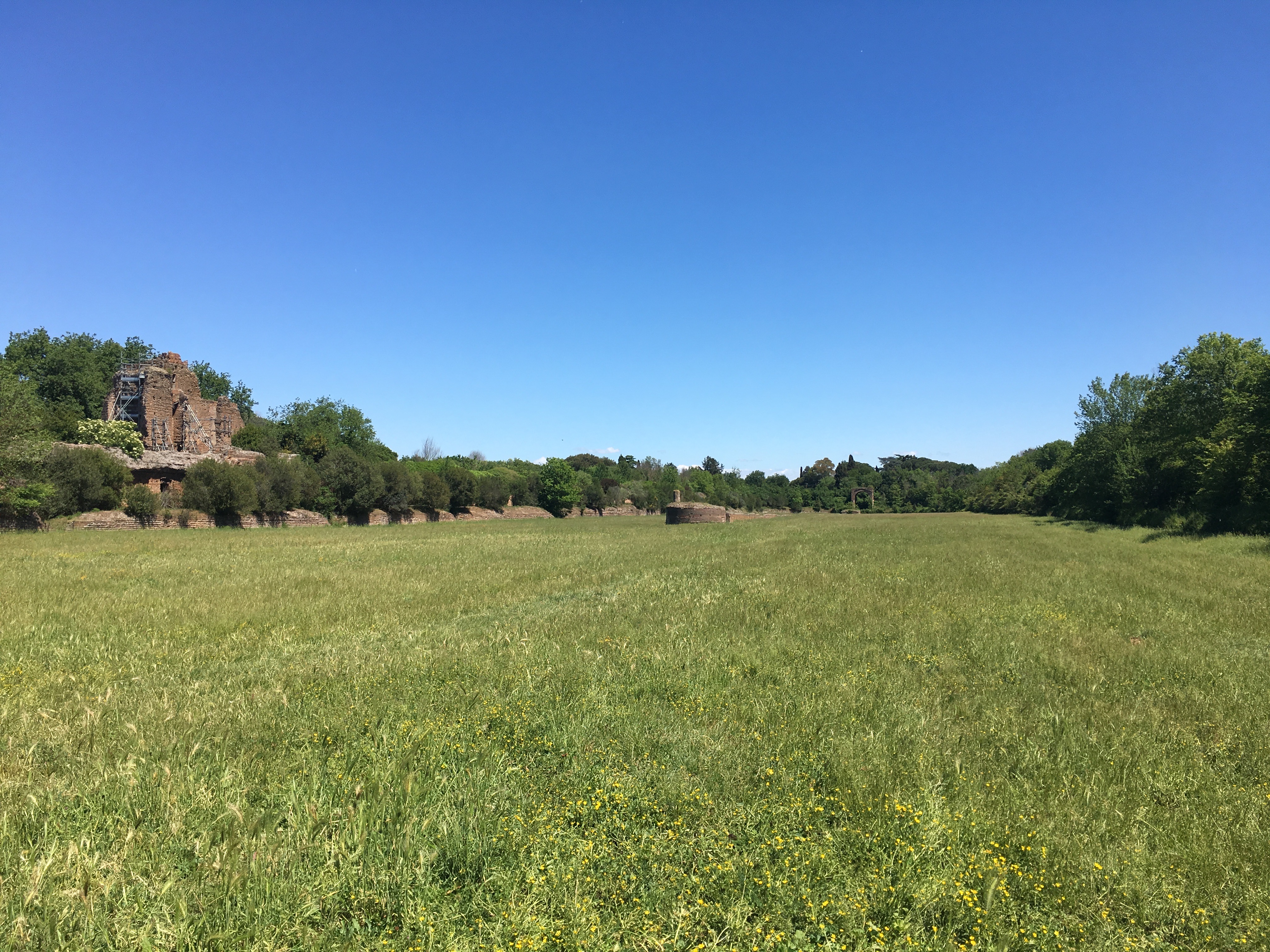
The Circus of Maxentius, or my favorite spot for a picnic.

We then plan to stop for lunch at the Circus of Maxentius. Maxentius is best known for losing Rome to Constantine in 312 at the Milvian Bridge. But before he did that, and ceased to be emperor, he built a private country villa along the Via Appia, along with its own circus for chariot racing. Talk about megalomania! Imagine having a private horse racing track in your own back yard. It’s mostly ruins now, but it’s a nice spot for a picnic.
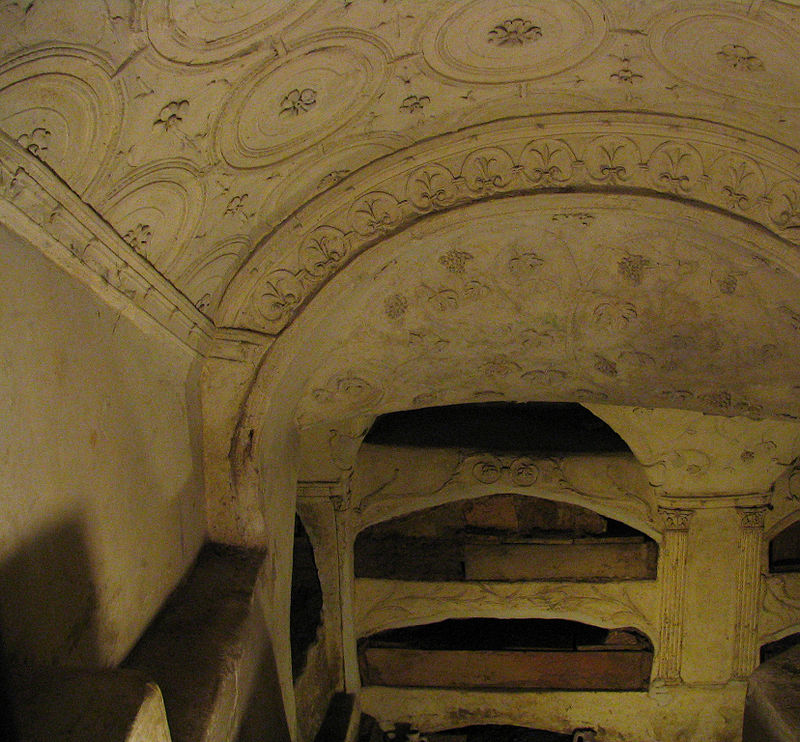
A look into the Catacombs of San Sebastiano

After we recharge, we’ll stop at the Church of San Sebastiano, which has some really wonderful Christian catacombs. Once believed, falsely, to be Christian hiding spaces, the catacombs are great to explore how the earliest generation of one of the Mediterranean’s youngest religions, Christianity, survived and thrived in a world dominated by Rome’s civic religious life. While Christianity began in the Middle East, it did not take long for it to spread across the Mediterranean, and to Rome in particular. The catacombs are also great in the summer, because they’re under ground and about 10-15 degrees cooler. From San Sebastiano, we pass by the Church of Domine Quo Vadis, which commemorates the moment when Christ urged Peter, who was fleeing Rome to avoid persecution, to turn back and continue his work, even if it would lead to death.

Panoramic view south from Rome from the top of the Porta San Sebastiano, now home to the Museo delle Mura

We then will pop into the Museo delle Mura, a tiny museum that is housed within the Porta San Sebastiano, one of the city’s old gates. It’s a quaint little museum, and you can walk along the walls and climb to the top of the turrets of the gate. With spectacular views of the countryside to Rome’s south, it’s easy to get lost in time and think you’re looking out at Rome’s first frontier with the same eyes as those who once defended imperial Rome.

Circus Maximus, Rome’s chariot track that could hold up to 250,000 spectators
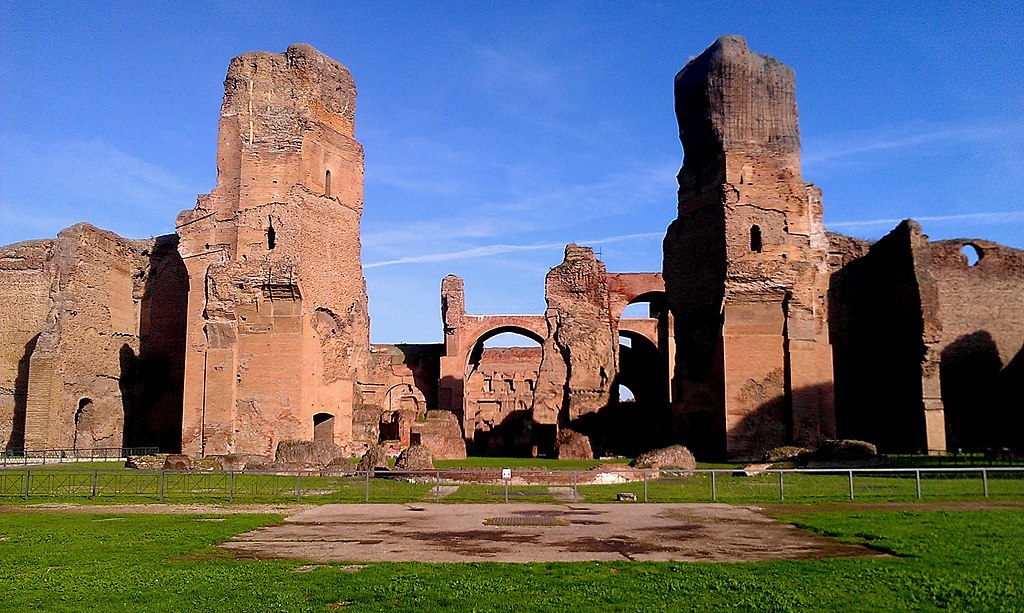
Baths of Caracalla

Technically, then, we are no longer outside the city. Our final destination is the Circus Maximus, now little more than a field used for jogging and walking dogs. On the way, we pass by the Baths of Caracalla, a massive structure that once housed a public spa, built in 217. We used to believe that Rome was in a free fall by the third century, but it’s hard to argue that when you look at the testament to Roman engineering, power, and sophistication that stretched across the Middle Sea.

So, that’s our walk. It’s a fun walk and one that lays bare all that Rome has to offer. Plus, it’s outside the city and not nearly as crowded (though hardly empty) as, say, the Colosseum. In just about 3 miles, we’ll learn so much about the Mediterranean: its myriad religious traditions; monuments of Roman power; how commerce worked; and how people communicated and moved in the pre-modern world.
Bringing the Mediterranean to Western North Carolina (Wait. No. Reverse that.)

This June, I’m guiding a group of fifteen students from Western Carolina University to Rome. For some of my students, it’s their first time leaving the country; a few have never even been on an airplane! For me, it’s a great opportunity to share my love for Rome with a group of students and renew my passion for the Eternal City. That’s not to say that I’ve grown bored with Rome, but I’ve seen the Colosseum a million times; it’s still awe-inspiring, but not quite like it was the first time. I hope to see that joy in my students’ eyes. Maybe I’ll feel like a 19-year-old again.

As someone who always thinks about the Mediterranean (literally, all the time; it’s a problem, especially when it comes to Mediterranean food), this trip is a great opportunity to show how Mediterranean history works locally. Rome’s the perfect spot for that. It’s not just a palimpsest of historical eras, but it’s also a crucible of Mediterranean cultures past and present. The city is festooned with artifacts that lay bare the myriad peoples from Spain to Syria who’ve visited or called Rome home. It’s here that I hope to show my students how Rome is both in the Mediterranean but also of the Mediterranean.

What do I mean by that? What does being in and of the Mediterranean mean? Well, here are a few highlights of the trip that show you.

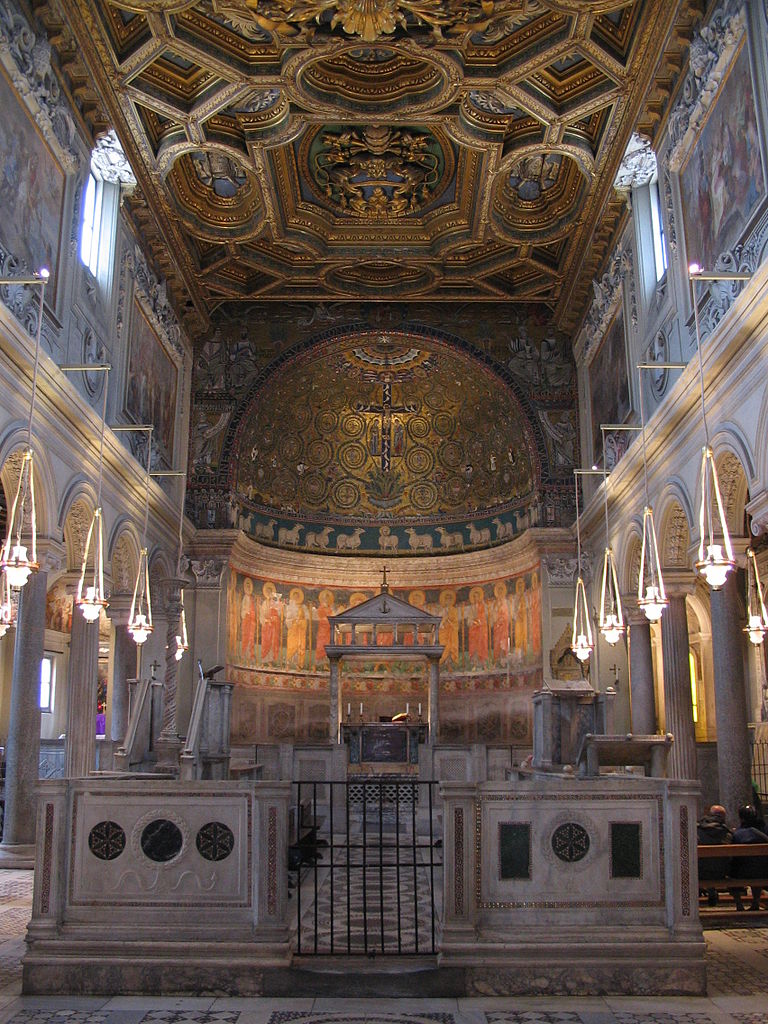
Apse of San Clemente in Rome

Take the Basilica of San Clemente. It’s located about halfway between the Colosseum and Rome’s cathedral, St. John Lateran, which was largely built through the largess of Rome’s first Christian emperor, Constantine. San Clemente, when you enter it, is a typical Roman church: the apse has a beautiful early-13th-century mosaic in a typical Byzantine Greek style.

A fresco of Mary and Jesus, found in the 4th-century church located under San Clemente

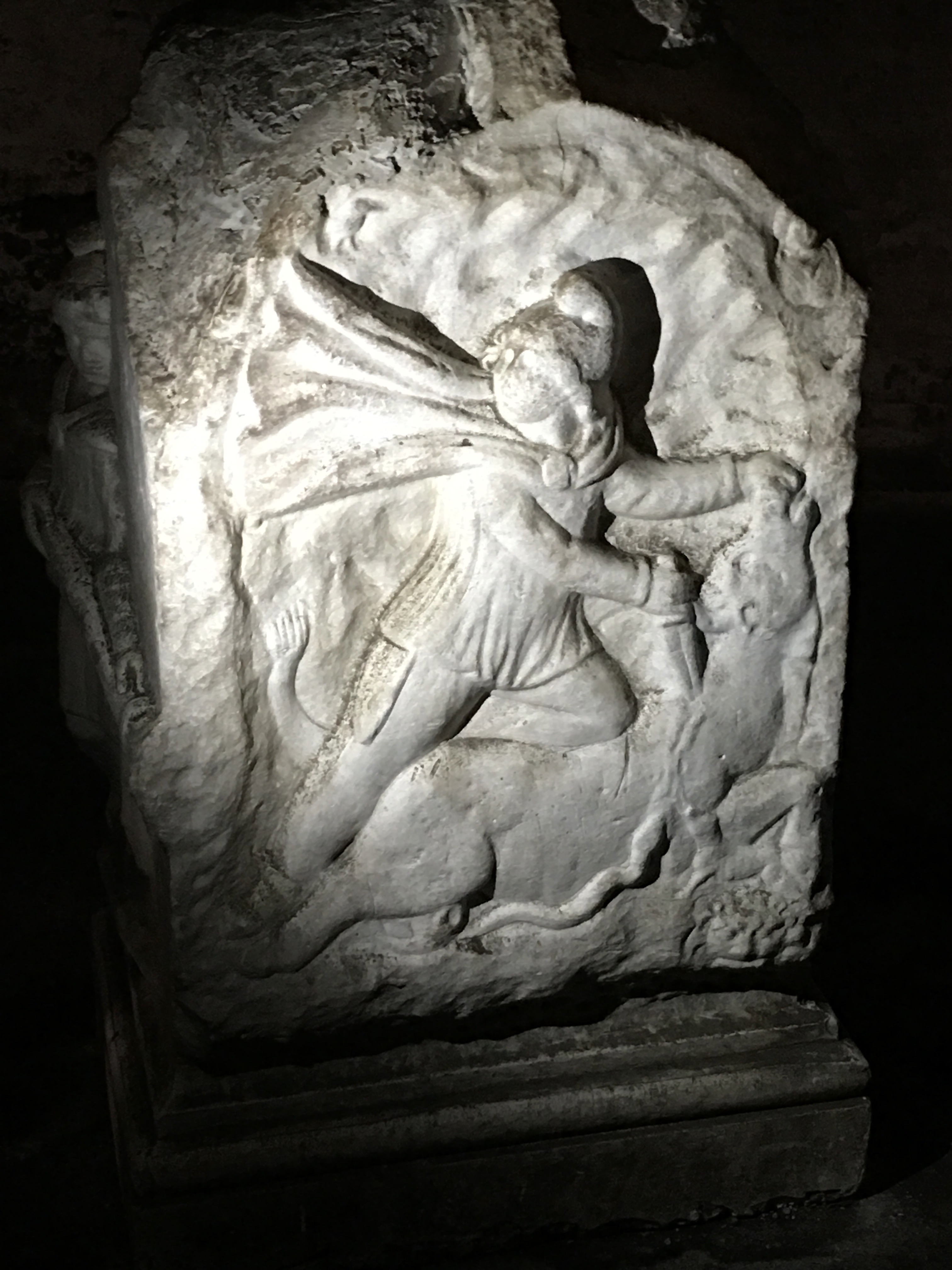
But below the church are a few treasures that you can see for a nominal entrance fee that goes toward maintenance and restoration: a 4th-century church as well as an even earlier temple, probably from the 2nd-3rd century, dedicated to the god Mithras, a mysterious figure about whom we know very little. But we do know that his cult originated in Persia and probably migrated throughout the Roman Empire via its mighty military, where it was made more palatable for Greeks and Romans.

A sculpture of Mithras killing a bull, in the lowest level of San Clemente. This image appears in numerous Mithraea

All of this means that, within one structure, we have layers of the past as well as layers of the Mediterranean. Worship within Rome, in one space, ranged from Persia to Greece to Italy and beyond.

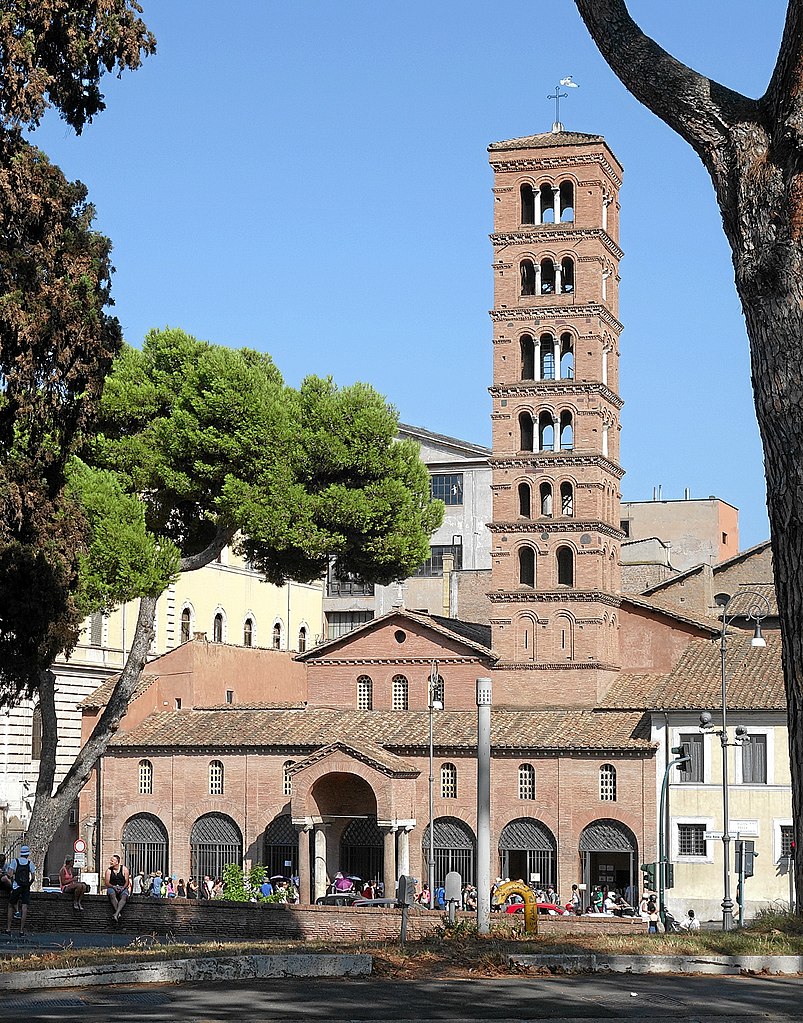
Another church, probably one of my favorites in the city, is Santa Maria in Cosmedin. Originally built in the 6th century, it was (and still is) a centerpiece of the Greek-speaking community of Christians that operated in Rome since antiquity.

Santa Maria in Cosmedin

In fact, the church’s name “Cosmedin” originated probably from the Ancient Greek word κοσμίδιον (cosmidion), which is related to our English words cosmos and cosmic. The church basically is called Saint Mary in the Cosmos or, if you’re feeling silly and are okay with loosely translating things, Cosmic Saint Mary!

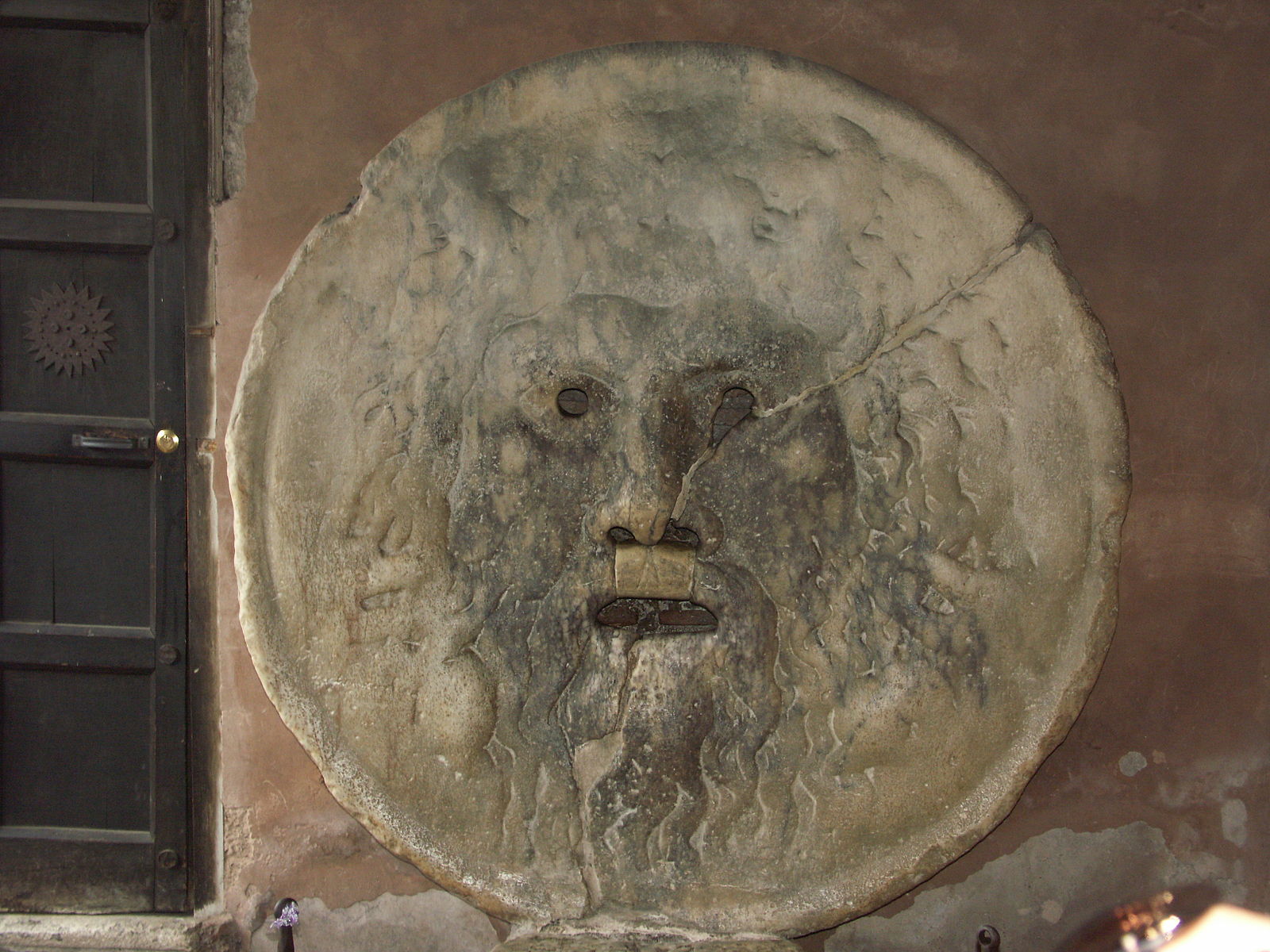
The Mouth of Truth, an old sewer cover that can tell if you’re lying

Most people don’t even go into this church. It’s perhaps best known for the Mouth of Truth, an ancient sewer cover that allegedly bit off the hands of liars. Tourists line up just to test their honesty, just as Audrey Hepburn did in Roman Holiday. I once took my fiancée there and asked her if she loved me just as she put her hand in. She still has two hands, so we might be okay.

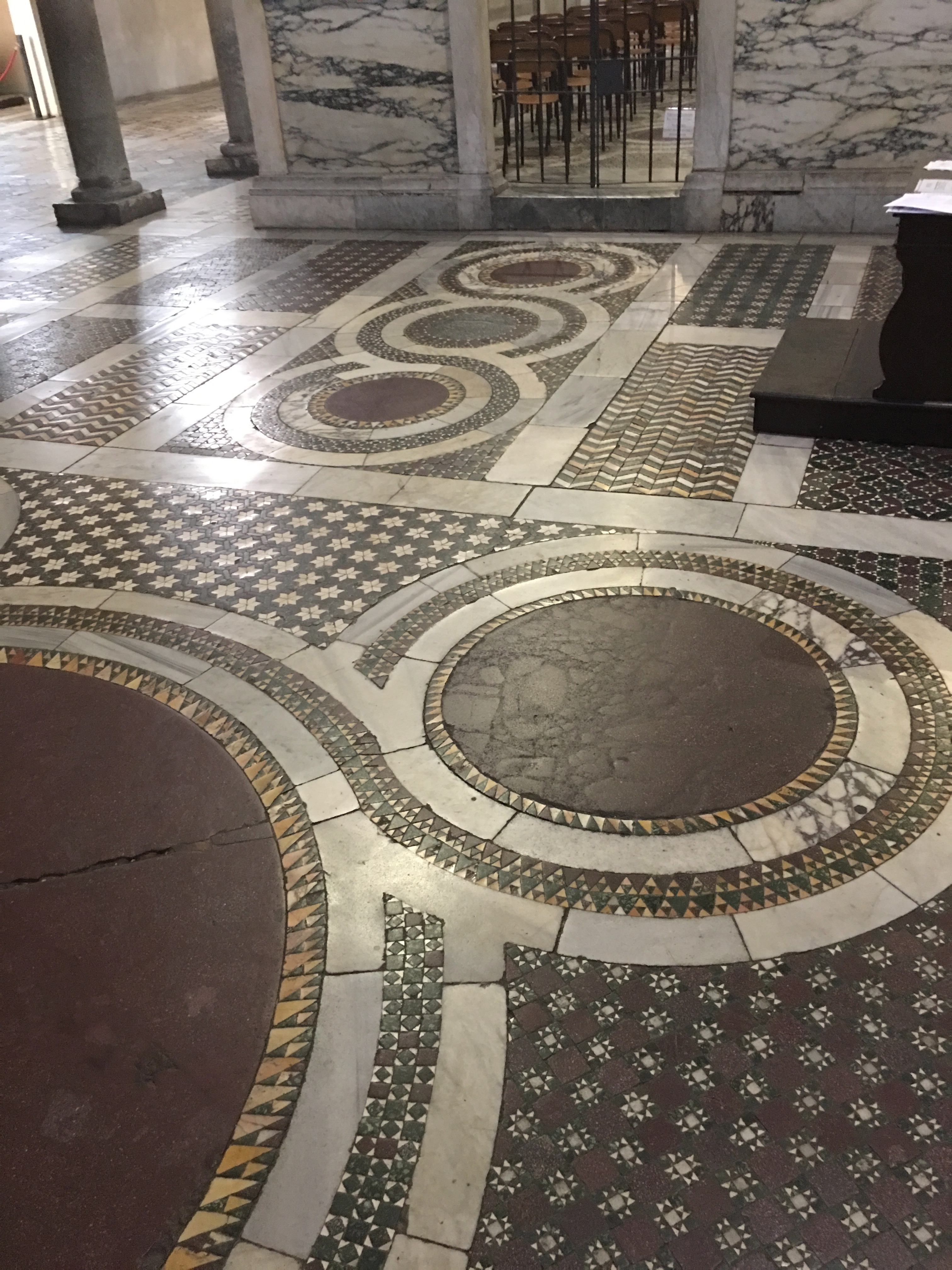
The ornate floor mosaic in Santa Maria in Cosmedin

In any case, skipping the inside of this church is a travesty. It’s austere and lacks the wow factor of most of Rome’s baroque churches, but it’s gorgeous in its simplicity. It has these lovely stone floors arranged in a style known as cosmatesque, an elaborate form of floor mosaic that, while thoroughly Roman, nevertheless betrays its Byzantine roots.

Columns that don’t match, a pragmatic choice over an aesthetic one

Likewise, it has ancient columns that are not uniform by any stretch, but clearly serve an architectural purpose. In late antiquity, it didn’t matter if the capitals matched, just so long as buildings didn’t fall over. But the capitals are all of different styles, showing that architecture in Rome was a mishmash of styles and tastes.

I could go on with examples that show how Rome was and is as Mediterranean as it gets. From Arab-style bowls in Romanesque bell towers to the more than 2,000-year presence of Jews in Rome, it’s a city that lies at the center of the Mediterranean in a number of ways.

Whether it’s food, architecture, or any other aspect of Rome, the Mediterranean has shaped Rome as much as the empire Rome built shaped the Mediterranean. If you want to be in the Mediterranean while also understanding the history of the Mediterranean, look no further than the first city to unify it all. When the Romans called it Mare Nostrum, Our Sea, they were right; they just didn’t realize how much the Middle Sea shaped their world.

Reading about Mediterranean Food Cultures

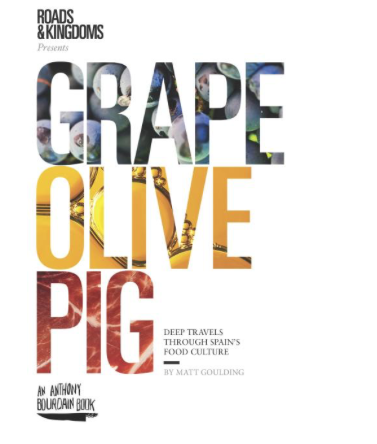
I recently finished Pasta, Pane, Vino and Grape, Olive, Pig, two wonderful books about Mediterranean food culture, both written by Matt Goulding. They’re similar in format: region-by-region explorations of various foods and the people who produce them. From mozzarella in Puglia to paella in Valencia, and everything in between.

What’s great about these two books, aside from causing me to salivate as I think about all the wonderful food I could be eating instead of reading and blogging, is just how different the cuisines of Italy and Spain are both against each other and within each country. You just simply don’t eat in Puglia what you would in Tuscany any more than you’d eat the same things in Italy and Spain.

Burrata, a version of mozzarella with a rich, creamy center

Yet, there is something unifying about both books. It’s the way the food is sourced, discussed, and enjoyed. Whether it’s eating the best hand-made pasta in the world in Bologna or world-class bluefin tuna in Cádiz, food is integral to life in these places and lets us know who these people think they are. The Neapolitans believe their pizza is the best ever made, and this says something about them as people; the Basques and Catalans have used cooking as a means of reminding the world that they are in fact not Spanish.

What I love most about these books is the emphasis on the local, the reminder that food is a reflection of the people who make and eat it, and the fact that food nourishes us in ways beyond basic sustenance. It is a part of the Mediterranean and its peoples, and it allows for good arguments over who can do more miraculous things with pigs, grains, rice, grapes, olives, and any other edible gem that the Mediterranean produces.

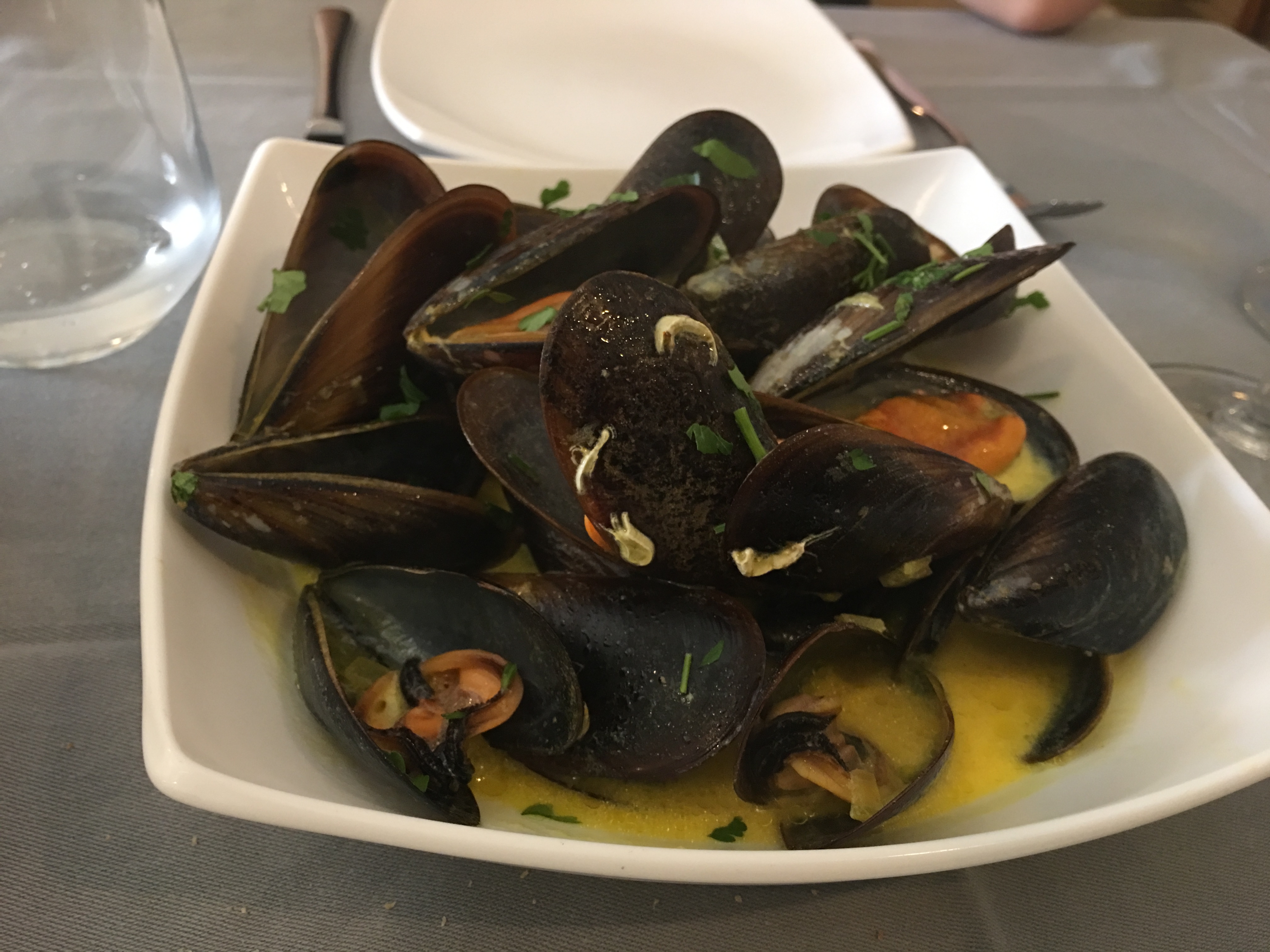
Peppered mussels in a butter sauce. A light treat I enjoyed a few years back while visiting Otranto, a small port city on Italy’s southwest coast

There are so many other Mediterranean cuisines that I hope Matt Goulding writes about: Portuguese, French, Croatian, Moroccan, Lebanese, Turkish, Greek, just to name a few (but certainly not all). Or maybe I will write about them some day. But I’d have to eat more food first.

The Platonic Sea: Marsilio Ficino and Mediterranean Philosophy

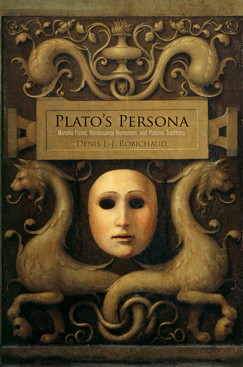
Cover of Denis J.-J. Robichaud’s recent book, Plato’s Persona

I was recently asked to review Denis J.-J. Robichaud’s recent book, Plato’s Persona: Marsilio Ficino, Renaissance Humanism, and Platonic Traditionswhich was published last year by Pennsylvania University Press. The review will appear in The Sixteenth Century Journala periodical aimed at an academic audience that specializes in the early modern period. While that review is geared toward scholars, I thought I’d share some of my thoughts on the book here, since some of what it covers piqued my interest as a Mediterraneanist.

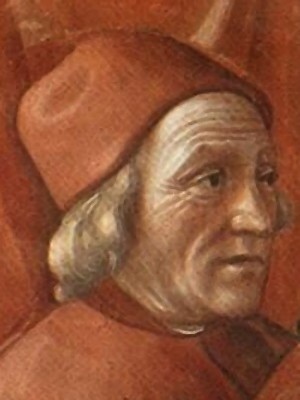
Marsilio Ficino, the Renaissance’s interpreter and translator of Plato

Robichaud’s book explores a figure named Marsilio Ficino, who is in some sense the father of Renaissance interpretations of the Ancient Greek philosopher Plato. Ficino wrote commentaries on all sorts of things related to Plato and was even responsible for many of the translations of Plato’s works into Latin from the original Greek. In other words, without Ficino, Plato would be a quite obscure figure.

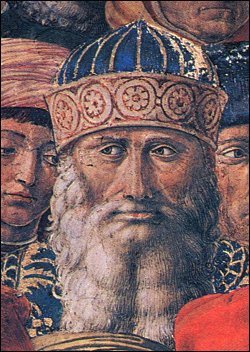
Georgios Gemistos

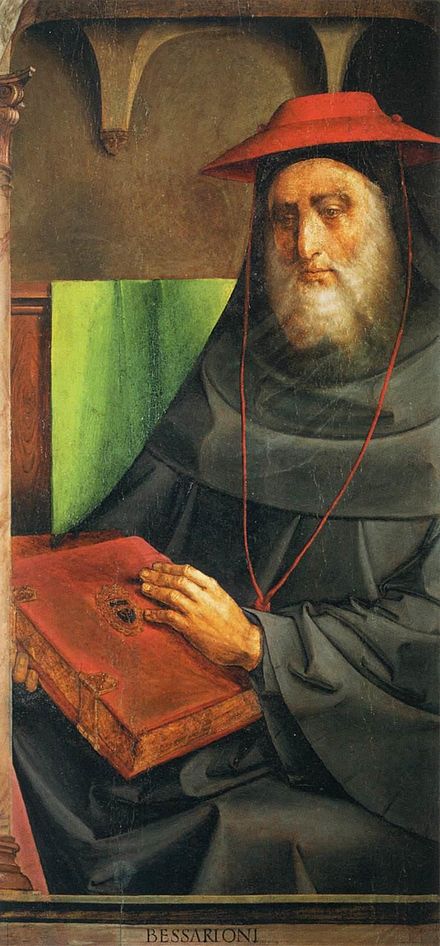
But Ficino wasn’t alone, and this is where the Middle Sea comes into play. Plato had been mostly unknown to Europeans for much of the Middle Ages. Then, when the Ottoman Turks began pressing on the Byzantine Empire centered at Constantinople (modern-day Istanbul), many Greek scholars such as Basilios Bessarion and Georgios Gemistos brought a ton of Greek manuscripts with them to Italy. Included in this, especially in Gemistos’s cache of papers, were many of Plato’s famous works that did not exist in Western Europe. This was a boon for figures like Ficino, who quickly got to work on interpreting Plato.

Cardinal Basilios Bessarion

So, Platonism’s revival in the West was the direct result of Mediterranean wars between Christians and Muslims, but it was also the collaborative project of Greeks and Italians who, despite their religious differences, saw a common vision in the words of the ancients.

But it doesn’t stop there. According to Robichaud, Ficino’s attempts to interpret and share his vision of Plato were not just about Plato. Rather, he borrowed from a whole slew of authors from the ancient, late antique, and medieval worlds who thought about and read Plato. These figures came from North Africa, Greece, Syria, and Turkey, demonstrating that Plato’s spread was not solely the product of Renaissance collaborations between Italians and Greeks, but had a much longer history.

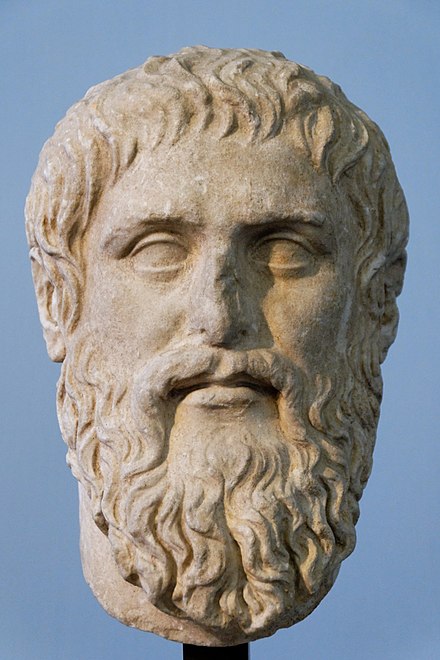
A bust of Plato

His dissemination took place as the result of Hellenization, which is what we call the process by which Greek became the dominant cultural model of the Mediterranean following the conquests of Alexander the Great in the fourth and third centuries before Christ. And then, the Romans had their turn, as figures ranging from the Roman orator, philosopher, and statesman Cicero to the Christian bishop and theologian Augustine all read, interpreted, and wrote about Plato.

Plato, then, is as Mediterranean as it gets. He might have written in one context, but he very quickly resonated with a wide array of people who saw value in what he said. While he may have been lost in Europe for centuries, his revival in the Renaissance—the product of a perfect storm of factors that converged all at once—demonstrates that the layers of the past and their continuity in the present extended even to philosophy.

In conclusion, if you know anything about Plato’s thought, this joke will make sense. If not, you need to read you some Plato: at the end of the day, if there were a Platonic ideal of Sea, it would surely be the Mediterranean.

Introducing Students to the Religious Landscape of the Roman Mediterranean

Last week, my students and I began our exploration of the pre-modern Mediterranean’s religious mosaic. Our journey began with selections from the Gospels according to Matthew and John. In particular, we discussed events leading to the crucifixion of Jesus and how Jesus might have been perceived by the Romans as well as the Jews who traveled to Jerusalem for Passover, which was about when tradition holds that Jesus was crucified.

What is most striking about these passages—at least for someone like me, who’s read them a million times—is seeing students react to the words of Jesus. Most of my students identify as Christian, but believe that Jesus preached love and compassion. I love that about them. Their Jesus is a very nice Jesus.

So, imagine their faces when we gloss over Matthew 10:34-36:

“Don’t think that I came to bring peace to the earth. I did not come to bring peace, but a sword. I have come so that ‘a son will be against his father, a daughter will be against her mother, a daughter-in-law will be against her mother-in-law. A person’s enemies will be members of his own family.’”

Not exactly the words of a peace-loving Jesus who just wants the world to embrace the Grace of God. But we ignore a lot of the Gospels if we only read that. This is true of much of the Bible. So we shouldn’t cherry pick, should we?

Here’s the thing, though. Sometimes, in history, cherry picking is exactly what people do. And the ancients were no different. For Romans and also for many Jews, Jesus’s words about bringing swords and dividing families, when taken out of context and heard according to how the listener wanted to interpret them, were not metaphorical. They were direct threats to the uneasy peace that the Romans and Jews had built. For them, Jesus was a rebel, a rabble-rouser from the countryside who had a bunch of outcasts for friends. For the Romans and the Jews, his sword was the sword of insurrection.

This is also why the Jews participated in his execution. The Romans, despite their claims of wanting to integrate foreigners into their lands, nevertheless looked down on non-Romans. No wonder, as John tells us, Roman soldiers purportedly adorned Jesus with a crown of thorns and mockingly worshiped him as King of the Jews. No matter what we might want to think about the Romans, they weren’t nice people. But they weren’t dumb, either, which is why they guarded Jesus’s tomb after his death. The only thing worse than a living insurrectionist is a dead insurrectionist whose body goes missing.

But that equilibrium eventually broke down. And I think this is where my students really made some progress and gained some insights into how the ancient Mediterranean was a complex world, equal parts divisive and inclusive.

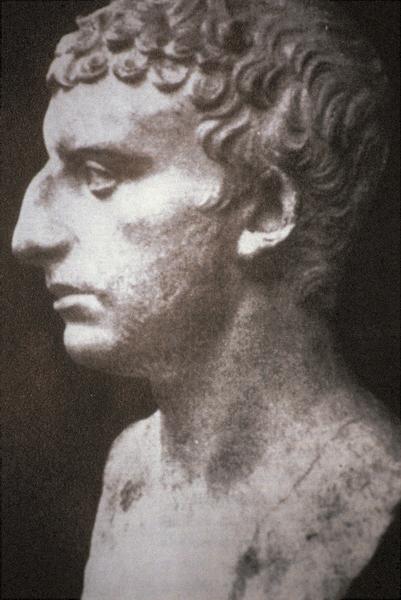
Flavius Josephus

To this end, we read sections of Josephus’s Jewish War, an account of the Jewish rebellion against Rome that began in 66 AD, which eventually resulted in the destruction of Jerusalem in 70.

What is most important about this reading, for our purposes, is that Josephus was a Hellenized (culturally Greek) Jew from Jerusalem who at first participated in the rebellion but was captured and taken to Rome as a prisoner. And his brilliance quickly shone through, as he was treated less and less as a slave and more as an archive to mine about the inner workings of the rebellion. He eventually earned Roman citizenship for his cooperation.

Hence his Jewish War.

It’s a great pairing with the Gospels. First, the section we read also takes place during Passover. Second, it encapsulates well what Jerusalem looks like when Roman rule isn’t supported: overcrowded and starved, under siege. Third, it lays bare how complex this religious landscape truly was.

The first thing my students recognize is that Josephus is writing for Rome. He speaks so highly of Roman might, of the magnanimity of Titus, and of the depiction of Jews as terrorists, partisans, and rebels. The students think nothing of it, really. For them, the war is clearly the Jews’ fault. Rome brought them so much, and even killed Jesus for them!

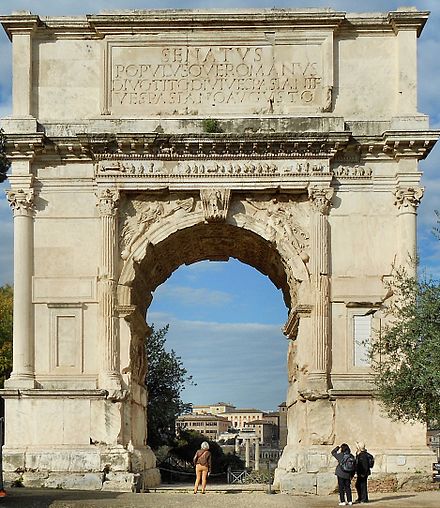
Arch of Titus in Rome

But then, when they are reminded that Josephus is a Jewish prisoner of war, things change.

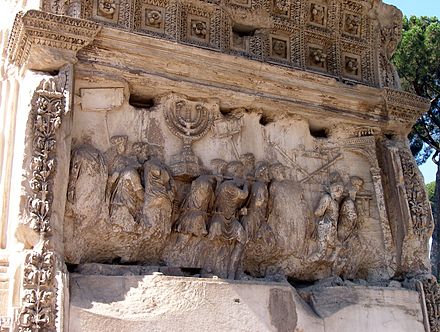
Depiction of the Sack of Jerusalem on the underside of the Arch of Titus

Titus’s troops disobey, which makes him look weak. Roman soldiers are depicted as lustful, bloodthirsty monsters. Rome looks like a tyrannical, imperialistic juggernaut that thinks conquest is a form of liberation. In the end, Titus torches the whole city and brings its spoils back to Rome, hardly the act of a generous leader who wants to bring peace. No wonder peace was not what Jesus was bringing.

What stands out as we concluded our discussion of the Gospels and Josephus is that both readings resonate with several audiences. Sure, the Gospels are explicitly for Jesus’s followers, but the events they recount allow us to empathize with Jesus’s Roman and Jewish detractors as well as their mutual antipathy for and anxiety of one another.

As for Josephus—a Hellenized Jew writing under Roman authority—he celebrates Rome and its might while also laying bare its hypocrisy. He writes a history that speaks to both Romans and Jews without alienating either. He celebrates Rome’s conquest of Jerusalem while preserving the integrity of the Jews’ motivation for rebelling. He likens Rome’s actions to those of the Egyptians, Babylonians, and Greeks. The Jews withstood them, so Rome will be no different. It’s a masterful work of historiography.

What was great for me was to see the students recognize how complex writing about the past can be, and how the many layers of Mediterranean history converge in the everyday lives of its people.

The students thought that Josephus was brilliant for his ability to both challenge Rome while purportedly celebrating it. And they thought it was cool that he could somehow be culturally Greek, religiously Jewish, and politically Roman. The inability to disentangle the three was, for a group of freshmen, equally mind-boggling as it was insightful.

With any hope, I may have created a few Mediterraneanists. Time will tell. But in either case, it was a great start to the semester.

Listening to the Mediterranean through the Ancient Sounds of Epirus

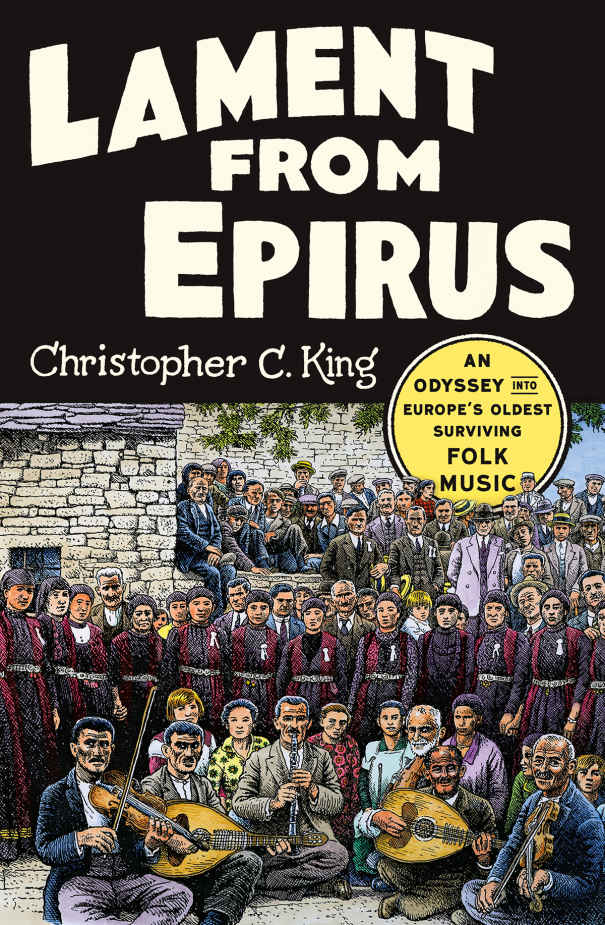
I recently finished Lament from Epirus: An Odyssey into Europe’s Oldest Surviving Folk Music, Christopher C. King’s exploration of his discovery of a lost world of ancient folk music nestled in the mountains that straddle modern-day Greece and Albania. It was fascinating to see how King brought alive the musical traditions of a society that has managed to preserve its roots through song.

We Mediterraneanists often think about the Sea as a whole, but every so often, its fragmentation comes lurking back to rear its beautiful head.

This book was one of those moments. Lament from Epirus was a fun read for a lot of reasons. King’s ability to weave history, music, and his own experiences makes the book more novelistic than esoteric tome. Plus his thorough knowledge of music, both how it feels and how it actually works, lets the reader get a fuller sense of what King experienced in his travels, which took him to remote mountain villages as well as wonky record stores in Istanbul. The result is a highly readable book that is as enjoyable a page-turner as it is an erudite and informative cultural history of Epirus’s folk music.

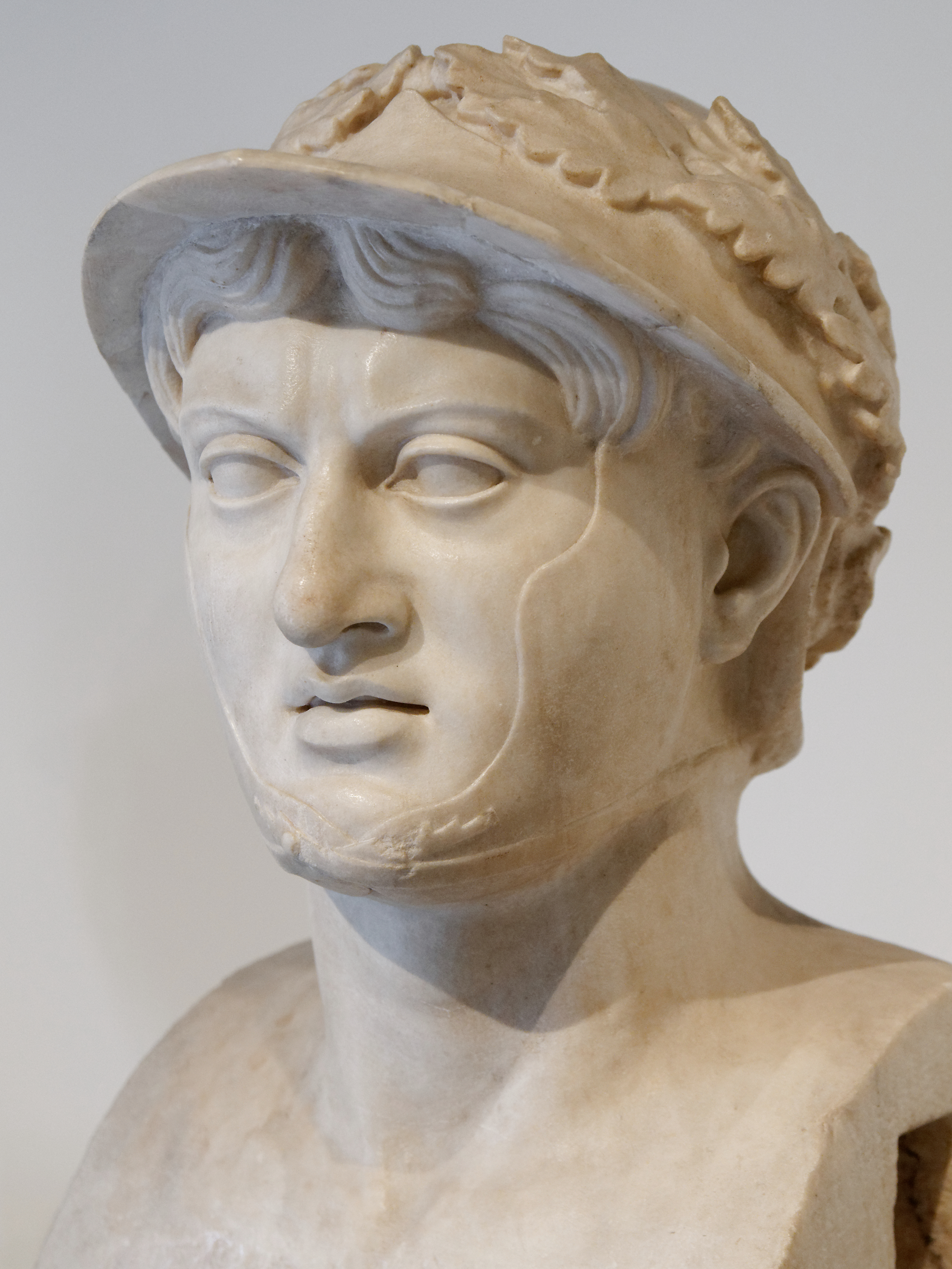
Portrait of Pyrrhus of Epirus, the famed Epirote tyrant who invaded Italy and challenged Rome.

Epirus is probably most famous (if at all) for being the homeland of Pyrrhus, the despot of Epirus, who once invaded Italy and threatened the burgeoning empire that the Roman Republic was trying to construct.

But that was nearly 2300 years ago. Much has happened since: Rome eventually conquered Epirus. It was a part of the Byzantine Empire, then was held by numerous despots before slowly falling to the Ottoman Turks between 1430 and 1480. And it wasn’t until the early 20th century that much of it finally became a part of Greece. A lot of foreigners came and went. And on some level, that would have meant Greeks, too. Yet, as King explains, Epirus’s musical traditions endured.

But history’s invaders were not the biggest threat to the purity of Epirote mountain culture and music it produced. Rather, King’s boogeyman is globalization—more specifically, the mass recording, distillation, and consumption of music. Whereas most Mediterranean folk traditions have been commercialized and innocuously re-packaged for tourists, the Mediterranean’s ability to hide its treasures from cruise ships and selfie sticks has allowed the music of Epirus to remain essentially untouched.

King mentioned a great number of artists, but the most famous is Kitsos Harisiadis.

Just give one listen to the songs of figures like Kitsos Harisiadis and you’ll know what I mean. The emotive, atonally jarring songs are not for the faint of heart, nor are they for your pleasure. At least not in the way you might think. It’s harsh music, almost guttural, but you still want to tap your toe to it. And, if King’s experiences are any indication, drink glass after glass of the local spirits to it.

Music is a funny thing. If nothing else, it’s a community builder. It brings people together and it allows them to forge a sense of solidarity when their identity is under pressure or when scraping together a subsistence existence can be too much to bare. But it’s also a way to welcome in outsiders and make them a part of the community. King fits this bill, as his passion for the music lets him get as close as any outsider has to a people who have endured thousands of years of invasions, live in rocky terrain, and are as salt of the earth as they come.

Another group of outsiders that King discusses at length are the Mediterranean’s historic non-members, the Roma. The Roma have traversed almost all of the land that encircles the Middle Sea, but arguably their most important contribution to Mediterranean society has been through music. From flamenco in Spain to fasıl in Turkey, the Roma have always been there to make it happen. This was true in Epirus as well. And for King, their story is the story of the folk music they made, continue to play, and its role in preserving Epirote traditions.

What makes Lament from Epirus so Mediterranean for me is that it captures how the Mediterranean was as interconnected as it was a world that allowed for isolation and cultural preservation. On one hand, a string of mountains and the Adriatic isolated Epirus, which allowed its residents to preserve their way of life. Yet, the Epirotes were hardly ever isolated in the purest sense—centuries of contact with Italians, Greeks, Albanians, Turks, and Roma, and their need to be who they thought they were, illustrate that no culture ever develops in a vacuum.

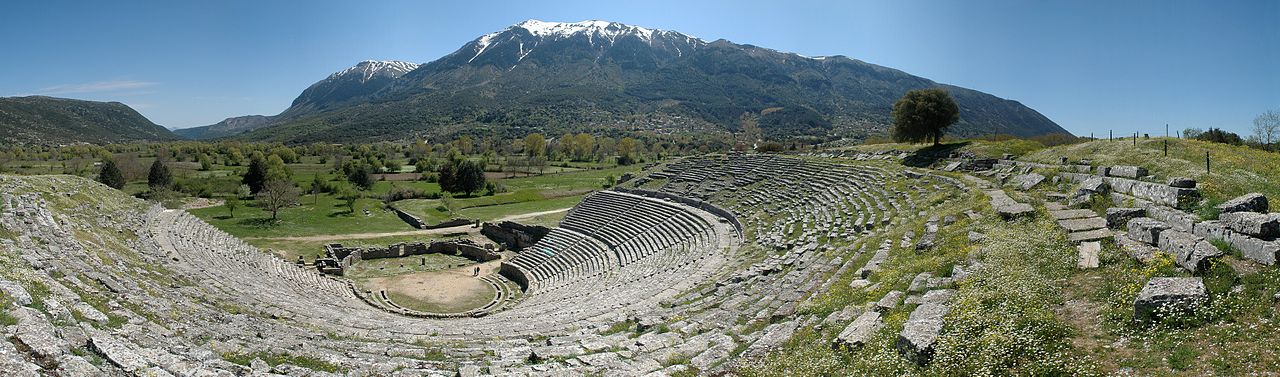
The theater at Dodona, Epirus (Greece) with Mount Tomaros in the background. The city dates to perhaps as early as the second millennium before Christ. Nestled in these mountains are the many villages that King visits to discover the hidden sounds of Epirus.

This delicate balance between isolation and contact allowed the people of Epirus to negotiate a complex existence that was both uniquely theirs and typical of the crucible of cultures that continue to shape the Mediterranean. And, while I hope that bringing notoriety to Epirote culture does not usher in its demise (which would be King’s greatest fear), learning about this fascinating culture that has endured for so long is literally music to our ears.

Eating the Western Mediterranean in Asheville

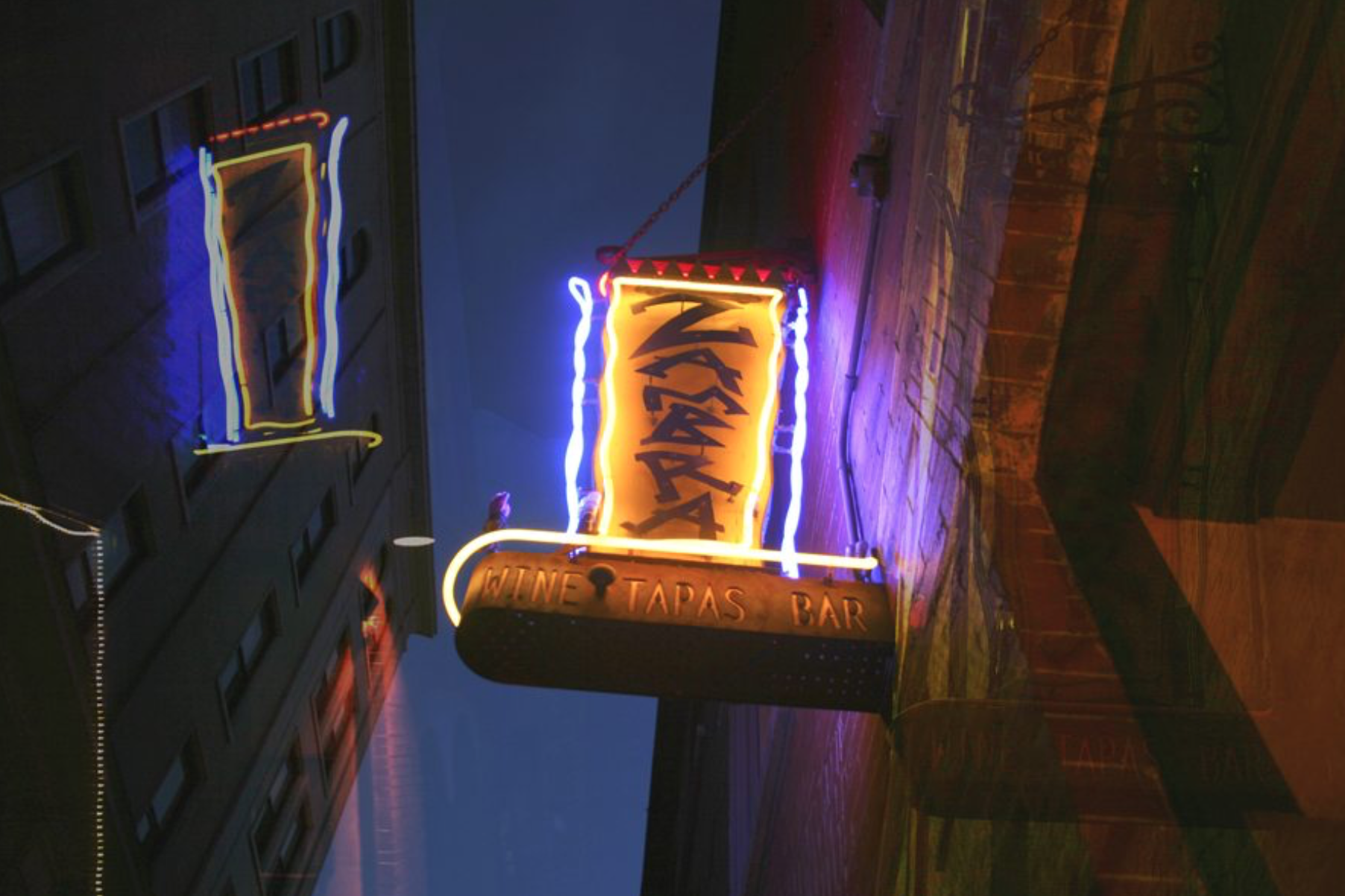
Seared scallops from Zambra—Asheville’s Western Mediterranean Tapas Bar

The other night, my fiancée and I decided to spend a nice evening in the Western Mediterranean. Luckily for us, you can do that in Asheville. We popped into Zambra, a local joint that specializes in Iberian-Maghrebi food. The dishes tend to be tapas-style, small plates that are meant to be shared along with the great conversations that tapas and wine facilitate.

Zambra’s swank bar, fully stocked with wines, spirits, and local WNC beers

The question I always have when I eat at a place that claims to be Mediterranean is really quite simple: is it authentic? The answer, interestingly, isn’t what you might expect. It’s not just replicating flavors and ingredients that count as Mediterranean. On a certain level, while there are some staples (think olives, pig, wine, etc.), there is no such thing as Mediterranean food—it varies so much by country and even by region. What you’d eat in Rome is not what you’d eat in Istanbul or Barcelona. And what you’d eat in Venice is not what you’d eat in Naples.

But there is a culture of food that pervades the Mediterranean regardless of ingredients. What makes a cuisine truly Mediterranean in a traditional sense is the method of sourcing and the relationship between those who eat and what is eaten. It’s a symbiosis between the people and the land, one that should ideally sustain each other.

Zambra’s dining room, which comes with a cool Arabesque architectural flair that’s quite common in Spain and North Africa

It’s for this reason that Zambra can claim to be authentically Mediterranean. Its dishes are locally sourced or they have strong relationships with long-distance food providers to ensure that the food is always fresh and sustainable. The only real exception is the wine, which is a great selection of Iberian vintages. I opted for a nice Portuguese vinho verde rosé. After all, without wine, you’re not really in the Med.

Likewise, Western Mediterranean fusion means you’re getting a wider profile of flavors. That’s not to say that Spanish tapas isn’t good—but it’s just one way to do it. Blending foods, which has been going on the Med for millennia, is just a fun way to present it.

We ate our way through a whole slew of dishes that capture so much of Western Mediterranean cuisine while still staying true to local WNC ingredients: charred octopus; pork-stuffed dates; crab cakes; seared scallops; chicken croquettes; braised pork rolls. They were simple dishes yet packed with flavors that leave you wanting more.

What’s best about Zambra is that it’s relatively inexpensive for both Asheville and for tapas. Tapas has been en vogue in the US as of late, which means it can get pricey. And Asheville is a food town with amazing, albeit often expensive, restaurants. Zambra stays true to its Mediterranean roots in that the focus should be on creating delicious food that shouldn’t break the bank.

In the end, you can visit the Mediterranean wherever you are. All it takes is finding the right place to eat, or just your local farmers market. The right mix of protein, starch, veggies, olive oil, cheese, and spice will take you to another world, one with a giant sea in the middle of it.

The Converting Sea

Bell Tower of the Church of San Salvador. Teruel, Spain. An example of mudéjar architecture, Hispano-Muslim elements used in Christian buildings. Just one of many conversions you’d find throughout the Mediterranean.


Today, my article, “The Converting Sea: Religious Change and Cross-Cultural Interaction in the Early Modern Mediterranean,” appeared in the journal History Compass. Religious conversion in the Mediterranean is a big deal for people who study the Middle Sea, myself included.

In fact, my forthcoming book is about a Jewish convert to Catholicism who becomes a priest and tries to convert others to become Catholics. Likewise, there are all sorts of figures in the early modern period in particular who converted for one reason or another, often not because of religion. Scholars like to call these folks renegades, which both aptly captures who these people were in some cases—social outcasts and cultural rebels—but is also just a really cool word.

But in “The Converting Sea,” I wanted to think about conversion in a different way. Instead of just tracing how and why people changed religions, I explored how changes occur when religions and cultures interacted. It’s a relatively short essay, but I cover a lot of ground. Here are just some of the many types of conversion I unpack:

  • Religious conversion as a tool for empire-building
  • Conversion not just as changing faiths but as faiths changing and new identities emerging
  • Conversion as an identity crisis
  • Depictions of converts and religious change in literary culture
  • Interfaith and cross-cultural intellectual exchange
  • Conversion in visual culture, architecture, and city planning

Such a broad way of thinking of conversion allows me to think more critically about the Mediterranean itself and how the Sea is in a sort of dialogue, a symbiosis even, with its inhabitants. As I say in the conclusion of the essay, I see the Mediterranean as “a crucible of religious change and cross‐cultural interaction, which allowed individuals and societies to change themselves by wrestling with difference and negotiating its meaning.”

This was a fun essay to write. I got to read about a whole slew of “conversions,” ranging from architectural changes in Venice due to Venetian mercantile contacts throughout the Eastern Mediterranean to evolving depictions of Muslims and Jews in Italian romance literature and English theater.

This whole interdisciplinary approach to conversion has even inspired me to write another essay on conversion, this time on how translation—literally converting texts from one language and genre to another—functions as a critique of cultural difference and challenge to the dominance of foreigners.

Tackling the Mediterranean this way and broadening the definitions of seemingly straightforward words like “conversion” are good ways to not just study the Sea between Lands, but to think more broadly about the ways humans create and imagine the world around them. By thinking of the Mediterranean as a Converting Sea—one that is shaped by the people it shapes—the world—the one we make and the one that makes us—comes fuller into view.

The Mediterranean before the Middle Sea

The Mediterranean Sea seems like a constant for those of us who study it. Literally a constant, in the sense that it’s always been there and has certain features that transcend history. All of its connections and sinuous networks that tie peoples and civilizations together. But what if that weren’t always the case? What if the Middle Sea or the sea between land—which is what the Mediterranean literally means—was not that, but was a vast wine-dark (to quote Homer, the author of the famed Odyssey and Iliad) body that was more mysterious than welcoming?

How, then, do we come to speak of a Middle Sea, one that is not a barrier, but one that unifies and connects?

The most famous historian of the Mediterranean, someone that anyone who wants to study the Med must read, is a Frenchman by the name of Fernand Braudel. His The Mediterranean and the Mediterranean World in the Age of Philip II is a magisterial, two-volume exploration of the the Mediterranean’s larger historical processes that move beyond the realm of humanity. In other words, we don’t matter for Braudel. Rather, things like the shapes of mountains, the traces of rivers, and the climatic shifts that permit things like shepherds moving their flocks are the driving forces of human history and are the motors of the Middle Sea.

If you read this book, it’s sort of deflated. Fascinating, but deflated. Because, really, that’s it? We’re all just part of it with no say?

But that’s not the only work Braudel wrote.

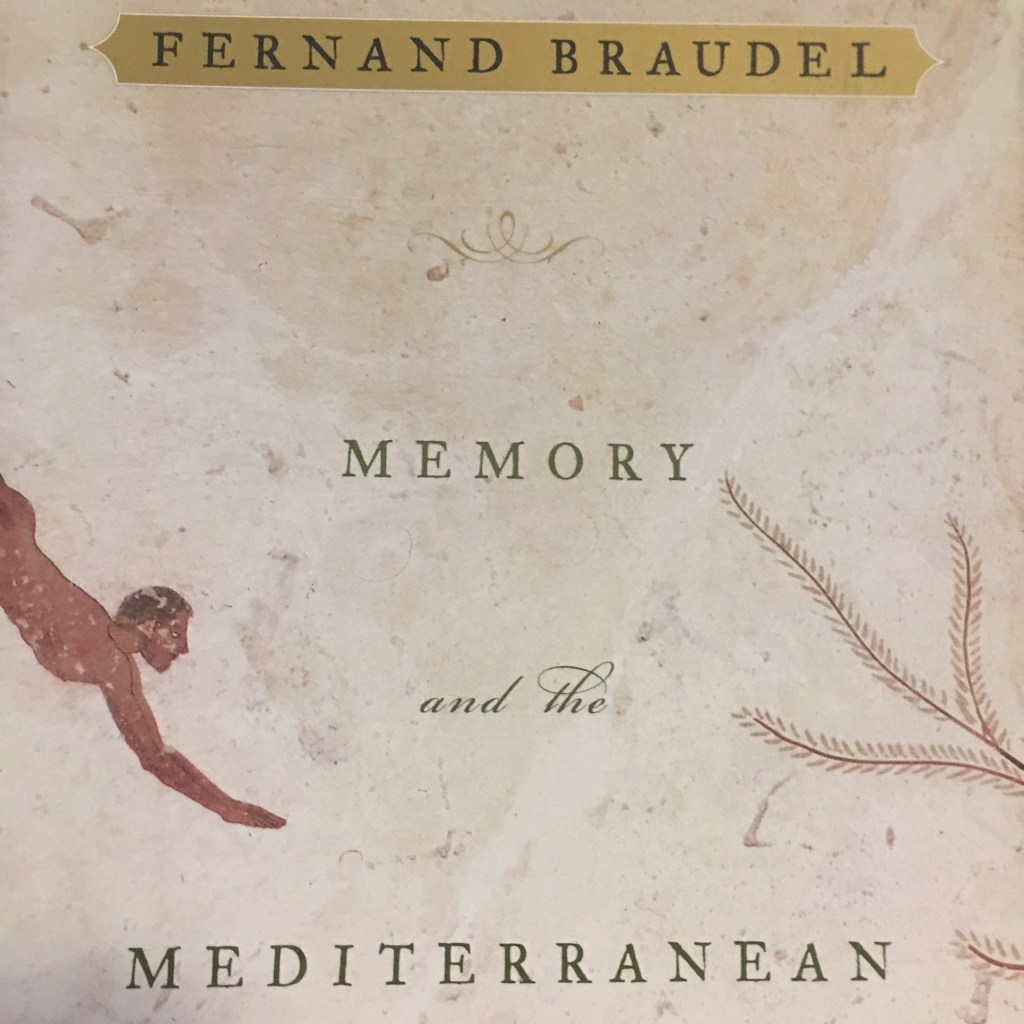
I recently revisited a personal favorite, one of Braudel’s fascinating yet relatively unknown works, Memory and the Mediterranean. Breaking from his more famous two-volume work, Memory and the Mediterranean surveys the Mediterranean from its fairly disconnected pre-historical roots to the Roman Empire, which unified the Middle Sea like never before.

What strikes me most about this book is that, despite his emphasis on unity in his more famous work, Braudel traces disunited, yet parallel pan-Mediterranean developments that are somehow both the hallmarks of early Mediterraneanisms yet not quite evidence of sea-wide unity. In other words, things happened across the Mediterranean because they were in the Mediterranean, but they didn’t happen because the Mediterranean connected them in the way we think.

Basically, networks and pan-thalassological (fancy-pants speak for across the sea) exchanges aren’t the only way that the Med connected people. There were other factors: climatic shifts, similar geologic experiences, and the birth of what we’d call civilizations that were not in contact yet were nevertheless in concert with one another.

It’s a fascinating approach, and challenges us to rethink the role that humans played in history. It’s easy to think that everything is determined, and we’re just along for the ride. Especially after reading Braudel’s famous and quite convincing tome. But in Memory and the Mediterranean, even Braudel admits, begrudgingly, that he’s not so sure about his previous thesis that our world isn’t so different from that of the ancient Greeks.

Maybe this causes us to question how much the structures of society makes us who we are. And maybe that can renew our sense of our own purpose in this world. I guess it makes sense that Braudel (or the editor of the U.S. version, anyhow) put “Memory” in the title of the book: the past isn’t some distant layer in a bowl of determinism that shaped the ancient Mediterranean and somehow also shapes our world. No, history is our for the making.

Making Rome’s Colosseum Come Alive

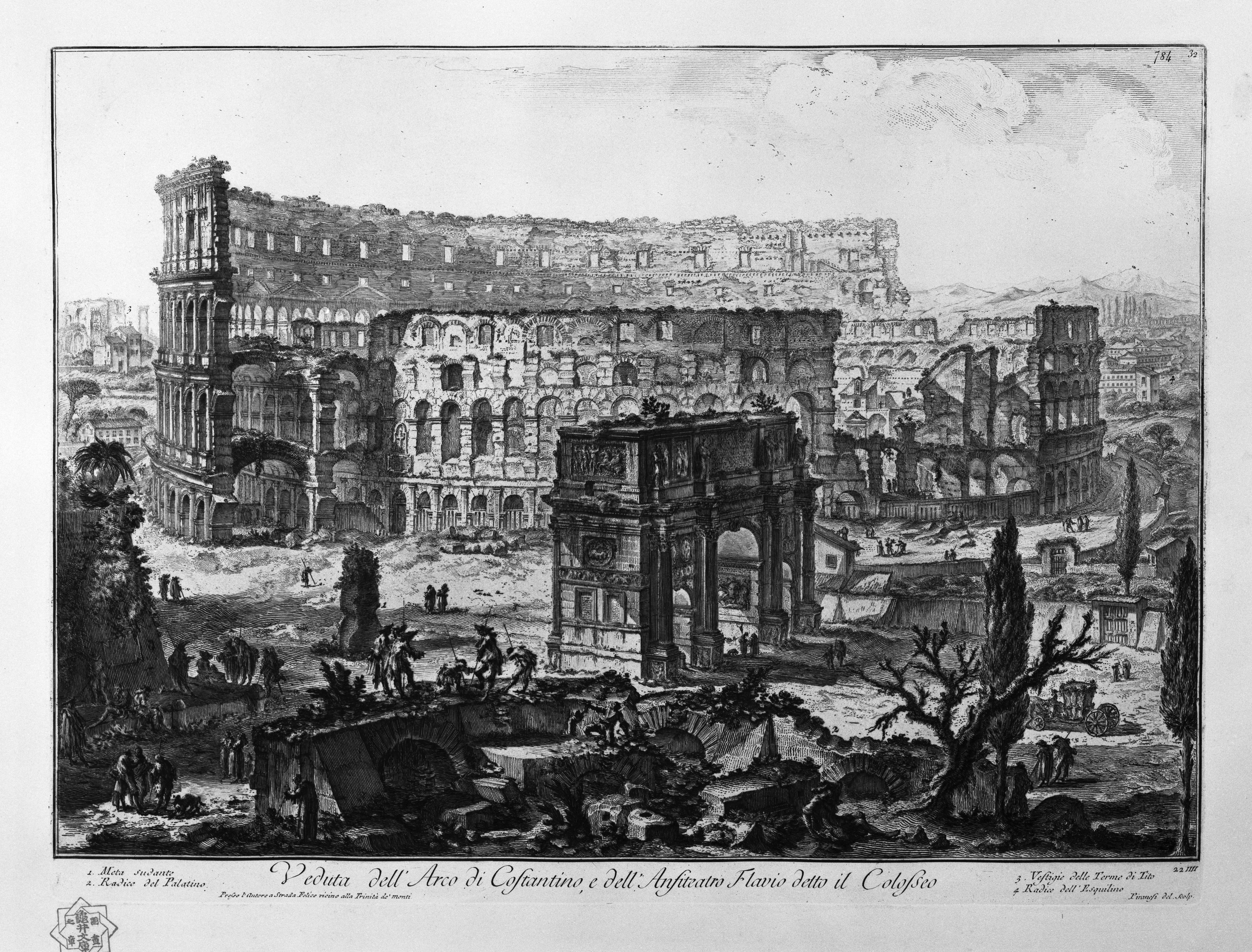
One of Giambattista Piranesi’s famous eighteenth-century etchings of the Colosseum

Yesterday, Kristi Cheramie and I submitted our paper on debris at the Colosseum, which we will present together in Providence, RI, at the annual meeting of the Society of Architectural Historians this April. Kristi and I have been working on the state of the Colosseum and the ancient Roman Forum in the early modern period (roughly 1350-1850). Much of our work centers on learning as much as we can about these ruined sites through our research of both historical and literary evidence as well as what we know about Rome’s built environment and climatic shifts over the centuries.

It’s a fun project. Much of this has taken me far outside my typical area of research into the Mediterranean. I’ve read a lot about seismography (the study of earthquakes), plant life, and early modern climate change. By linking this up with my knowledge of literature, history, and art, we’re trying to get a sense of how Rome and its ruins seemed to their visitors. From this pretty large corpus of data, we create hyperrealistic photo-quality approximations of what Rome probably looked like. Think of these images not as real-life snapshots of real events, but as approximations of what you might have expected to see at any given moment in the past.

This hasn’t been easy. Most of the time, the evidence is cryptic or really over the top. Take the famed humanist Petrarch. He claimed that “When we passed through the walls of the shattered city and sat there, the fragments of its ruins were before our eyes.” Of course they were. They still are. But what does Petrarch mean? What could Petrarch see? He never really tells us what he saw in particular, other than to say that “the houses are laid low, the walls tottering, the temples collapsing.” Not very helpful.

Pinturicchio (1454-1513), Martyrdom of St. Sebastian, Borgia Apartments, Vatican Museums.

But art can help. Pinturicchio’s painting of the Martyrdom of Saint Sebastian is one of my favorites. Sebastian was what they call a paleochristian martyr, an early Christian who died for his beliefs at the hands of the ancient Romans. For him, that was around the year 288. But look at the Colosseum: that is not the Colosseum of 288. More like 1492-1494, which is when Pinturicchio worked on this painting, among others, for Pope Alexander VI. While Pinturicchio may have been painting a third-century event, the backdrop is from his own time. Images like this help Kristi and me get a sense of what we might expect the Colosseum and other ruins in the city to have looked like.

Giambattista Nolli, Nuova Pianta di Roma, detail

Maps help with the environs. Nolli’s 1748 map, for example, lets us know what types of buildings surrounded the Colosseum. In the lower right is the Colosseum. Hard to miss. To the upper left, where Rome’s ancient temples and meeting houses should be, we see the words CAMPO VACCINO, which means cow field in Italian. That’s what the Roman forum was by the eighteenth century—a cow pasture!

We then combine all this with anecdotes from various texts. The fifteenth-century historian Flavio Biondo, to give you a sense of things, claimed that “all of the buildings of the church and the monastery of Santa Maria Nuova, and all of the ruins around the Colosseum, were part of the said Temple of Peace.” He allows us to figure out how close things were to one another, which we can compare to things like Nolli’s map, to get a better sense of how to reconstruct our images.

To accompany our images, we’re also writing what I like to call a cultural history of Roman ruins. Essentially, we use what people have said about ruins to get a sense of who they were. It’s a weird idea, but it works. The way we describe the world tells us a lot about what we see. But it also tells us much about ourselves. The past is no different. How people talked about what they saw in Rome is as much about the state of the city’s ruins as it was about their own states of mind.

But more on that in time. I’m not going to give everything away. If you want to see our images, you’ll just have to come to Providence in April. Rhode Island is hardly the Mediterranean, but if you stare at our images long enough, maybe you’ll convince yourself that you’re in Rome.