
One phrase with little precedence and next to no historical meat to it is “Judeo-Christian civilization.” Grounded more in drawing a false dividing line between Western Civilization and societies seen as its opposite, the phrase operates to create a false narrative of some culture shaped by Jews and Christians, but not Muslims or anyone else. It’s a problematic notion for a couple reasons. It ignores centuries of antisemitism by suggesting that Christians and Jews have always seen each other as religious and cultural kin. It also presents Islam as a different culture, so different that it has no place in the West, and in fact never has. It also excludes much of Asia Africa, and Oceana, as well as indigenous religions of the Americas.
This couldn’t be further from the truth. Not only does Judeo-Christian society not exist, but Judaism, Christianity, and Islam have a long history of existing alongside one another. Yes, there has been conflict. But there’s been plenty of cultural exchange, intellectual borrowing, and cooperation over the centuries. They intermarried, worked together, fell in love, were neighbors, and friends.
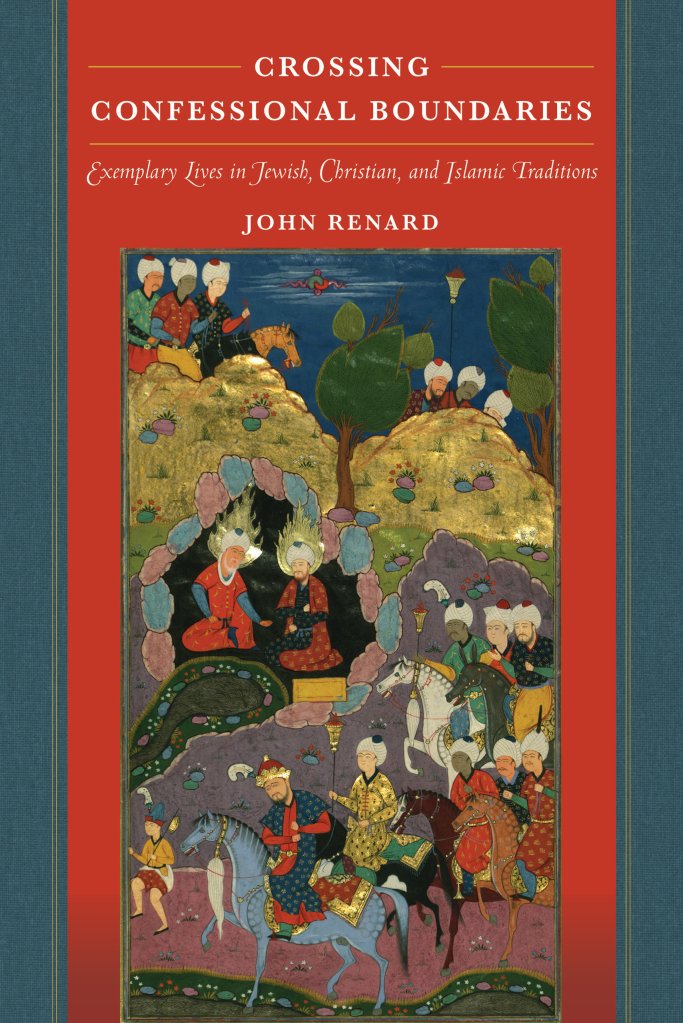
One book that argues for such close contacts between the three Abrahamic faiths is John Renard’s Crossing Confessional Boundaries: Exemplary Lives in Jewish, Christian, and Islamic Traditions, which I recently reviewed for the Mediterranean Seminar. Renard argues that all three faiths in the centuries following the advent of Islam shared common practices and venerated similar types of holy peoples; in some cases, they venerated the same peoples.
What struck me about Renard’s book is how much the three religions had in common and how, despite current rhetoric about how Jews, Christians, and Muslims will never get along, they very much lived, worshiped, loved, worked, and died cheek by jowl. Rather than focusing on how different the faiths were, Renard presented the world they shared and how, despite their faiths’ differences, their religious beliefs were interlinked and the product of centuries of living together.
It’s an important book not just for what it tells us about late antiquity. Rather, it’s a major political intervention. As I state in my review, “The Clash of Civilizations thesis of Bernard Lewis, Samuel Huntington, and others has long been debunked. But the continued prevalence of such views of Orientalist antithesis in modern discourse obscures the historical reality of theological similarities and how exemplary lives resonated with Jews, Christians, and Muslims, whether in Iberia, Egypt, or the Balkans.”
In other words, we should stop arguing nihilistically that little can be done to bring Jews, Christians, Muslims, and countless others together because they’re just far too different. Rather, we should focus more on our common humanity and look to what we share. Exemplary lives transcend faiths. They and the people from different backgrounds, nations, and faiths who venerated them together are truly exemplars for us all.

 Robert Clines, Ph.D.