Late last year, my essay “Between hermits and heretics: Maronite religious renewal and the Turk in Catholic travel accounts of Lebanon after the Council of Trent” appeared in the volume Travel and Conflict in the Early Modern World, edited by Gábor Gelléri and Rachel Willie.
This project’s genesis was a conference in 2015 at the University of Bangor in Wales. It was a great trip. Not only did I get to share my work with scholars and make new friends, but I was able to spend some time in Cardiff with an old Rome friend for a bit.
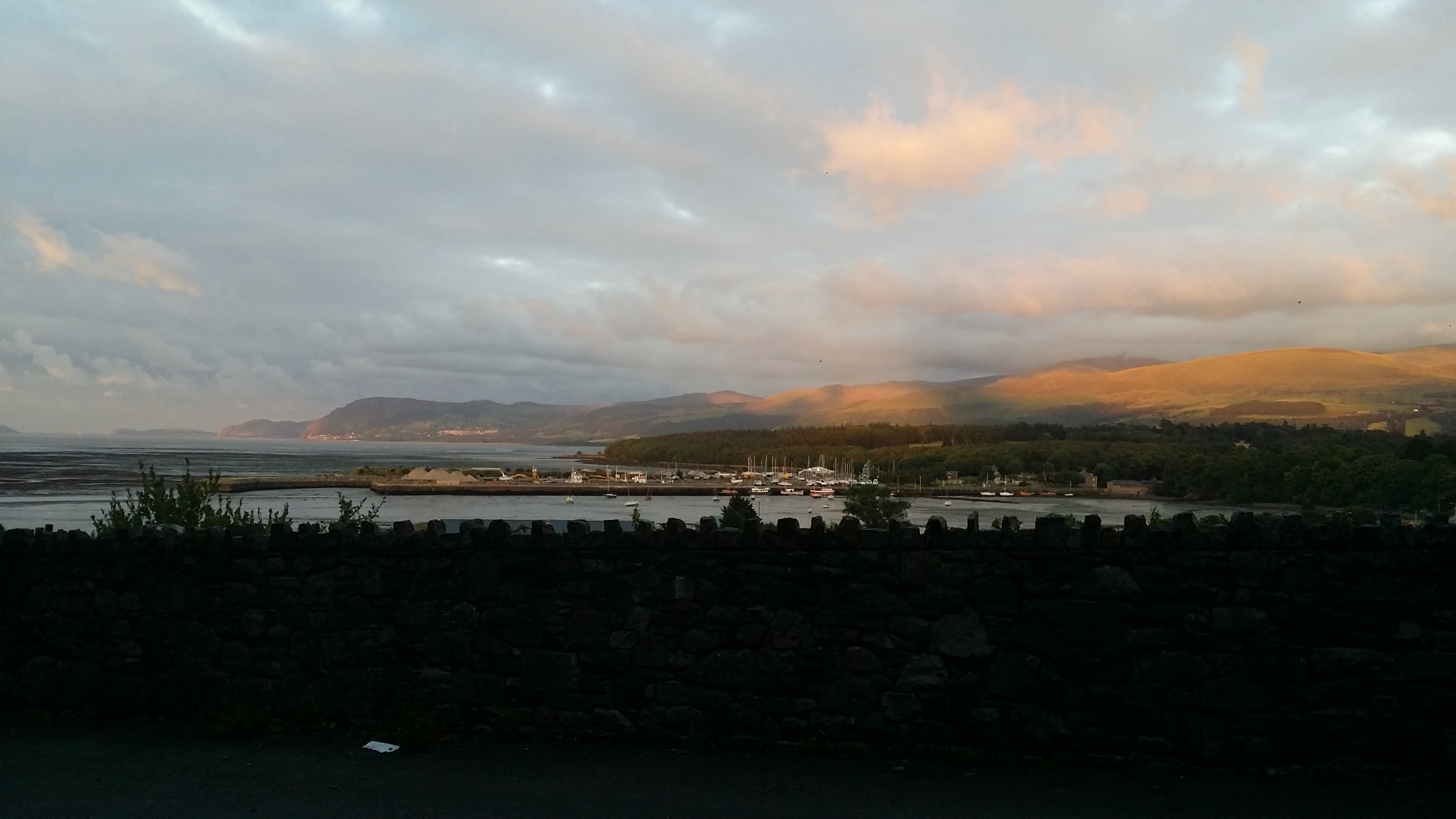
Bangor, Wales, at sunset
In the essay, I explored how European Catholic visitors to Lebanon viewed the religious lives of a local Christian community known as the Syriac Maronite Catholic Church of Antioch and used them as a lens to probe deeper into what it meant to be Catholic in an increasingly plural religious landscape.
Girolamo Dandini’s Missione Apostolica, one of the texts describing the life of Christians in early modern Lebanon
The European visitors—one Spanish, the other Italian—used the Maronites to work out their own anxieties about religious change, fears of Islam, and the challenges that Catholicism faced in a world marked by increased interest in global exchange, commercial cosmopolitanism, and cross-cultural interaction.
For these two visitors, the Maronites were two things that were ostensibly incompatible. On one hand, they were what one of the visitors called “relics of the ancient hermits”: their poverty, piety, and dedication to a simple Christian life suggested that they practiced a form of Christianity that had somehow survived for a millennium tucked away in the mountains of Lebanon. On the other hand, their cultural practices—such as wearing turbans, divorce, the lack of silverware and chairs at meals—suggested that they had succumbed to the pressures of Islam. While they were still technically Christians, they spent far too much time with Muslims for the visitors’ liking.
The result is a community that both served as a model for Catholic piety and as a warning for what happens when Christians get too close to non-Christians. Such a sliding scale between deep faith and moral depravity shows that being Catholic was never as secure as it might seem in everyday life. Something as simple as eating with one’s hands or drinking coffee could be a mark of heresy, schism, and moral bankruptcy.
To our ears, this all sounds a bit absurd. But in 16th-century Europe, these were very real concerns. Turning Turk, being captured by pirates, and falling prey to the allure of the Other were all very real. One day, you’re a God-fearing Christian, the next you’re a morally base renegade living it up in Algiers. This is both appealing and revolting. Such were the contradictions of the early modern world.
Europeans were so focused on themselves that how they saw the Maronites had little to do with the Maronites’ actual religious and cultural practices and everything to do with Europeans’ fears, anxieties, and doubts about themselves. It’s an important message: How we view others often tells us far more about us than it does them.
If you’d like to hear more about my essay and the collection as a whole, check out this crowdcast that a few other contributors and I put together this week. It was such a pleasure to get to know these scholars over the past few years. While the Travel and Conflict project may be behind us, we’ll be sharing ideas for years to come.
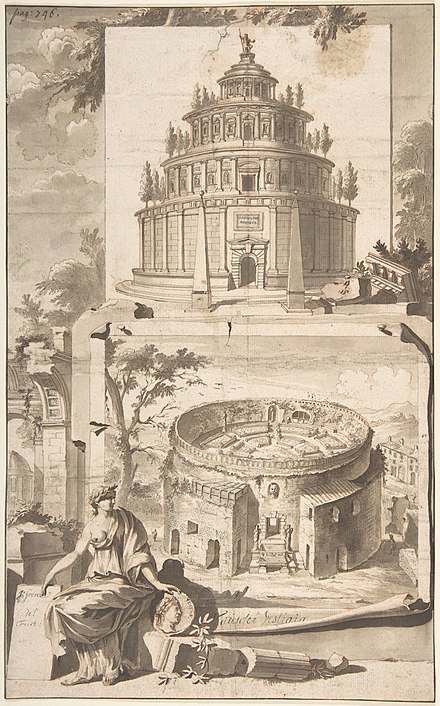
An 18th-century rendition of the historical and contemporary Mausoleum of Augustus
Beginning tomorrow, the Mausoleum of Augustus will reopen to the public. Closed since 2007, the tomb of Rome’s first emperor was recently restored by the Italian telecommunications company TIM. Visits for tourists won’t be until later, but if you’re planning a trip to Rome in the next few years, this is definitely worth checking out.
Built to house the remains of Augustus as well as other emperors, it fell into disrepair after imperial authority collapsed in the fifth century. For the next 1500 years, it was used for a number of things: bullfights, a family fortress, and a private garden. Under a unified Italy, when it was known as the Augusteo, it was a concert hall.
Rome’s Ara Pacis, or Altar of Peace, located across the street from the Mausoleum of Augustus
After the rise of Mussolini, the theater was closed and restoration attempts began. Mussolini’s Piazza Augusto Imperatore was to be one of many public spaces that articulated the power of the fascist regime in Rome. Along with new government buildings and the restored Altar of Peace, the mausoleum, once restored, would be proof of Rome’s eternal greatness.
Mussolini’s plans never happened. With the beginning of World War II, restoration stopped. After the fall of the fascist regime, Mussolini’s restoration project was never picked back up and the mausoleum has sat more or less as Mussolini left it. But with TIM’s intervention, we can now enjoy the building and learn more about its history from the inside.
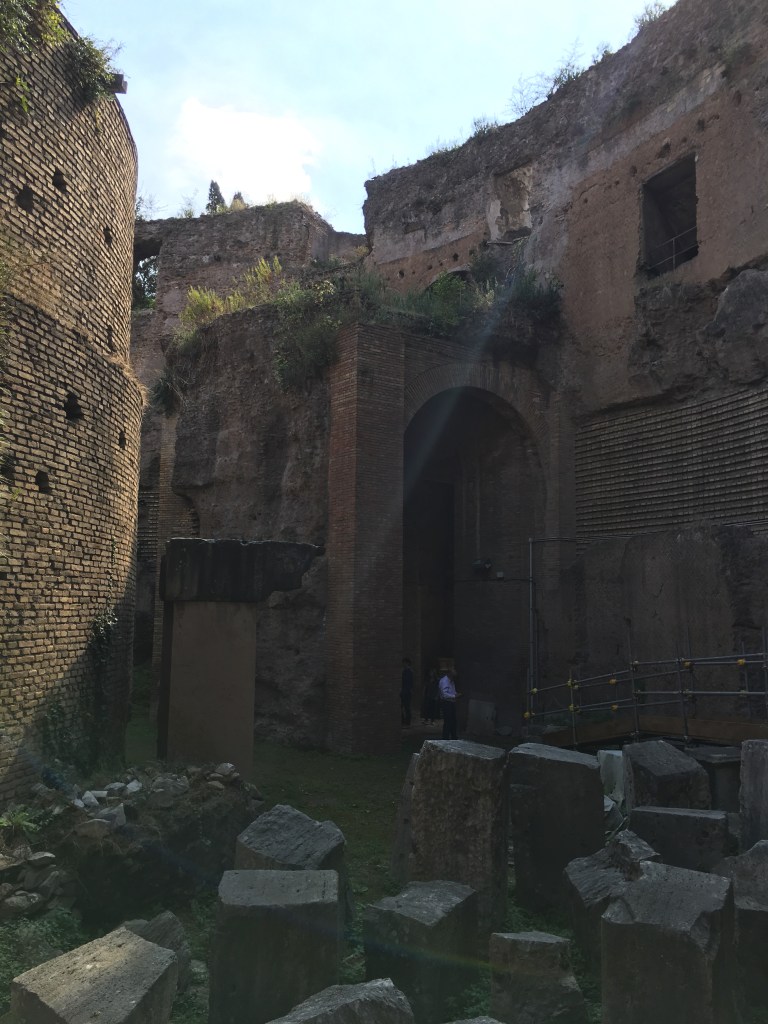
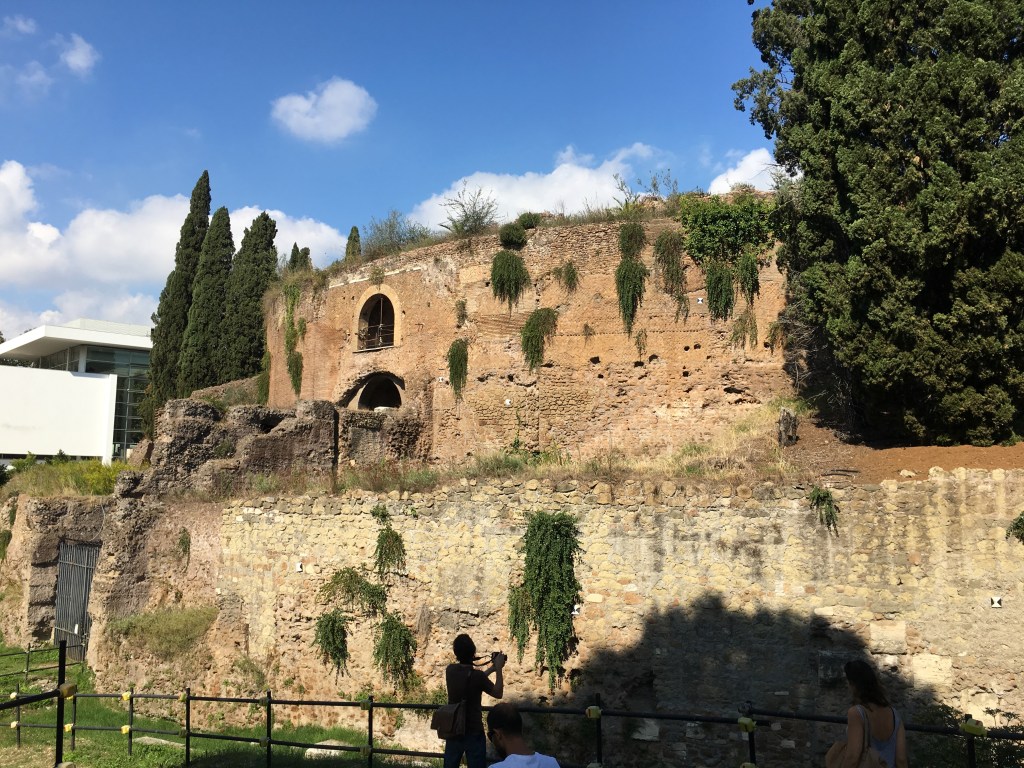
It’s one of my favorite lesser known gems in the city. While it’s been closed for years, I was able to gain access to be building in 2016. Here are a few pictures of the inside before restoration. The restored version will, I assume, be a little more tidy.
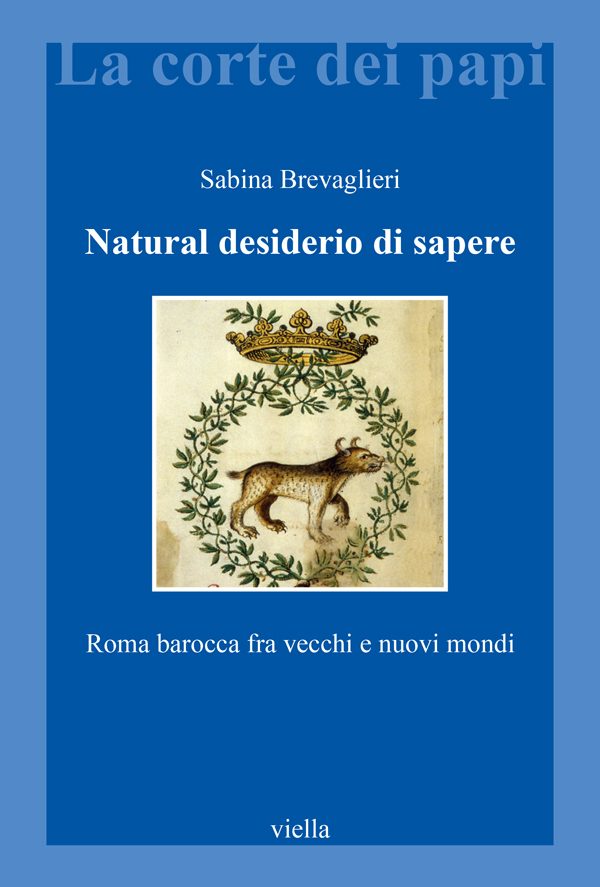
My recent review of Sabina Brevaglieri’s book, Natural desiderio di sapere: Roma barocca fra vecchi e nuovi mondi(The Natural Desire to Know: Baroque Rome between Old and New Worlds) will appear in the forthcoming volume of the academic journal Renaissance Quarterly. I really enjoyed reviewing this book because it paints a very different picture of Papal Rome after the Reformation than most imagine. Because of Counter-Reformation institutions like the Inquisition and the Index of Forbidden Books, there’s long been a belief that Rome in the age of the baroque was a contradictory city marked by cultural decadence and ornate, even gaudy and tasteless art on one hand and deep suppression of ideas that question the papacy’s stranglehold on society on the other. Brevaglieri shows that this is simply untrue, that baroque Rome was a dynamic and learned city.
Frontispiece of the Tesoro Messicano
Published by the Roman printing house Viella in 2019, Brevaglieri’s book explores the backstory to a text little known to non-specialists, the Tesoro Messicano, a compendium of knowledge relating to Mexican plants, many of which were believed to hold medicinal properties, which was compiled by Federico Cesi in Rome in 1651. Brevaglieri explores how intellectual life in Rome, the city’s connections to Naples, Germany, and the New World, and the increased desire to know more about the New World fueled interest in natural history, all of which led to the creation of the Tesoro Messicano.
Brevaglieri’s book shows that Rome was anything but a center for the suppression of ideas. Yes, Giordano Bruno was burned at the stake for heresy in 1600 (on my birthday!) and Galileo was placed under house arrest for some of his views. And they were not alone. But Brevaglieri reminds us that there was plenty of intellectual freedom and scientific inquiry taking place in the Eternal City. The Accademia dei Lincei, a sort of club for scholars and their patrons to share ideas about the natural world, was the center of intellectual life. But what’s most interesting to me is that this was no secret society. Its members were often heavily patronized by and connected to the power players themselves—popes, cardinals, nobles, rich merchants, famous artists. And they participated in these learned circles and were deeply interested in knowledge of the natural history of the New World.
Brevaglieri called this world a “mutable prism” of exchanges and dialogues driven by a mutual desire to know and a mutual desire to know more. Rather than seeing Rome as an isolated exception to global knowledge networks, Brevaglieri shows how intellectuals Rome was very much attuned to scientific discoveries, medical advances, and the movement of ideas across borders.
It appears that even when it comes to spreading knowledge about the natural history of the Americas, all roads really did lead to Rome.
One phrase with little precedence and next to no historical meat to it is “Judeo-Christian civilization.” Grounded more in drawing a false dividing line between Western Civilization and societies seen as its opposite, the phrase operates to create a false narrative of some culture shaped by Jews and Christians, but not Muslims or anyone else. It’s a problematic notion for a couple reasons. It ignores centuries of antisemitism by suggesting that Christians and Jews have always seen each other as religious and cultural kin. It also presents Islam as a different culture, so different that it has no place in the West, and in fact never has. It also excludes much of Asia Africa, and Oceana, as well as indigenous religions of the Americas.
This couldn’t be further from the truth. Not only does Judeo-Christian society not exist, but Judaism, Christianity, and Islam have a long history of existing alongside one another. Yes, there has been conflict. But there’s been plenty of cultural exchange, intellectual borrowing, and cooperation over the centuries. They intermarried, worked together, fell in love, were neighbors, and friends.
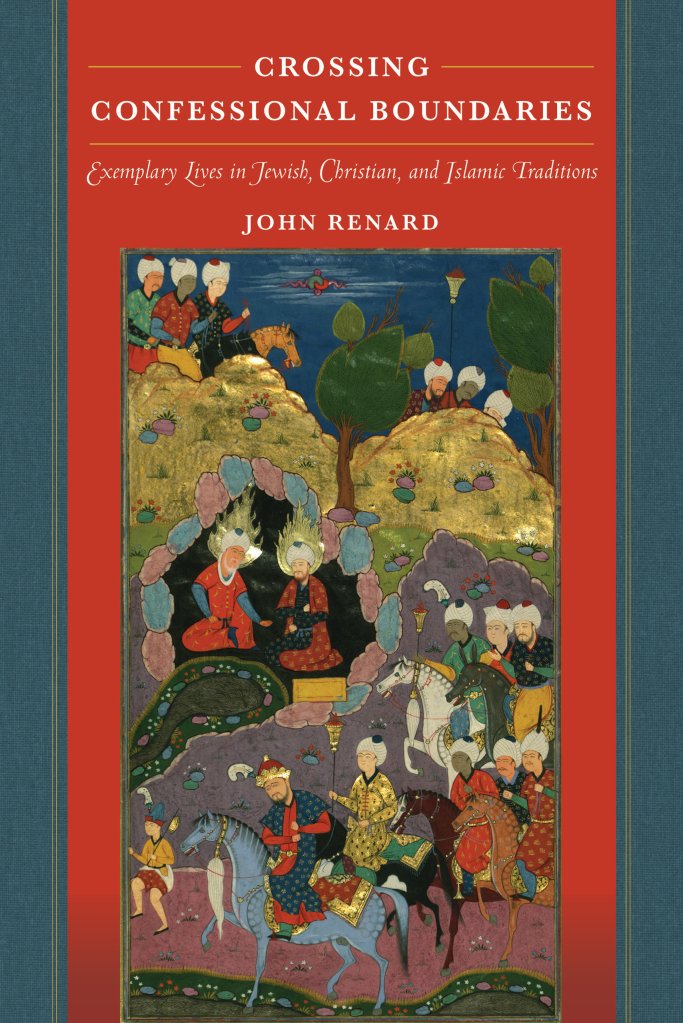
One book that argues for such close contacts between the three Abrahamic faiths is John Renard’s Crossing Confessional Boundaries: Exemplary Lives in Jewish, Christian, and Islamic Traditions, which I recently reviewed for the Mediterranean Seminar. Renard argues that all three faiths in the centuries following the advent of Islam shared common practices and venerated similar types of holy peoples; in some cases, they venerated the same peoples.
What struck me about Renard’s book is how much the three religions had in common and how, despite current rhetoric about how Jews, Christians, and Muslims will never get along, they very much lived, worshiped, loved, worked, and died cheek by jowl. Rather than focusing on how different the faiths were, Renard presented the world they shared and how, despite their faiths’ differences, their religious beliefs were interlinked and the product of centuries of living together.
It’s an important book not just for what it tells us about late antiquity. Rather, it’s a major political intervention. As I state in my review, “The Clash of Civilizations thesis of Bernard Lewis, Samuel Huntington, and others has long been debunked. But the continued prevalence of such views of Orientalist antithesis in modern discourse obscures the historical reality of theological similarities and how exemplary lives resonated with Jews, Christians, and Muslims, whether in Iberia, Egypt, or the Balkans.”
In other words, we should stop arguing nihilistically that little can be done to bring Jews, Christians, Muslims, and countless others together because they’re just far too different. Rather, we should focus more on our common humanity and look to what we share. Exemplary lives transcend faiths. They and the people from different backgrounds, nations, and faiths who venerated them together are truly exemplars for us all.
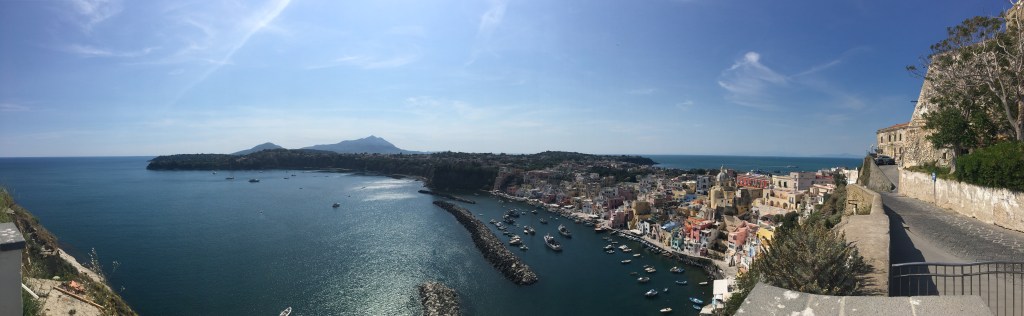
Panoramic view of Procida, in the Gulf of Naples – one of my favorite spots in the Mediterranean
I’ve been thinking a lot about islands lately. I’m not entirely sure why, but it’s probably because the doldrums of the semester require me to drift off to some of my favorite places in the world, to think about what I could be doing if I weren’t wrapping up an essay, prepping students for exams, etc. This should come as a surprise to no one, but my favorite island is a Mediterranean one: Procida, an idyllic little crescent of land that inexplicable juts out of the water at the far western edge of the Gulf of Naples. Once overrun with sheep and lemons, it’s become more touristy as of late. I could rant about that (and there is a rant there!), but I’m in a sort of happy mood these days, so I’ll roll with that.
Islands are funny creatures, or perhaps we’re funny creatures given how we think of them. We think that islands exist in a bubble—they’re separate from real land, disconnected and somehow not really a part of the world as we know it. Even the way we talk about islands gives us the image of far-off lands that seem to float beyond our grasp, spaces that can only be reached by cruise ships, ferries, and, if you’ve ever watched an episode of Gilligan’s Island or seen Castaway, really really bad luck.
Think about how we talk in English. We say things like “so-and-so is so insular.” One of our words for being alone, isolation, is etymologically related to the word island. We also have the expression “to be out on an island,” which suggests you’re surrounded by an endless, vast sea that separates you from literally anything. In other words, you’re out of touch. And we say “desert island,” a place so remote that it’s completely unknown.
NFL Cornerback Darrelle Revis, referred to in his prime as Revis Island.
It even has odd uses. American football fans of the late 2000s might remember the shut-down cornerback of the New York Jets, Darrelle Revis. Revis was so dominant between 2007 and 2012 that he could completely close off an entire half of a football field for opposing wide receivers. This side of the field was seen as so dangerous and deserted that any receiver might get totally lost. And how was Revis described? As Revis Island, of course!
But is this true in the Mediterranean? Are the islands of the Sea between Lands no-man’s lands akin to Revis’s 26 2/3 yards of football field?
If you ever went to Melos or Sardinia or my beloved Procida, you’d see why it’s easy to think so. All it takes is a wistful stare out into the abyss that the Mediterranean can seem to be. Watching a sunset on Santorini, for example, can be awe-inspiring but also entirely isolating. There’s something about that anonymous expanse of sea that humbles us, makes us feel small, reminds us how alone we can often be in the world.
But if we dig a little deeper, islands are by no means random rocks peeping out of the Middle Sea.
Al-Idrisi’s world map from a 1456 copy. Note that South is directionally at the top. The Mediterranean is at the lower right. The map is in a line of Mediterranean traditions, including both Ancient Greek/Roman as well as Muslim views of the world. It’s as Mediterranean as it gets!
Take Sicily, for example. In antiquity, it was festooned with Greek colonies, and Thucydides, the great historian of the Peloponnesian War, opined that the reason why Athens eventually lost the war was an ill-fated desire to invade an island that eventually became the desire of Romans, Carthaginians, Arabs, Byzantines, French, and Spanish. In the Middle Ages, at the court of Roger II—a northern Frenchman—one could find Catholics, Greek Orthodox, Jews, and Muslims working side-by-side. He even had a Muslim polymath from Spain named Muhammad al-Idrisi as his geographer. Roger wanted to use al-Idrisi’s knowledge of the Muslim world and his expertise in classical geography to better understand the nature of his realm and where it fit into the geopolitical landscape of the medieval Mediterranean.
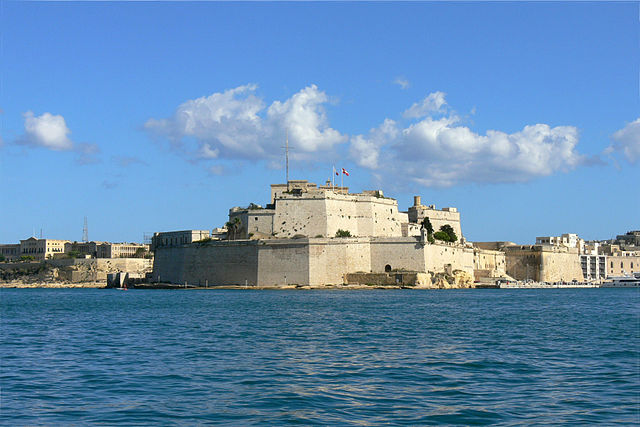
View of the Fort of Sant Angelo, Malta
Or how about Malta? After the Order of Knights of the Hospital of Saint John of Jerusalem, better known as the Knights Hositaller, were driven out of Rhodes (another island!), Pope Clement VII and Emperor Charles V gave them Malta in the sixteenth century. They then operated as pirates and pursued Muslim ships (though also some Christian) throughout the Mediterranean. Despite the island’s tiny size, it exercised a lot of political power and influenced courts across Europe.
Scribes in the court of Roger II of Sicily: Greeks, Arabs, Latins.
In both cases—Sicily and Malta—these islands were never disconnected from the wider world. If anything, they were the center of the Mediterranean World, places where cultures mixed, wars were fought, and differences were negotiated.
The Mediterranean is full of such islands—Corsica, Mallorca, Crete, Cyprus—that are not so much disconnected from the mainland as they are crucibles and friction points in which the cultures that surround the Mediterranean came too blows, accommodated differences, and influenced the world that surrounds them.
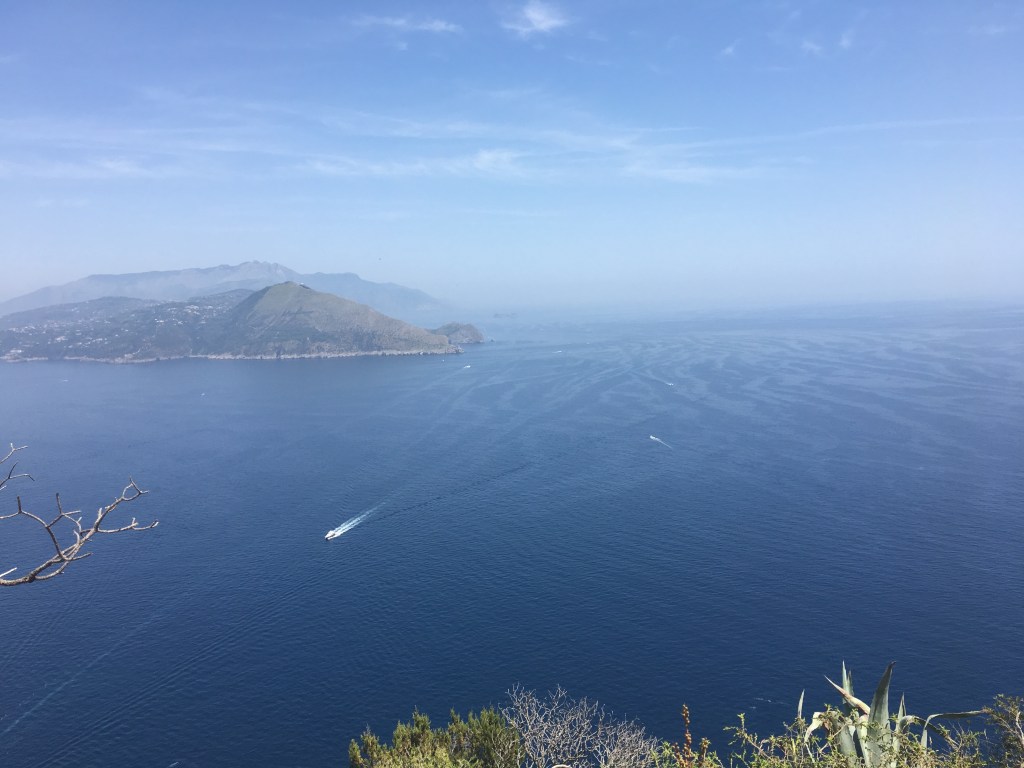
A view of the Mediterranean looking south from Capri, Gulf of Naples. Note the myriad boats criss-crossing the waters. Hardly isolated, is it?
Maybe, when we say things like “on an island” or “to be insular,” we should mean one is surrounded by and always connected to a wider world, or is always tuned into the larger currents that define the times. Being isolated, at least in the Mediterranean anyhow, has nothing at all to do with being alone. The vast sea off Capri may give us this impression, and we’d be wrong not to stare off into the distance and wonder what’s out there. But what lies off in “the distance” is closer than you might think.
Last week, in what was really nothing short of an act of procrastination in an attempt to avoid grading final exams, I decided to do some reading for a proposed graduate seminar I want to teach on the intersection of Orientialism, imperialism, and classics. I am increasingly interested in how what we call the classical tradition—the study of Greece and Rome—is also a part of a larger process in the Mediterranean and beyond of building narratives of a historic East vs. West, civilized vs. barbaric, all in the name of justifying empire.
Ruins of Timgad, a Roman city in Algeria.
Part of this has been the creation of a purported “Western Civilization” that merited control of the world through its global empires because of its historical superiority. Some of the readings explore who had the right to claim descent from Egypt’s Pharaohs, the use of antiquities in Fascist Italy and Nazi Germany, and how French colonizers in North Africa tried to reform agriculture along the lines described in ancient sources, when Africa was “Rome’s breadbasket.” I hope to teach this course soon, perhaps in a year or two.
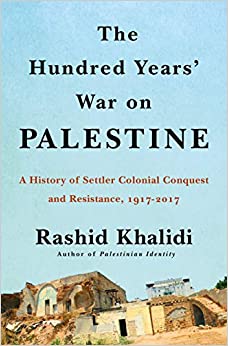
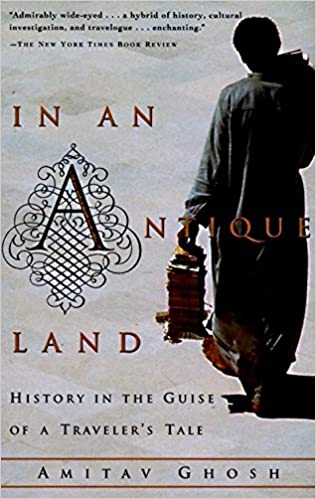
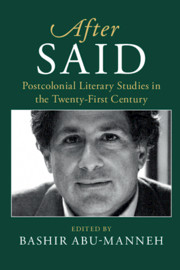
But designing this course took me in another direction, down a rabbit hole of reading that investigated a number of topics: studying the Mediterranean, doing history, and the ways in which modern imperialism and Orientalism have shaped our understanding of the Middle Sea and have fractured the past, potentially rendering it irredeemable without a significant amount of intellectual gymnastics. Three books in particular have stood out, in the order I read them: Rashid Khalidi’s The Hundred Years’ War on Palestine(2020), Amitav Ghosh’s In an Antique Land (1992), and Bashir Abu-Manneh’s After Said(2019).
Khalidi’s work is part historical narrative, part personal memoir, and tells of the denial of sovereignty to the Palestinian people in the wake of Zionism, Western intervention since World War I, and the establishment of Israel. Ghosh’s work tells two narratives, bends the boundaries of genre, and underscores the irrevocability of empire, doing so through the lens of medieval Jewish travel/exile in the Mediterranean and the experiences of post-independence Egyptians grappling with the ebbs and flows of modernity. After Said captures the essence of the life and work of the postcolonial scholar and cultural critic Edward Said. What’s most telling is that, like imperialism and modernity, Said’s work—even the parts many now reject, like his refusal to see the role of materialism and capital in empire—especially Orientalism (1978) and Culture and Imperialism (1993), have irrevocably changed the way we think about and discuss empire, modernity, racism, and nationalism. Even when we disagree with him, we still have to talk about why.
These books pushed me to think about what we do as historians and why in truth history is an artifice. That is to say, how we treat history not as a linear progression of events and facts that took place in time, but as a constructed narrative of experiences that are always burdened by the pasts that preceded them as well as colored by those who get to tell that history. And not “history is written by the victors” necessarily, as that’s reductionist, so it doesn’t quite capture what I mean. Rather, these books have led me to consider the Mediterranean and its histories as a field of inquiry in new ways.
We might call this a postcolonial Mediterranean if we want, and in fact Iain Chambers did exactly this in “A Postcolonial Sea,” a chapter in his Mediterranean Crossings (2008). And Chambers claims that the Mediterranean as a unified, cultural space only entered intellectual discourse in the 19th century. I still find that explanation insufficient, because I struggle with seeing how the intellectual unity of the Mediterranean only came into being when the Mediterranean’s equilibrium destabilized in the wake of new European empires. It’s almost as if we historians are looking for a unity that wasn’t there, to find a unity that Orientalism and imperialism denied. We admittedly make intellectual leaps when we talk about, say, an “archaic” Mediterranean world. But it’s a useful tool nevertheless, and the Romans did call it ‘our sea,’ so I’m not ready to reject it.
What’s most telling in these three books (Khalidi, Ghosh, Said) is that history becomes a tool not for studying the past, but for justifying the present. Whether it’s Zionism, making sense of Egyptian nationalism, or grappling with the legacy of colonialism, history in all these contexts functions not to uncover the past, but to obscure it further. In each case, myths about the past get invented to make the past fit the mold needed to move forward new narratives.
Albert Camus makes this point about the use of Mediterranean pasts to construct new nationalist narratives in his “The New Mediterranean Culture” (1937): “It may indeed seem that serving the cause of Mediterranean regionalism is tantamount to restoring empty traditionalism with no future, celebrating the superiority of one culture over another, or, again, adopting an inverted form of fascism and inciting the Latin against the Nordic peoples.” But the use of history in this war on the past leads us to miss the point, says Camus: “Nationalisms always make their appearance in history as signs of decadence. When the vast edifice of the Roman empire collapsed, when its spiritual unity, from which so many different regions drew their justification, fell apart, then and only then, at a time of decadence, did nationalisms.”
Such inventions of collective identities that may not have ever been there, and the fracturing of these identities into regionalism allow us to create dichotomies and weave them into the past in an effort to make sense of how we got to where we are. In other words, Mediterraneanists don’t just study historic Mediterraneans, whichever one they study, to tell us something about those worlds. Rather, we must be cognizant of the ways in which it’s always an engagement with the current state of the Middle Sea. Ghosh’s Ben Yiju, an exiled Jew in medieval Malabar, speaks the same language as twentieth-century migrants crossing the Mediterranean; denying Palestinian identity is no different from the Roman destruction of the Temple and Sack of Jerusalem in 70AD. They are epistemological and metaphysical kin.
The Mediterranean’s timelessness as space, despite Chambers’s reservations, allowed for Walter Benjamin’s contradictory and somewhat reductive—but no less true—statement that “There is no document of civilization which is not at the same time a document of barbarism” (“Theses on the Philosophy of History”). It’s a famous statement, but it’s almost always disconnected from the context in which it was written, namely the art of writing history. It’s the rest of the paragraph that captures Benjamin’s point: “And just as such a document is not free of barbarism, barbarism taints also the manner in which it was transmitted from one owner to another. A historical materialist therefore dissociates himself from it as far as possible. He regards it as his task to brush history against the grain.”
So, if we don’t look at history with a critical eye, are we all bound to suffer from some sort of historiographical dissociative disorder that prevents us from seeing the truth because of what our world has done to us? Yes, I think Benjamin would clamor. So to break free from this, we must see through the barbarism and grapple with civilization not as its antipode but as its bedfellow. The way we discuss the past must pursue a discourse that elides differences. Only them can we break free from what obscures how we understand the past, the present, and the two’s interrelationship.
This is modernity’s problem, and the artifice of modern historiography has hindered our ability not to know what happened in the past, but to fully grapple with the experience of it in real time. Everything must be studied according to particular strictures of professional historicism. It’s a reminder, as Dipesh Chakrabarty pointed out twenty years ago in Provincializing Europe, that “Third-world historians feel a need to refer to works in European history; historians of Europe do not feel any need to reciprocate.” Again, the victors don’t always write history, but there are certain ways in which how history is written that haven’t quite allowed us to shake off the structures that aim to obscure certain voices.
Even the way we think about how to do history gets obscured by burdens that we don’t realize are there. Take for example Jacques Derrida. Anyone who’s taken a theory course has grappled with his work, and discussed him as one of the pioneers of challenging French structuralism. He’s thought of as a Parisian, where he spent most of his life, and he’s an intellectual spoken of often in the same breath as Michel Foucault and Jacques Lacan as those modern French philosophes who make our brains hurt. It’s an apt accusation, in fairness, as any grad student will attest. There’s just one problem with all this: Derrida wasn’t French. He became French in our minds, but he was a Sephardic Jew from French Colonial Algeria, and was expelled from his lycée by the Vichy regime. His Frenchness was always contingent. When we think about that past and the bloody war for Algerian independence from France, rather than solely his intellectual trajectory in Paris, his deconstructionism seems to make a lot more sense. His philosophy is the very embodiment of the fragmentation of Mediterranean histories obscured by Orientalism, nationalism, and empire. But still, his philosophy can still help us find the unity that the Mediterranean in a lot of ways never possessed.
Franco Cassano calls the Mediterranean an Infinite Sea. It’s easy to see why.
This erasure of pasts brings me to one of the overlooked aspects of the impact of modernity on the Mediterranean, what Gramsci called the Southern Question, originally where ‘backward’ southern Italy fits into the modern Italian nation-state, but now meaning perceived backwardness as the hurdle to modernization. We talk of a Global South, lands on the front lines of decolonization, globalization, and fast-paced development that compound the differences and inequalities that Orientalism, empire, and concomitant uses of history ushered in. The rush to modernize both put the past at the service of new nations and empires while also denying the histories of those left behind, i.e., the Global South. This is why Franco Cassano has urged us in Southern Thought (1996) to “go slow” and reclaim the Mediterranean and the spaces around it from the structures that seized them. We can only truly come to unlock the past and fully appreciate its deeper meaning, so Cassano would urge, “when we are cured of the obsessive search for separation and distinction. Then beauty will return to visit us. It is impossible to take power away from salesmen if we cannot figure out the difference between the experience of the world and its purchase on super discount.”
In other words, bad history isn’t just wrong; it’s dangerous. It tells fake albeit compelling stories that serve corrupt agendas. It separates us from the past as it was and provides us with a past that justifies a present that does not serve us. It serves some of us, but not all. And that’s what came across in Khalidi, Ghosh, and Abu-Manneh. For me, they all tell of pasts burdened and constructed by the present, and of a Mediterranean world burdened by the people who occupy it, rather than those who desire to live in and share it with one another. Disentangling all this isn’t easy, and I have intentionally not proposed any solutions. But I think we can start with being honest about the past and how we’ve bastardized it, and then work to find new ways to do it justice.
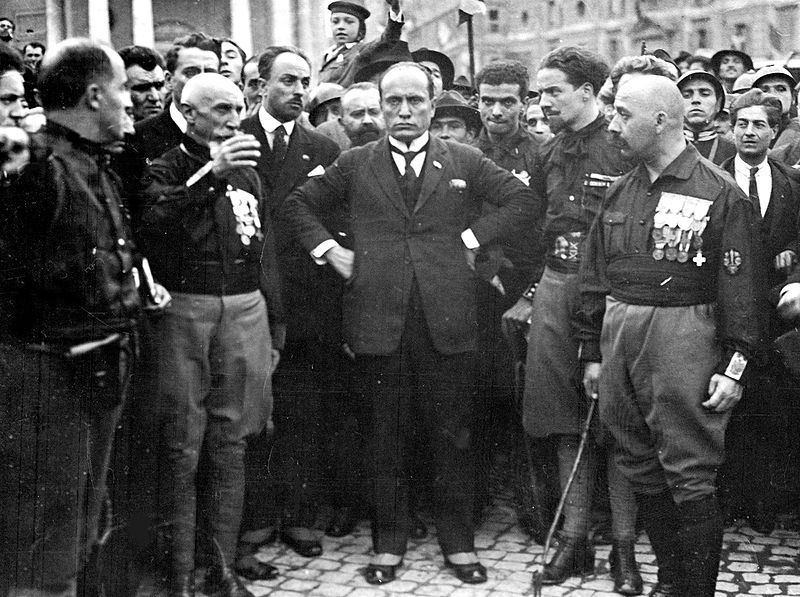
In October 1922, more than a decade before Adolf Hitler claimed power in Germany, Benito Mussolini marched on Rome, ushering in one of the darkest periods of Italian and European history.
Disillusioned with the fallout of the First World War, many Italians rallied behind Il Duce and his promises of a better future. It was a regime based on bluster, fictive might, and a palpable anger grounded in a young Italy’s belief that it was not given due respect.
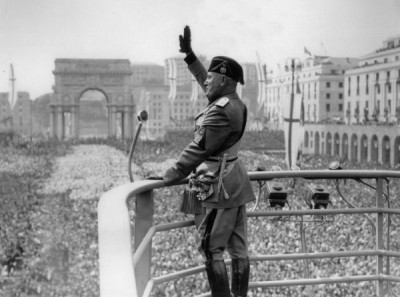
Mussolini before a crowd in Rome
These promises, of course, were unrealistic and deeply dangerous, as the course of the Second World War would show.
Not everyone was on board with the Fascists, however. Not everyone saw World War I as evidence of Italy’s unfulfilled potential. Some saw it, and war in general, not as proof of a nation’s potential greatness, but of our collective failure.
One such man was the artist Massimo Campigli. Enlisted in the Italian war effort in 1916, he was captured and spent most of the war as a prisoner in Hungary.
But he wasn’t angered by the failures of Italy or its allies. Rather, he was angered by the failure of humanity that is war. He saw its futility, its pointlessness, and, above all, its callous disregard for human life. He realized that, in war, there are no winners. There are only broken promises and failed futures.
While originally linked with the Futurists, some of whom came to support Mussolini’s regime, Campigli rejected their pomposity. Instead, he turned to more subtle, nuanced art.
Massimo Campigli’s Le spose dei marinai (1934; Roma, Galleria d’Arte Moderna)
No work captures this better than his Le spose dei marinai (The Wives of the Sailors, 1934), a work that a few years ago was at the center of a segment in BBC’s Rome Unpacked, hosted by art historian Andrew Graham-Dixon and chef Giorgio Locatelli. It’s a poignant work. The longer I look at it, the more I see the deep melancholy in the women waiting on the shores of Italy, hoping their husbands return alive. Women are told to wait for their husbands, who are sent off to defend the Patria, the fatherland. But they wait. And wait. And wait. The only comfort they find is in embracing each other, as they stare out at a tiny strip of blue, a sea that never gives back.
There’s a deep melancholy in the scene where Graham-Dixon and Locatelli stare at the painting. A quiet room, light shines solely on the painting, and they mull over what would ever happen to the sailers whose wives await their return.
In Italian, there’s an idiomatic expression, ‘far promesse da marinaio,’ to make a sailor’s promise. It means more or less, an unfulfilled promise. A sailor’s promise is made by one who cannot guarantee that what is said would ever happen. The sea into which one ventures does not care about love, promises, futures. A sailor’s promise is a promise broken as it’s made.
So it is with war. Le spose dei marinai are for Campigli le vedove dei marinai… sailor’s widows.
And this is where I feel the most despair when looking at this painting, and where in Rome Unpacked we’re reminded that art’s beauty is sometimes found in how it surreptitiously points us to humanity’s ugliness. All of these women know that some of their husbands will never come home, but none know who that will be. They linger, they hope, they hold on to false promises that will go unfulfilled.
War is anonymous, as anonymous as the women whose faces we never see because they stare out into a Mediterranean abyss.
War is fought in the name of the nation, but those who suffer don’t always do so collectively. Loss is purportedly collective, where we can come together as one (think tombs of unknown soldiers); but once the homecomings end, the bereaved are usually abandoned.
Nationalism, totalitarianism, and fascism are some of those sailor’s promises. We stand on the beaches of sameness and stare out at difference, hoping to finish better than we started. But we never do. Nationalism is an empty identity. The waves roll in, but they do not fulfill our baseless hopes of grandeur.
Campigli captured that in Le spose dei marinai in 1934, five years before war broke out. Had we listened to him and those who rejected fascism and false dreams of empire, maybe the Second World War would have never happened.
But we can learn from Campigli and from his sailor’s wives. There is hope for us in their despair.
He didn’t paint because there was no hope. Rather, he wanted us to believe in solidarity and in our shared humanity. He saw what many of his contemporaries did not see. He was, to borrow Locatelli’s word for Campigli, a lungimirante: far-sighted in the truest sense. He saw what we couldn’t because of our collective blindness.
Solidarity and collective belonging need not devolve into evil, oppression, and destruction. We can do better. I hope we do better. We must do better.
No one wins in war; no war is good, not even just ones. They are the moral failings of humanity that leave us on beaches hoping the sea gives us what it never will.
When I introduce Mediterranean Studies to students, I ask them what comes to mind when they hear the word Mediterranean. Some answers include “beaches” or “Greece.” Sometimes, I get more thoughtful answers, like “the Crusades” or “Romanization.” Eventually, I ask about food, and we get to the two staples of the Mediterranean diet, grapes and olives, or, as my students timidly say in fear of getting scolded because they think I’m a puritan, wine and olive oil! (It’s no secret I enjoy both in high moderation).
Few things are more Mediterranean than the grape and the olive. In fact, both grow quite well in the Mediterranean Basin, and nearly every Mediterranean society has both at the center of their cuisines, with a few exceptions. Muslims generally don’t consume wine, but many still do consume grapes and raisins.
Evidence of olive and grape production and consumption go back further than Homer, who talked often about the myriad uses of olive oil, or even refers to the Mediterranean itself as the wine-dark sea. Olive oil has been produced since at least 6000 years before Christ, and wine is just about as old. The oldest known winery, found in Armenia, dates to about 4000 years before Christ. Clearly, we’ve been enjoying the fruits of the Middle Sea for quite some time.
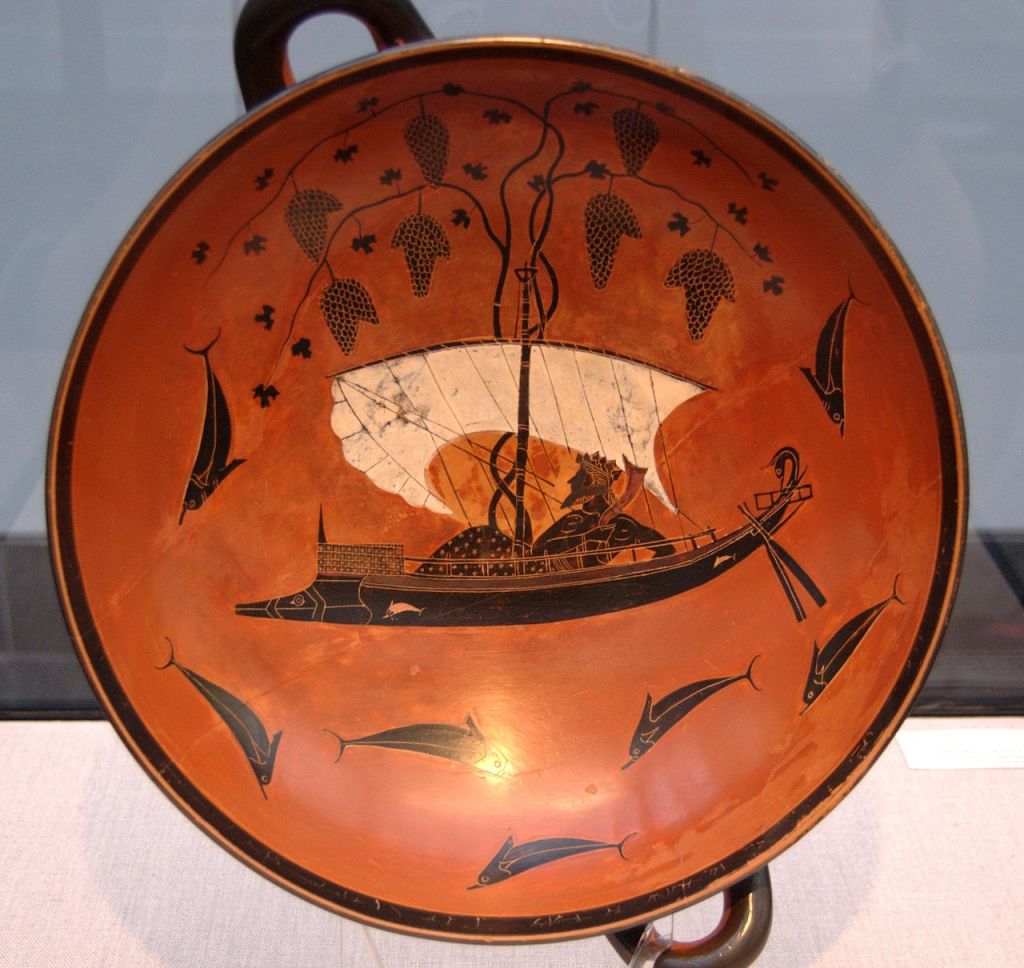
The Dionysus Cup, a sixth-century cup depicting the God of Wine turning pirates into dolphins
What’s most interesting to me about the grape and the olive is how both have become cultural symbols rather than just things to be eaten and drunk. When we think about Greek pottery, for example, images of the god Dionysus, or Bacchus as the Romans called him, usually come to mind. The fact that there even was a god of wine should tell us all we need to know about how central the grape was to the societies teeming around the Middle Sea, especially the Greeks and Romans. According to the Roman army commander and naturalist Pliny the Elder, “The majesty of Rome has accorded the olive-tree great honor by crowning our cavalry squadrons with wreaths of olive on the Ides of July and also when celebrating minor triumphs.” And he explained that the best wines grew in Italy, even imported Greek varietals, a subtle reminder that the Romans had come to dominate the Mediterranean. Overall, then, both crops held in important place in the high culture of the day.
But both could be labor intensive. While grape vines grow wild, they can be tedious to maintain and to keep clear of parasites. And olives are no less difficult, especially since, as Pliny again reminds us, it’s best not to wait for the olives to fall; you have to pick them at the right moment, or the oil will be bitter and greasy, not nearly as sweet as one my desire. The need to ensure that grapes and olives are picked at the right time meant that a labor force was needed, but not for very long. They had other tasks, such as pressing the grapes or olives. And for this, you needed either big strong animals or big strong men. The latter could be had in most port cities, especially in the winters, in the form of galley rowers with little else to do, and vice versa.
Graffiti of the Battle of Lepanto on the walls of an olive press in Muro Leccese, Puglia. If you look closely, you can see a ship in the lower right. At top is probably the Sicilian city of Messina, where the victorious Christian navy reconnoitered after the battle.
In the town of Muro Leccese, in rural Puglia, Italy, local olive press workers, who spent their days grinding olives into oil, were conscripted to row galleys in the famed Battle of Lepanto in 1571, which pitted the Holy League of Venice, the Papacy, and Spain against the Ottoman Turks. Upon their return, some of them etched their victory over the Muslim Turks onto the walls of the olive press to share their stories and impress their friends, but also probably to pass the time during a hard day’s work.
For all their positives, the plants weren’t always producers of good things, like beverages to drink, condiments for food, or even jobs, brutal as that work might be. If Pliny is any indication of things, which he often is, “Greeks, progenitors of all vices, have diverted the use of olive-oil to serve the ends of luxury.” And as far as wine goes, Pliny didn’t hold back:
Meanwhile, even in the most favourable circumstances, the intoxicated never see the sunrise and so shorten their lives. This is the reason for pale faces, hanging jowls, sore eyes and trembling hands that spill the contents of full vessels; this the reason for swift retribution consisting of horrendous nightmares and for restless lust and pleasure in excess. The morning after, the breath reeks of the wine-jar and everything is forgotten – the memory is dead. This is what people call ‘enjoying life’; but while other men daily lose their yesterdays, these people also lose their tomorrows.
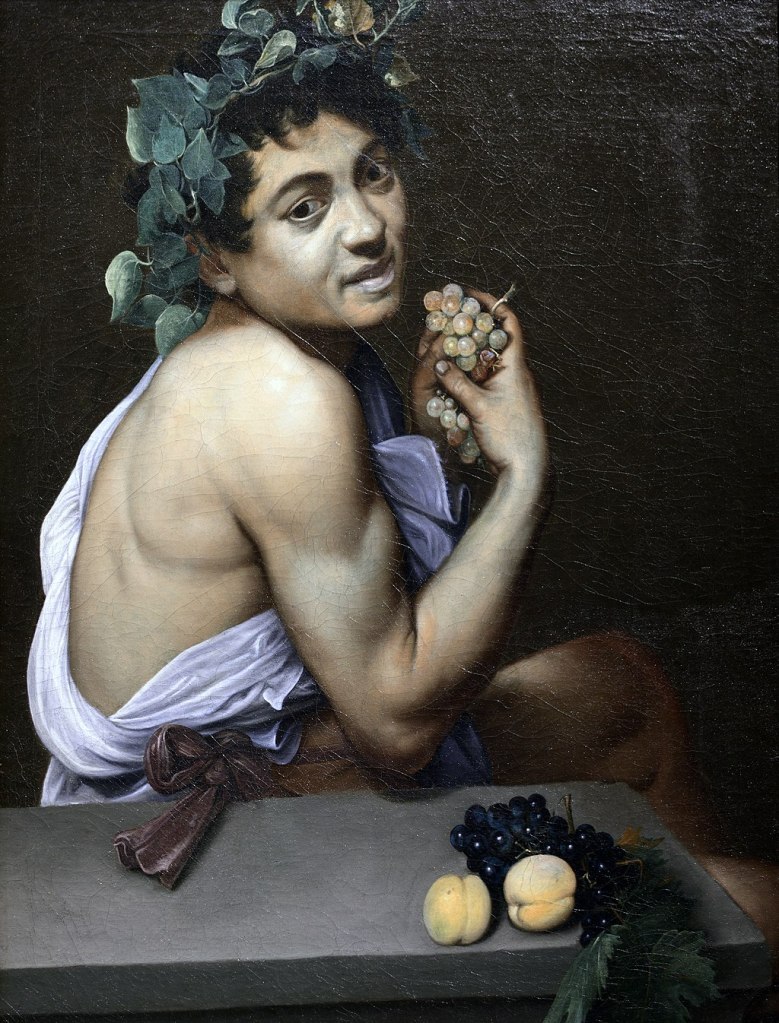
Caravaggio, Sick Young Bacchus. The young god of wine’s gangrenous skin and slightly contorted smile conveys that he’s had a good time with wine, but is beginning to feel the effects of too much fun.
Things got so bad that the Romans even tried to ban the cult of Bacchus in 186BC because they believed it was causing too many problems with people running into the hills getting drunk and having wild orgiastic sex. Even in the Renaissance, wine still didn’t shake the stigma. One look at Caravaggio’s Young Sick Bacchus, and you’ll know exactly what I mean.
While Pliny might be a bit of a buzzkill and Caravaggio’s painting might make you think twice about how much wine you drink, both men’s preoccupations with wine, and others’ focus on the olive, betray how integral those crops were to his world. And it’s fun to see how just two plants can say so much about the world they grow in. Virtues and vices; foodstuffs and labor; wars and weather. All these things are so intertwined. Next time you eat at a Mediterranean restaurant, whether it’s Levantine, Turkish, French, Moroccan, Spanish, or Italian (but not Olive Garden!), think about the olive and the grape and how they tell us as much about the soil they grew in as they do the societies that consumed them.
This past week was the start of the new academic year. It’s always an exciting time. The whole dynamic of the campus changes. Much like a small Mediterranean seaside town in high tourist season, campus is now abuzz with energy: move-in coordinators showing freshmen to their dorms could easily be mistaken for tour guides bringing guests to their lodgings; lines at the bookstore easily resemble eager shoppers queuing up at a fish market just as the day’s catch—the fruits of the labors of the fishermen who were at sea since long before dawn—begins to roll into port.
Perhaps you can forgive me for the terrible Mediterraneanization of my Appalachian university campus: after all, as you could expect, my students the past week have spent a lot of time thinking about things related to the Sea Between Lands. While neither of my classes this semester is a course on the Mediterranean itself, what we are studying sort of necessarily forces us to grapple with the Middle Sea and how it impacted global history on one hand and the history of early Modern Europe on the other.
A later recreation of the first-century AD geography Ptolemy’s vision of the known world
In my intro course, a freshman seminar on global history, we looked at the way two ancient Mediterranean civilizations—Babylon and Greece—understood the world and the sea according to their respective cosmologies. We discussed in particular their maps of the world, ranging from Homeric visions of a cosmology that hinged on the gods’ intervention in human affairs, Babylonian beliefs that the Ocean Sea was the boundary between this world and the next, and the Romanization of Greek views of the world that wed together Greek cosmogony with Roman needs to govern their sprawling Mediterranean empire.
Raphael’s School of Athens, one of the most famous paintings of the Renaissance. It depicts the great minds of Philosophy, including Plato (L) and Aristotle (R) at the center
In my upper level Early Modern Europe class, which explores the relationship between early modernity and the Classical Tradition, we began by reading Plato’s Republic, a text that you really have to read if you want to understand anything about early modern political theory. In fact, the first three weeks of my early Modern Europe class will all be dedicated to classical Mediterranean sources—Plato, Lucretius, Vergil, Livy, Ovid, Cicero, Augustine, among others—that I think students should have a baseline relationship with. Of course, one of the hallmarks of early modernity that I want them to understand is connections across the Mediterranean that began in antiquity and were reaffirmed and strengthened (not broken—sorry, Atlanticists) in the early modern period.
On the whole, my goal in both classes is that students come to realize that whether you study big history or something as focused as classical reception in early modern Europe, everything is connected and human societies have more in common with one another than the rhetoric of difference would have you believe. My freshmen will read geographical and ethnographical texts that describe the many peoples whom their author met and the many lands they visited; my history majors will read epic poetry, histories, and private letters that tell us what early modern Europeans thought of others.
In both cases, students will explore how societies viewed others, themselves, and the connections between them. My hope is that they come to agree with Plato when he said in Phaedo that Mediterranean societies were all ‘frogs around the pond’: despite perceived differences and the belief that seas separate people, my students will explore the myriad ways that seas are but ponds that connect us, not aquatic chasms that divide us. If this helps them see difference not as a matter of hierarchy but as something that enriches us all and makes societies better forms of themselves, then I might have done an okay job this semester.
My poor blog. I seem to have neglected it more than I neglected my houseplants (Sorry Rosemary Clooney, St. Basil the Great, and Elvis Parsley). It was a busy summer: I had a few outstanding projects that needed to be wrapped up, my book went into production, and I gallivanted about Rome with a cavalcade of undergrads. This is not me making excuses (it’s totally me making excuses), but I am back to blog as the new academic year is upon us.
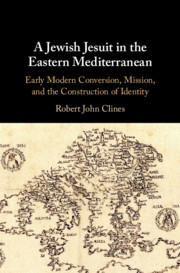
The cover of my new book, A Jewish Jesuit in the Eastern Mediterranean, to be published by Cambridge University Press
The exciting news is that A Jewish Jesuit in the Eastern Mediterranean is officially in production and is set to be released this winter by Cambridge University Press. You can pre-order it here or here.
It was a fun book to write. It traces the story of a Jewish-born priest who lived from 1530 to 1589 named Giovanni Battista Eliano. I first came across him in 2008 while working on my MA thesis and then decided to explore his life and world more fully for my PhD. Then, his life was so fascinating that I wanted to tell his story to a much wider audience. So I decided to write this book!
Eliano is an interesting figure. He was trained as a book printer and lexicographer (fancy way of saying text editor/linguist/translator) and was a merchant with his father in Egypt. He then decided to become a rabbi. But midway through his rabbinical studies, he converted to Catholicism, became a priest, and traveled to Lebanon and Egypt to convert Eastern Christians to Catholicism. Much of his life, though, was about trying to prove he was no longer Jewish both to his Jewish family as well as to his fellow Catholics.
This was never easy for Eliano: he got arrested twice, often had to wear disguises, was in a shipwreck, his mother disowned him, and even fellow Catholics distanced themselves from him when the feared he might be what they called a renegade, someone who pretended to practice one faith to gain some sort of social advantage.
We may never know the truth of Eliano’s beliefs (belief is a hard thing to prove), but his story teaches us things that I think more than historians like me will find fascinating: we often struggle with family members who don’t like our life choices; trying to be our best selves isn’t always a linear progression of personal growth; being a part of a new group and leaving an old one often means people question your desires and motives (think of renegade as another word for poser).
All in all, his life makes for a captivating story. Whenever I tell people about him and the book I’ve been writing, the response is always that I am the one doing the great work of telling his story. While I suppose it is true that I had to do the research and writing, just like any historian on any project, I would be lying if I didn’t say I feel like a little guilty for taking credit for his story. While I’ve had the great pleasure of giving him a voice and will continue to tell others’ stories, I’ve tried my best to show him using his own words by quoting his personal papers as much as possible.
While A Jewish Jesuit will probably tell you something about me as a historian, I really hope it tells you more about Eliano and his world. He’s an intriguing enigma of a figure whose voice has been muted by many layers of history. It’s time that voice gets to shine. So go buy my book!















 Robert Clines, Ph.D.